From the journal

The Mould before the Metal: Work Remembered in Tiexi

A former foundry makes more sense when the machinery is read through the problems its workers had to solve.

In the same city · Shenyang ↗
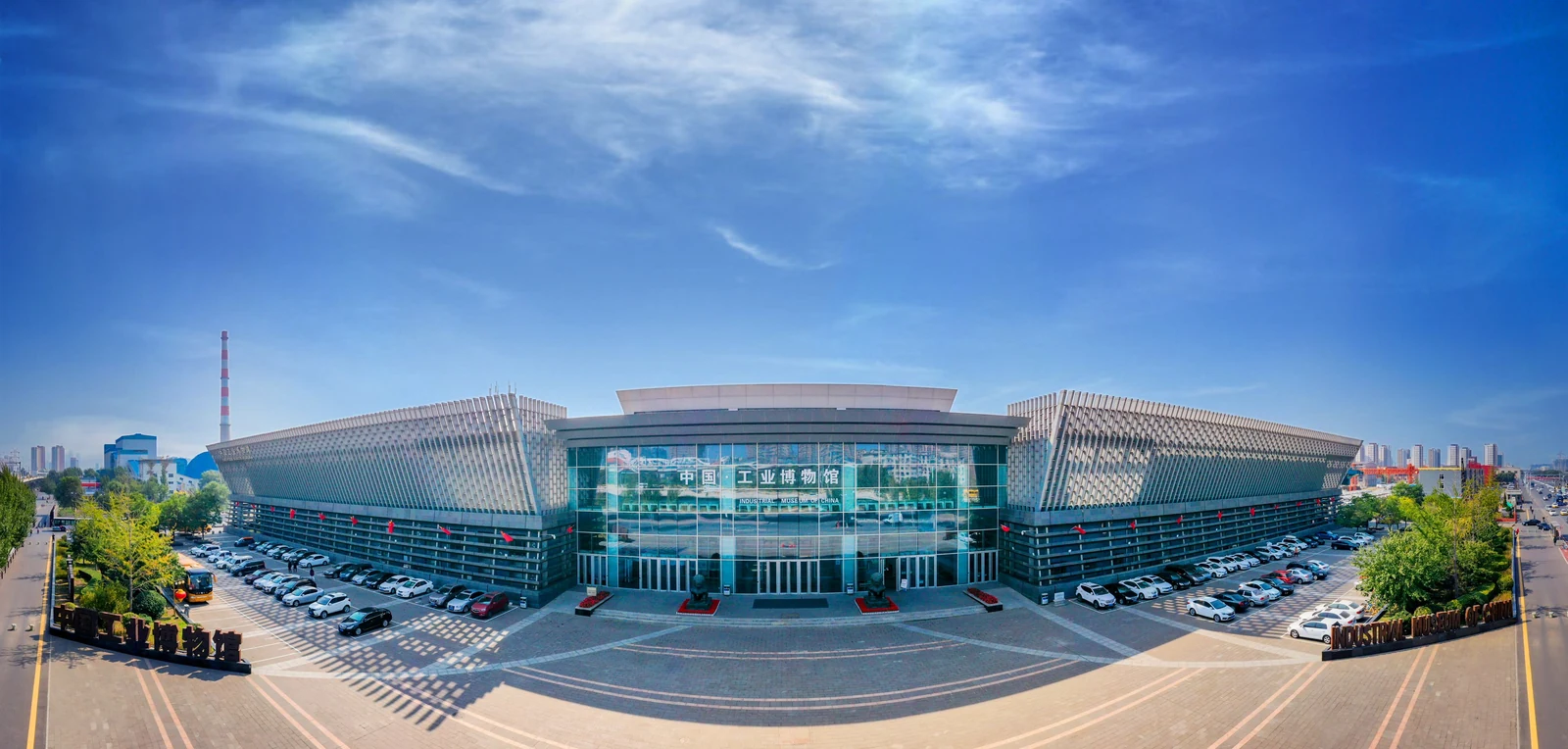
A broad, glass-fronted industrial museum with angled metal cladding faces a paved forecourt, with a tall chimney behind.
The Industrial Museum of China occupies part of Shenyang’s former foundry site in Tiexi.

A building sized for work

The China Industrial Museum occupies part of a former foundry landscape in Tiexi, Shenyang’s industrial district. In its casting hall, large-scale equipment and the workshop itself preserve the relationship between making an object and moving it. An overhead crane belongs to that relationship just as much as the melting equipment below.

The museum opened in 2012 after expansion of an earlier casting museum. Its wider collection gathered industrial objects from different parts of China. Its collection places equipment from the local workshop alongside objects gathered to tell a wider national story.

Start with the space the metal will fill

Casting begins before molten metal appears. A mould has to define the shape that the metal will take. Sand mixed with a binder can be formed into that mould, and its precision affects the resulting object’s dimensions and surface. A finished casting therefore preserves the consequences of work done in a material that may no longer be visible on it.

This reverses the usual museum emphasis. The striking metal object is the end of a chain of decisions. The quality of a mould, the handling of its parts and the ability to repeat the process all matter. Sand boxes and moulding equipment record this often-invisible stage of production.

The process also links scale to effort. A small adjustment to a repeated task can affect a worker’s whole day. Mechanization is consequently a story about the organization of movement as well as the power of a motor.

A fitter studies a difficult task

Fitter Zhang Chengzhe entered the foundry in 1950. A museum report describes his later effort to mechanize work on radiator castings, where preparing and handling sand imposed a heavy physical burden. His team developed equipment that fed sand into moulding boxes and used vibration in the process. The improvement came from studying a recurring shop-floor difficulty.

A separate opening-period report identifies a pneumatic hammer Zhang designed for knocking off casting risers, the extra metal attached to a casting during production. A heavy, repetitive finishing task could thus become the subject of a specific tool.

This is a different scale of invention from the unveiling of a complete new factory. It begins with a task workers already know intimately, then changes how that task is performed. Zhang’s contribution is valuable because the problem is specific: the relationship among sand, a box, a casting and the person repeatedly handling them.

Zhang’s tools emerged from observation, testing and repeated adjustment. They link the machines preserved in the museum to the physical demands of the jobs they changed.

Preserving a process that has stopped

The former production space now serves another purpose. Its equipment can establish relationships and scale without being presented as an operating industrial line. The museum’s national collection also makes comparison possible: local workshop history sits beside objects brought from elsewhere.

One further distinction concerns a familiar national symbol. A metal state-emblem exhibit described in the museum’s published history is a replica made in 2012 under former foundry workers’ guidance, not the original emblem taken from Tiananmen. Its significance lies partly in the renewed act of making and the skill carried by those workers.

Industrial heritage includes buildings and products, but also techniques that people can remember, explain and sometimes perform again. Tiexi’s machinery becomes more intelligible when the hands and decisions around it remain part of the story.

Continue exploring · China Industrial Museum ↗
Photo credits and rights
  1. The Industrial Museum of China occupies part of Shenyang’s former foundry site in Tiexi.Source: Liaoning Provincial Department of Culture and Tourism, via the Liaoning Provincial Government website. Photographer and image license not stated. · Rights status unknown Photo source ↗ Original aspect ratio retained. Display copies resized only when needed; no enlargement, crop or retouching.