Quanzhou: How a Maritime City Worked
Follow a porcelain bowl from inland kilns toward the sea to understand Quanzhou’s bridges, trading institutions and 22 World Heritage components.
Quanzhou’s history reaches from Fujian’s mountain workshops to the waters of its bay. The 22 components of its Song-Yuan World Heritage property describe a connected trade system; the wider city and municipality add Nanyin music, string puppetry, coastal communities, porcelain making and tea landscapes. Follow a material, a sound or a belief to find a route through that richness.
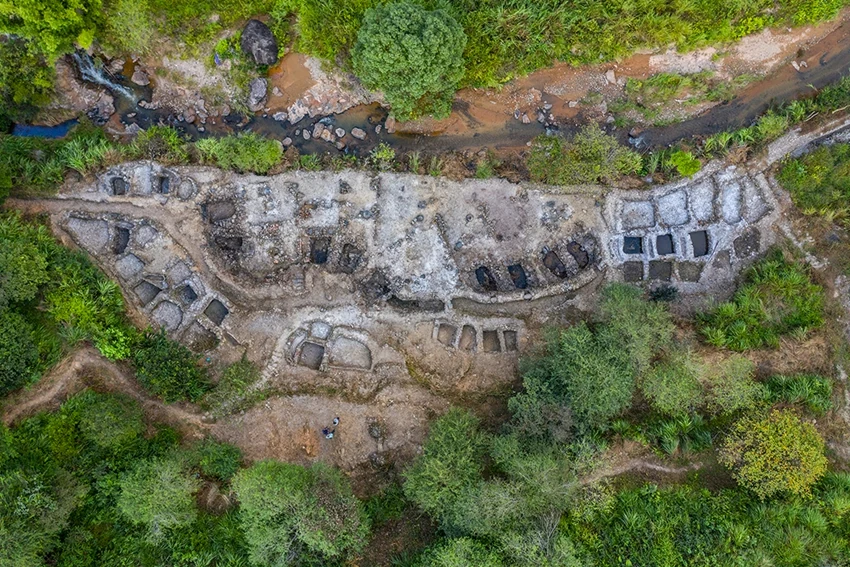
Follow a porcelain bowl from inland kilns toward the sea to understand Quanzhou’s bridges, trading institutions and 22 World Heritage components.
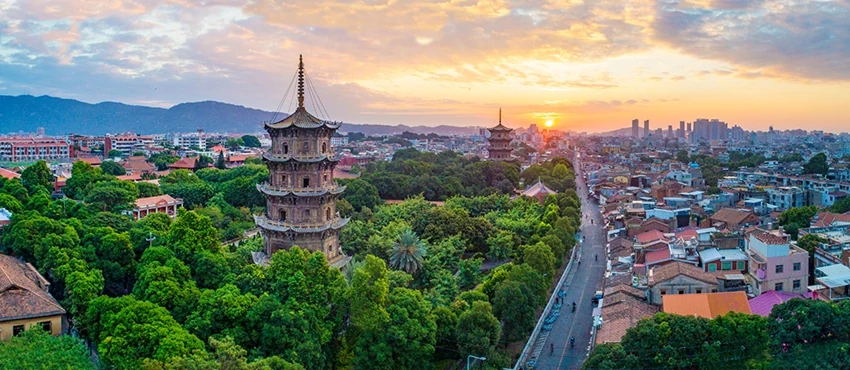
Move from the twin stone pagodas to reused Hindu carvings and the working spaces of Quanzhou’s great Buddhist temple.
Read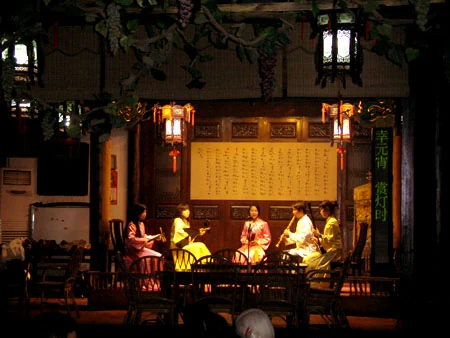
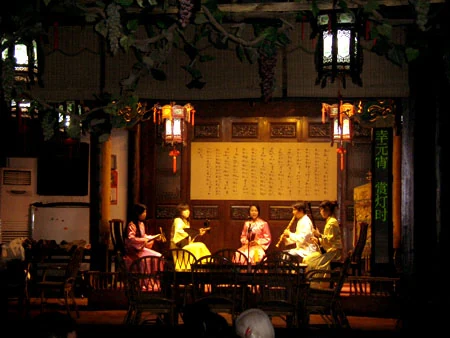
A horizontal lute, bamboo flute and carefully shaped voice offer a way into Nanyin, the musical tradition shared by Minnan communities.
Read
Look beyond the portrait session to the hairdressing skills, oyster livelihoods and everyday identities behind Xunpu’s floral headwear.
Read
From a kiln’s chambers to a porcelain figure’s fingertips, Dehua reveals the material and human choices behind blanc de Chine.
ReadA Buddhist temple whose twin pagodas and reused stone carvings connect monumental architecture with the city’s religious life.
A historic mosque with a monumental stone portal, prayer-hall remains and inscriptions documenting centuries of care.
Quanzhou’s Mazu sanctuary connects seafaring devotion with the shared spaces of a port city.
Quanzhou’s northern mountain setting holds the great rock-cut image of Laozi.
Ships, models and religious stones offer material routes into the history of maritime exchange.
A Song-period granite crossing whose foundations answer the challenges of the local Luoyang River estuary.
A long stone-beam bridge between Anhai in Jinjiang and Shuitou in Nan’an.
A coastal community known for women’s floral headwear, oyster-related livelihoods and shell-built houses.
An inland porcelain-producing county where kiln archaeology, figurine craft and contemporary industry meet.
A mountain county associated with Tieguanyin tea and the agricultural knowledge supporting it.
A small hillside temple in Jinjiang with a dated stone relief of Mani.