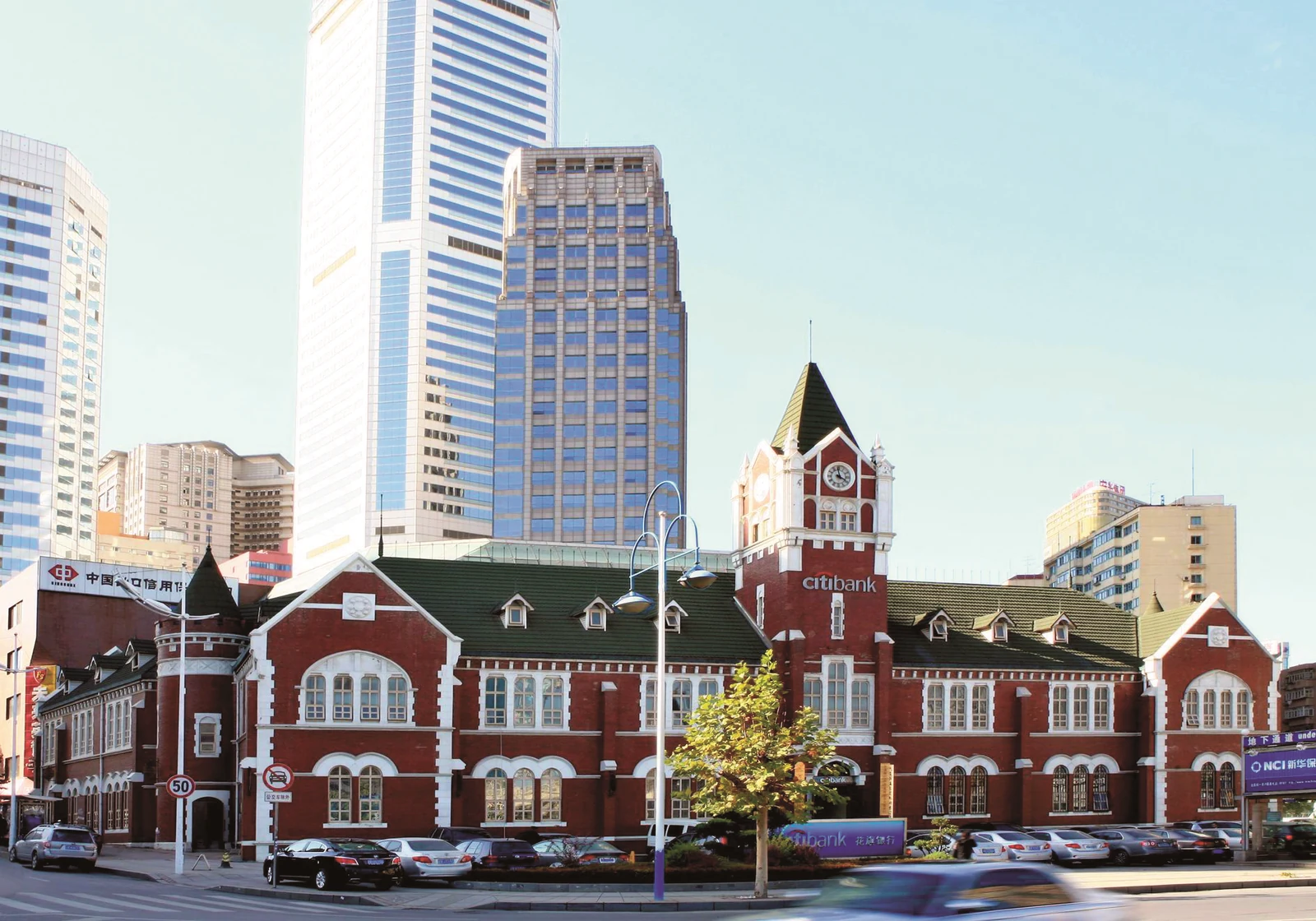
The Institutions Around a Circle: Dalian’s Zhongshan Square
A hotel, a bank dome and a civic roofline reveal how successive powers made a modern port legible in stone.
Dalian faces the sea through several different histories. Around Zhongshan Square, banks, public offices and a railway hotel show how Russian planning and Japanese colonial institutions shaped a commercial port. The tram adds another scale: workshop ingenuity, driving skills and everyday movement. Farther southwest, Lüshun, historically known abroad as Port Arthur, brings the harbour, prison, museum and hilltop memorial into a more difficult conversation about empire and remembrance. Beyond the buildings, Jinshitan exposes sedimentary strata and microbial structures from deep time, while Laotieshan belongs to a migration landscape whose ecological connections reach far beyond Liaoning. The city’s wider territory brings these urban, historical and coastal landscapes into one peninsula.
A hotel, a bank dome and a civic roofline reveal how successive powers made a modern port legible in stone.
Behind the familiar old carriages are metalworking problems, changing controls and a continuing relationship with the street.
Read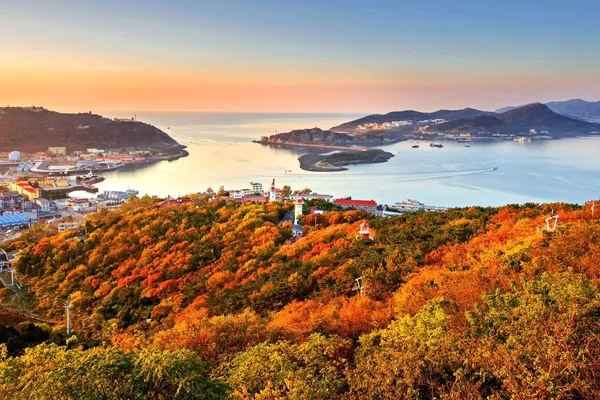
The narrow entrance helps explain the naval port, but docks, railways and imperial decisions explain why it became Port Arthur in world history.
ReadLayered microbial structures and cracked sediment surfaces preserve different kinds of evidence from seas long before the present coast.
A circular urban space whose surrounding buildings reveal the institutions behind Dalian’s modern port.
An exposed coastal succession where sedimentary history meets the continuing work of waves.
A seaside natural-history collection that connects whale anatomy with fossils, habitats and the practice of preserving evidence.
An early twentieth-century museum whose architecture and far-travelled collections require different kinds of historical reading.
A preserved prison complex where spatial arrangements and individual lives illuminate colonial detention.
A hill above Lüshun harbour where a colonial war memorial remains a conspicuous historical landmark.
A layered district of streets, institutional buildings, residences and trees in western Lüshun.
A peninsula-end migration landscape especially important for the autumn passage of raptors.
A coastal public landscape used for both everyday walking and organised gatherings.
