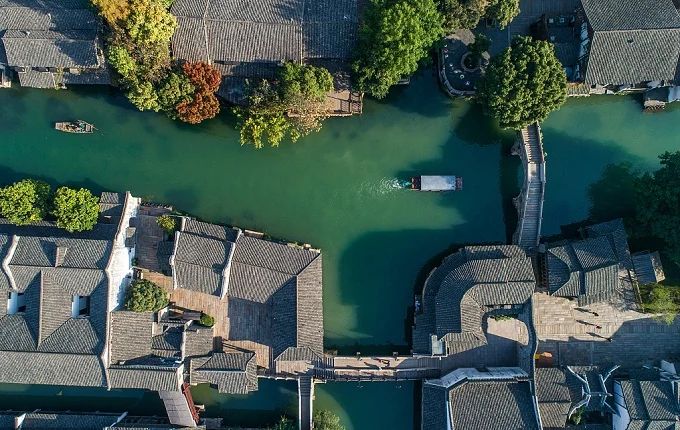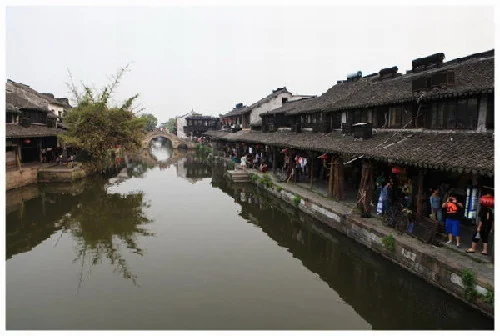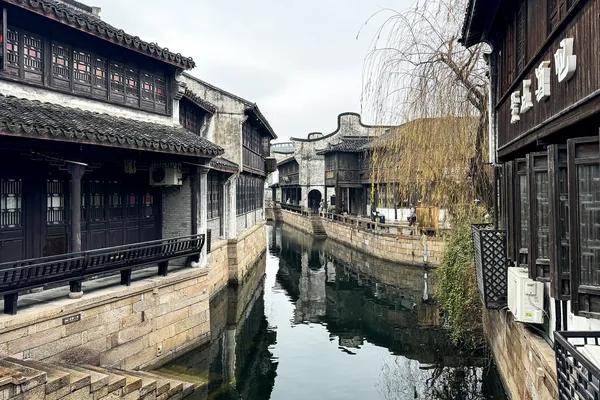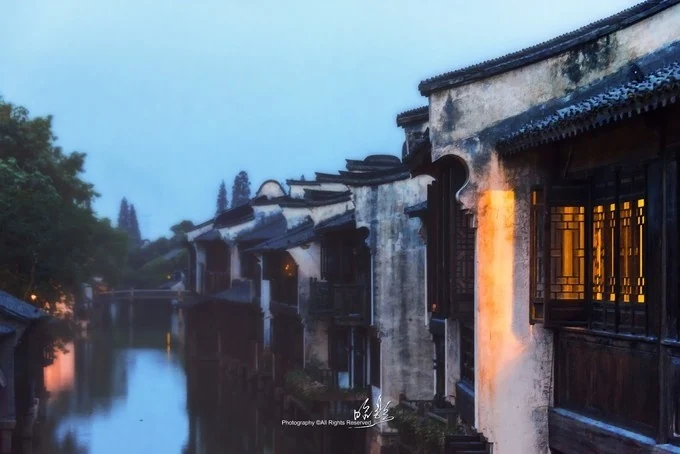
A doorway, a bridge and a stretch of roof reveal how Jiaxing's waterways gave everyday life its shape.
A roof, a landing and a bridge make the water towns easier to read. Each place has its own answer at the waterline.
Waterways, working hands.
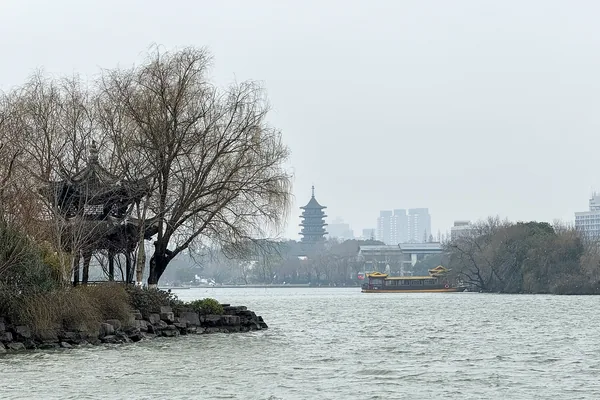
In northern Zhejiang, between Shanghai and Hangzhou, Jiaxing names both a city and the wider region around it. Wuzhen, in Tongxiang, and Xitang, in Jiashan, are distinct towns within that region. Start with their different ways of living beside water, then return to South Lake and the canal-side streets of the city itself.
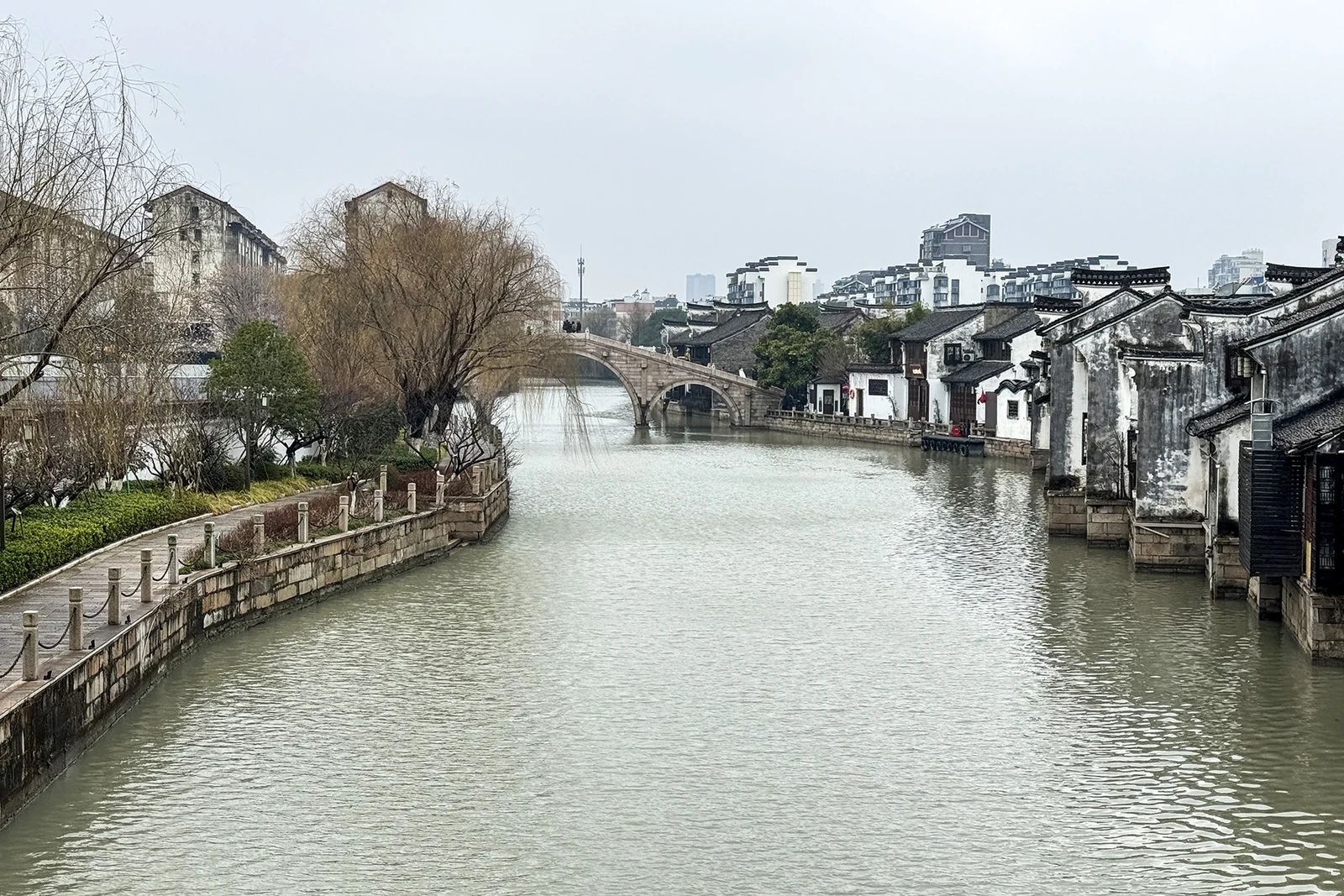
A doorway, a bridge and a stretch of roof reveal how Jiaxing's waterways gave everyday life its shape.
A roof, a landing and a bridge make the water towns easier to read. Each place has its own answer at the waterline.
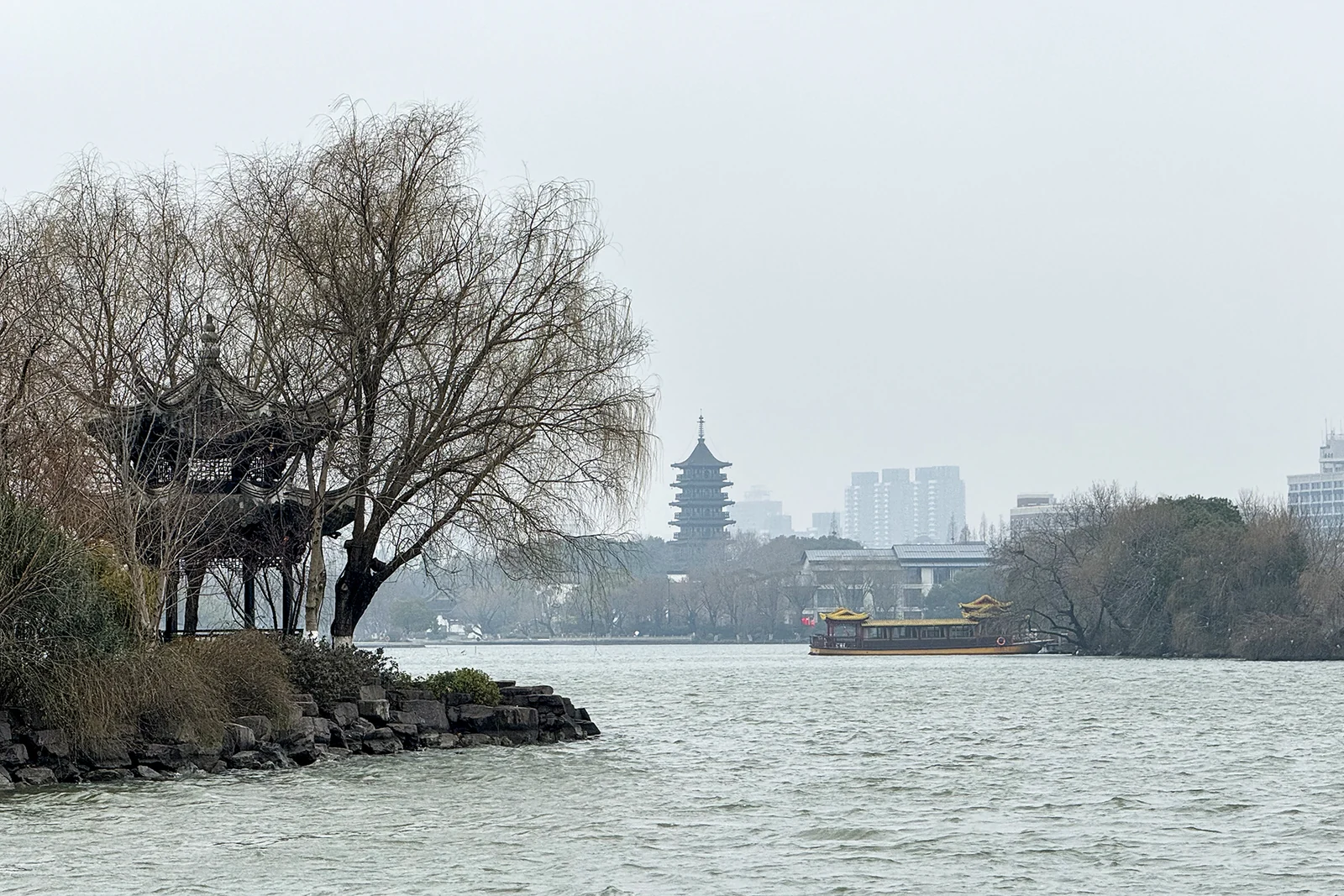
Wuzhen and Xitang have their own stories. South Lake and Yuehe offer lighter pauses within Jiaxing.
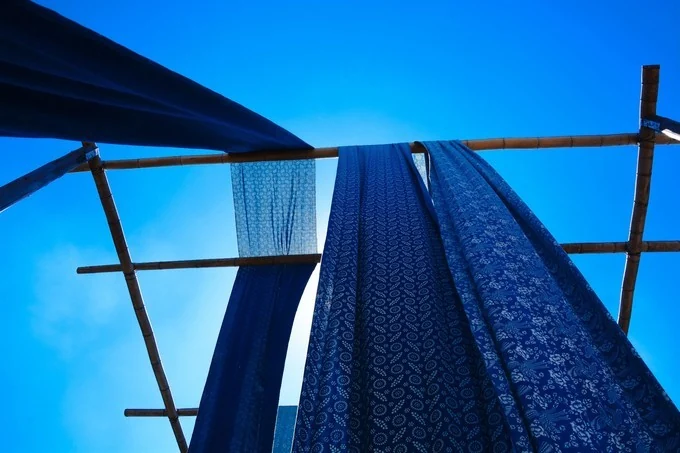
At Wuzhen’s indigo workshop, a pattern takes shape by keeping parts of the cloth away from the dye.
Follow the white shapes through a blue cloth, from a careful covering of paste to a courtyard of hanging fabric.
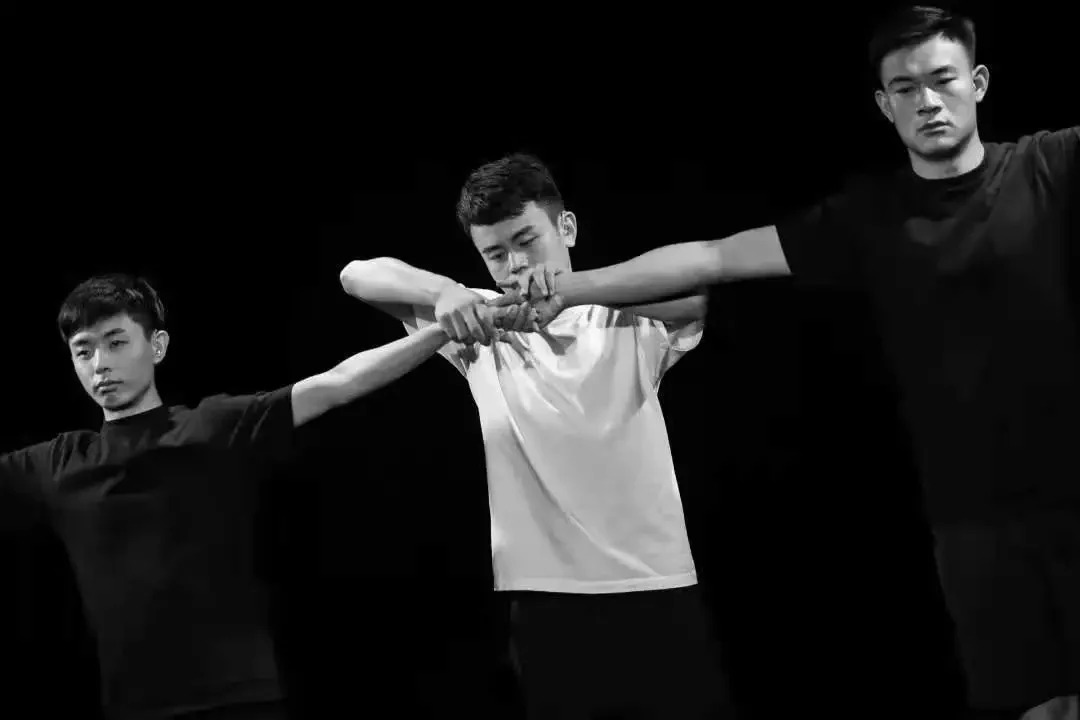
Wuzhen’s theatre festival brings performances into courtyards, lanes and other shared spaces, turning the old town into a modern cultural venue.
Wuzhen adds contemporary theatre to the uses of its lanes, bridges and courtyards.
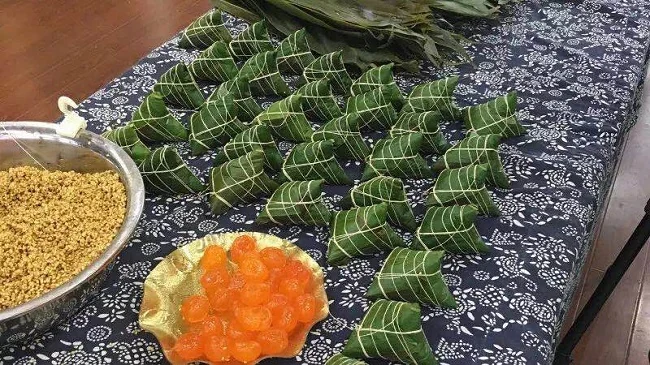
Jiaxing's zongzi turns a few ordinary materials into a compact lesson in texture, shape and handwork.
Rice, a broad leaf and a few precise movements bring the wider region to the scale of one parcel.
Buildings, materials and human uses offer paths beyond a single destination.
This journal follows the things that give a place its particular shape: a covered street, a protected white pattern, a lake within the city. Choose a thread, read a little further, and leave room for the next discovery.