Zhouzhuang: Homes Beside Bridges, Trade on the Water
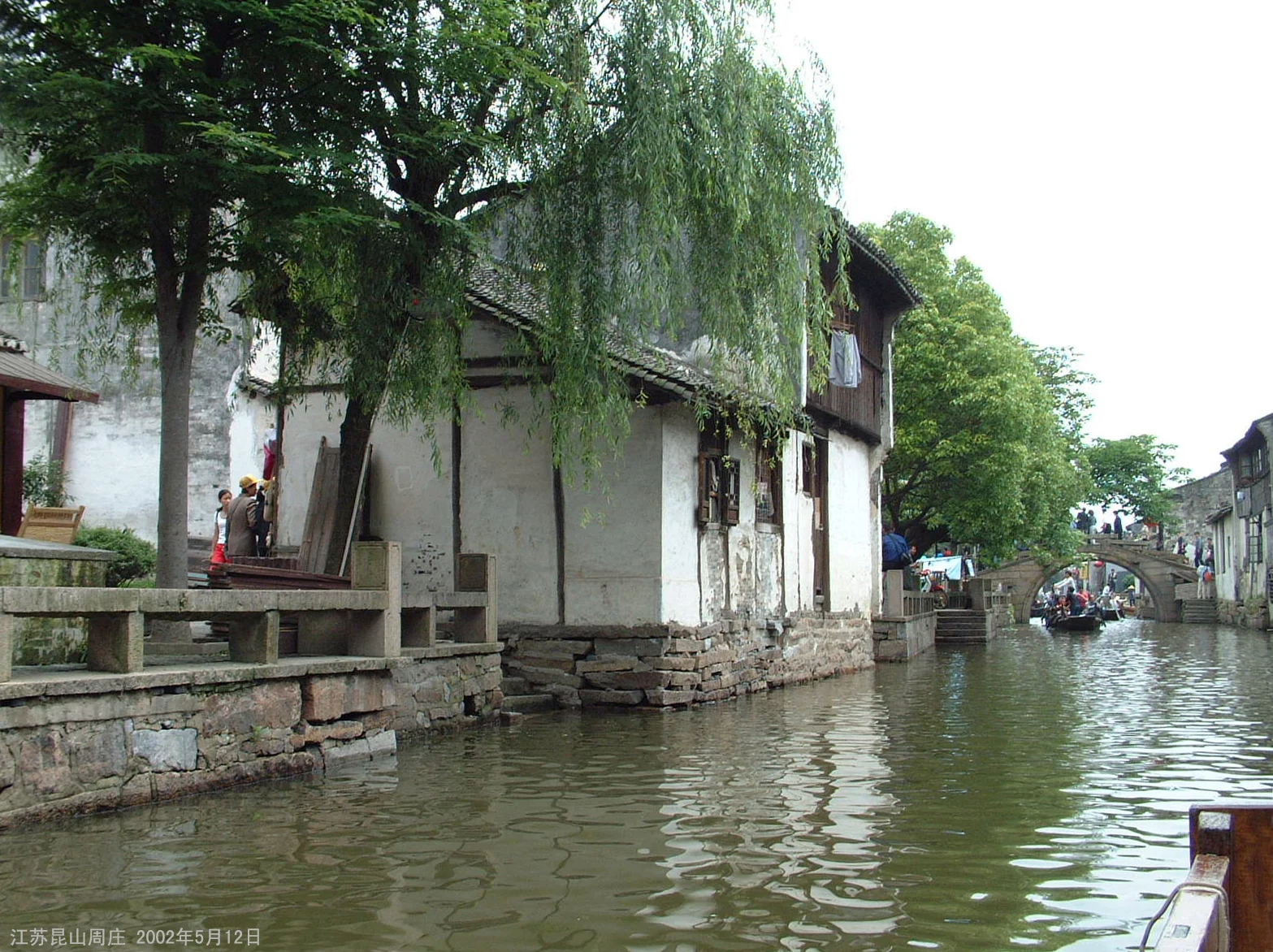
At Zhouzhuang’s Twin Bridges, the riverfront mansions and narrow canals reveal how a Jiangnan town joined family life to commerce by water.
Read a water town through two different bridges and the waterside household of Shen Benren.
Zhouzhuang offers a different starting point from Tongli’s Retreat and Reflection Garden: here, begin with crossings and households rather than one enclosed garden. At the Twin Bridges, distinguish Shide’s rounded stone arch from Yong’an’s flatter stone-beam structure and rectangular opening. Their meeting at intersecting waterways makes a compact lesson in how streets and canals connect. Compare the paths above with the space left for boats below.
Shen Hall brings that relationship indoors. Built by Shen Benren in 1742, it belongs to a descendant of the earlier merchant Shen Wansan; it should not be described as an unchanged home occupied by Shen Wansan himself. Follow the transition from waterside access to reception rooms and domestic courtyards. Where does a visitor arrive, where is business or ceremony conducted, and where does family life withdraw from view? These questions make the size of the house meaningful.
Zhouzhuang is also a place whose image has been cultivated. The town’s Chen Yifei studio site adds an artist’s perspective to the familiar bridge views. Look for the difference between a composed image and a working crossing. Shops and tourism belong to today’s town; neither every old-looking facade nor every quiet canal should be read as an untouched historical scene.
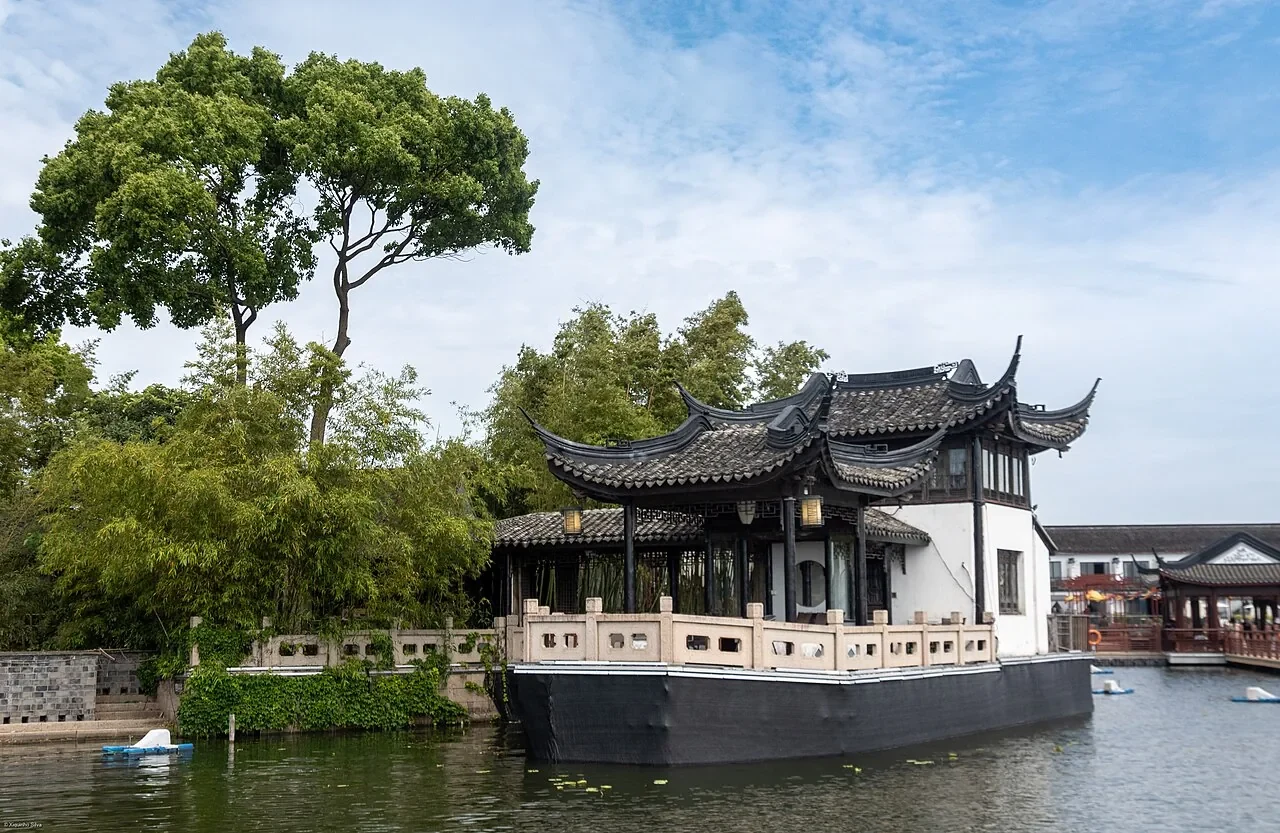
At Zhouzhuang’s Twin Bridges, the riverfront mansions and narrow canals reveal how a Jiangnan town joined family life to commerce by water.