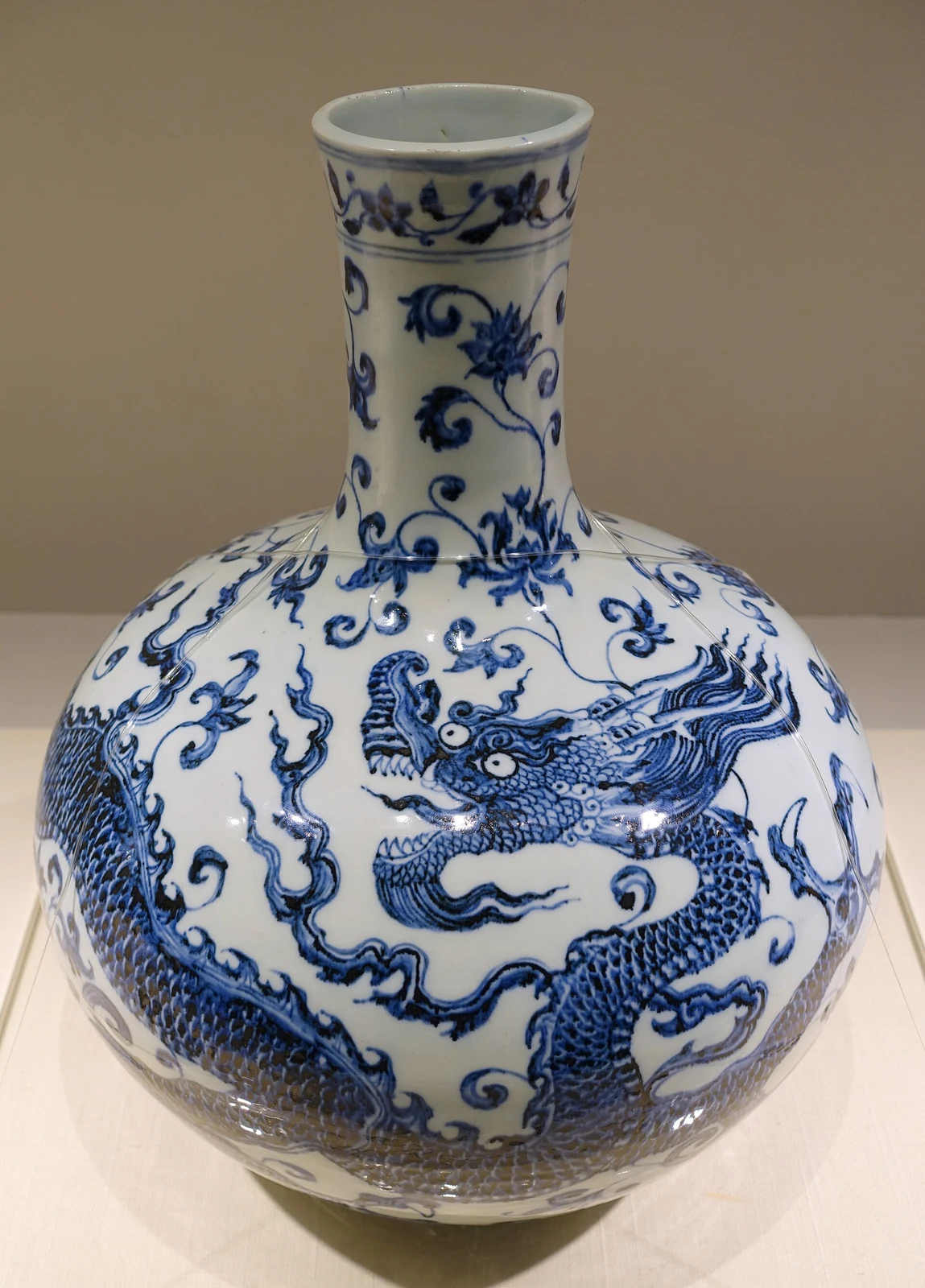
Why the emperor's porcelain was broken
At Jingdezhen's imperial kiln, a rejected vessel could be smashed and buried. Archaeologists and conservators have made those fragments tell another story.
Jingdezhen takes its name from an imperial renaming in 1004, when the town of Changnan was given the reign title of the emperor who ordered its pots for the court. The Chang River runs through the city and the Gaoling clay came from the hills to the east. On 25 July 2026 the historic porcelain-making sites of the city were inscribed on the World Heritage List.
At Jingdezhen's imperial kiln, a rejected vessel could be smashed and buried. Archaeologists and conservators have made those fragments tell another story.

Before the kilns drew their clay from elsewhere, the workshops of the whole region worked the white earth of this valley.
Read