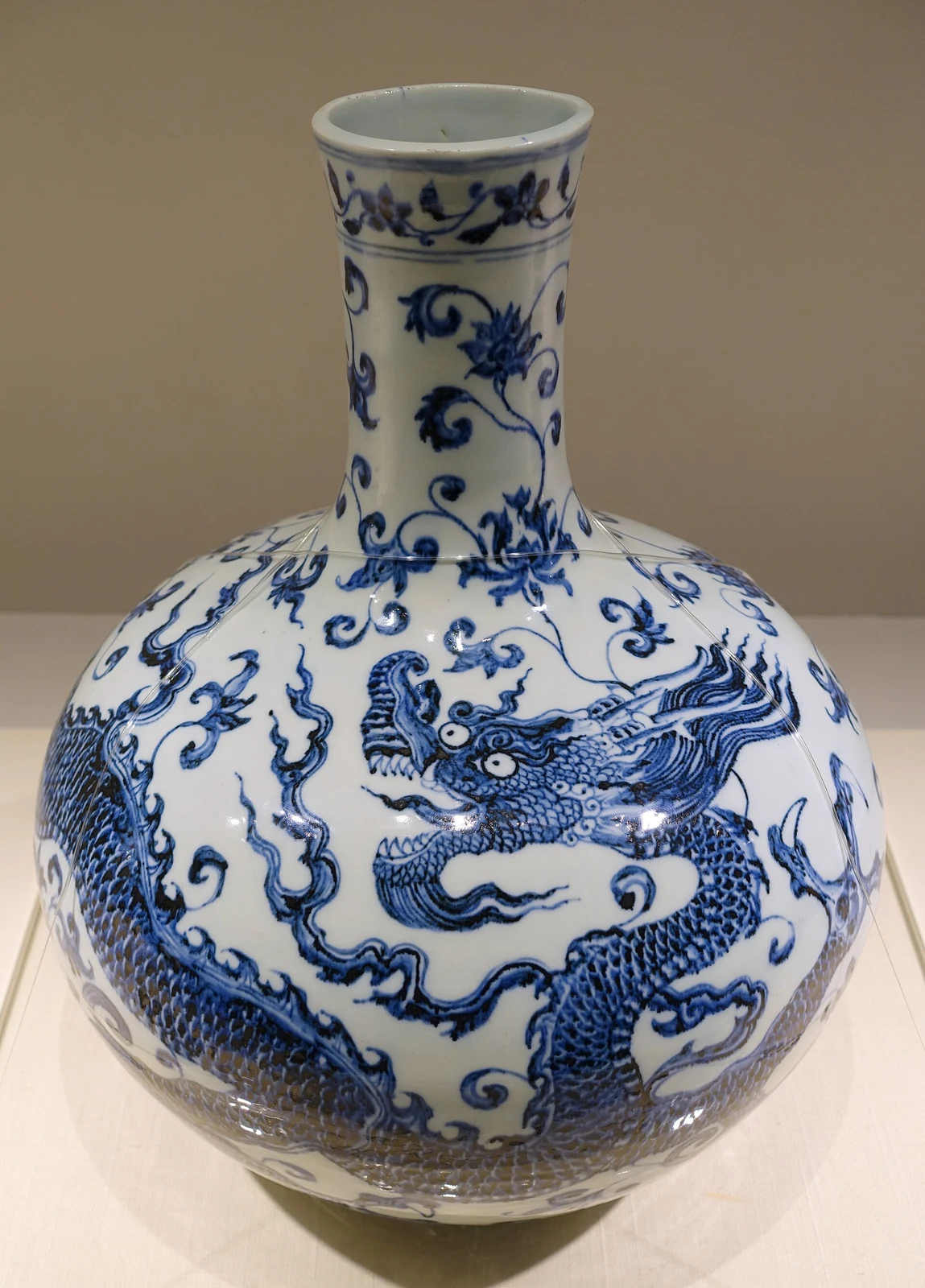
Why the emperor's porcelain was broken
At Jingdezhen's imperial kiln, a rejected vessel could be smashed and buried. Archaeologists and conservators have made those fragments tell another story.
The imperial kiln was established in the Ming and again in the Xuande reign; it burned until 1855, was rebuilt in 1866 and stopped firing in the early Republic. Rescue excavations from 1982 and formal excavation from 2002 to 2004 cleared a late-Ming northern wall and an early-Ming kiln, and turned up more than ten tonnes of shards from the early and middle Ming. The kiln site is a national key protected relic and part of the World Heritage property inscribed in 2026.
At Jingdezhen's imperial kiln, a rejected vessel could be smashed and buried. Archaeologists and conservators have made those fragments tell another story.