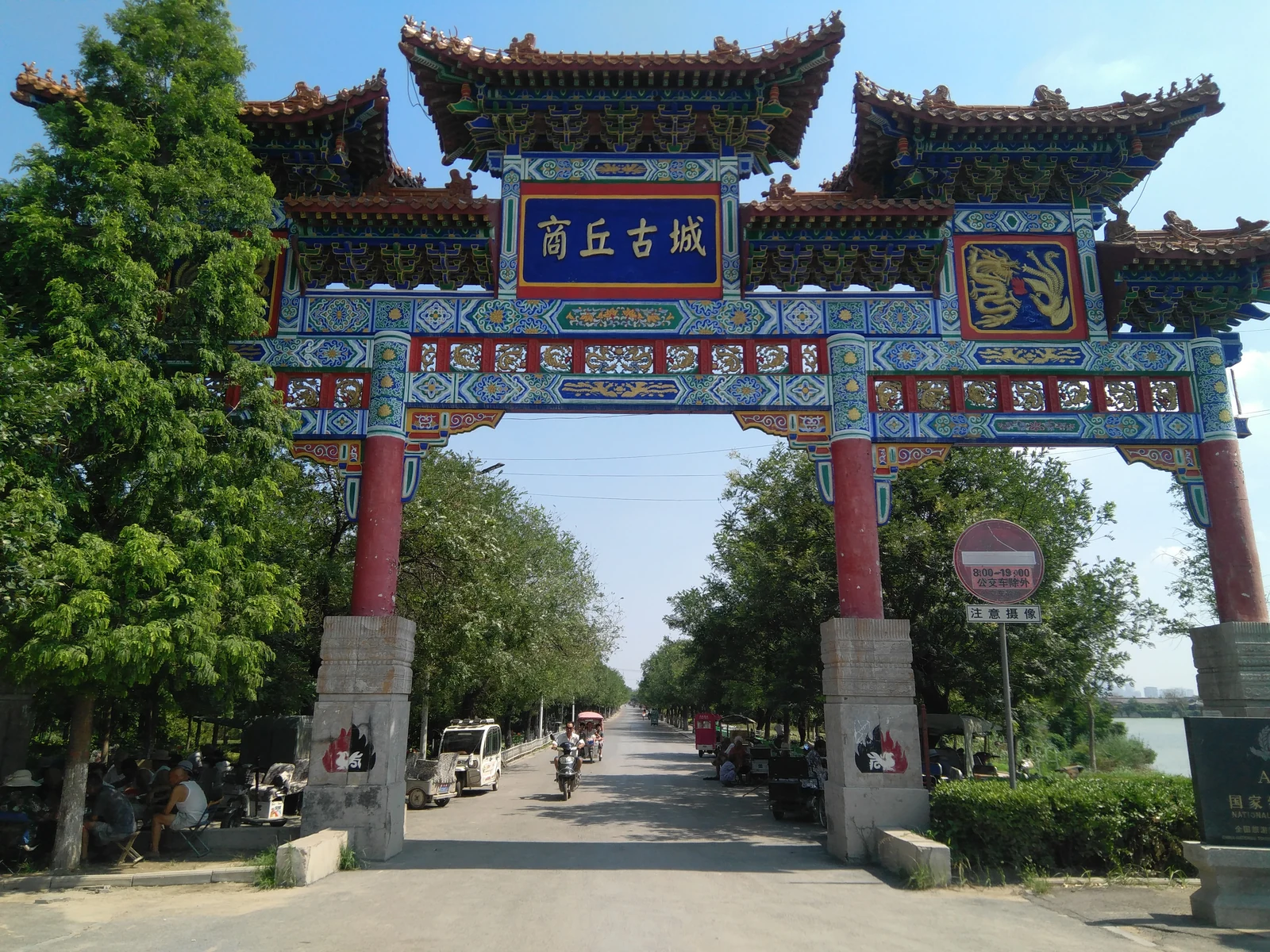
The City Under the City
Reading Shangqiu's history beneath the Ming city wall: earlier urban layers lie under the streets of today's walled town.
Shangqiu stands on the eastern Henan plain, where the province's highway culture meets the old road north to the Yellow River. What most visitors meet first is the walled old town: the surviving Guiding prefectural wall was broken out of the ground in 1503 and finished in 1511, and beneath it lie the ruins of Yuan, Northern Song, Sui-Tang and Qin-Han cities. The city government describes the site as 4,000-plus years of settlement and 1,500-plus years of capital history, and the wall itself has been a nationally protected monument since 1996. Outside the walls, the landscape changes again: at Yongcheng the Han kings of Liang had hills cut open to make rock-cut mausoleums, and at the edge of town the fire ancestor Suiren is remembered at the Suihuang mausoleum.
Reading Shangqiu's history beneath the Ming city wall: earlier urban layers lie under the streets of today's walled town.
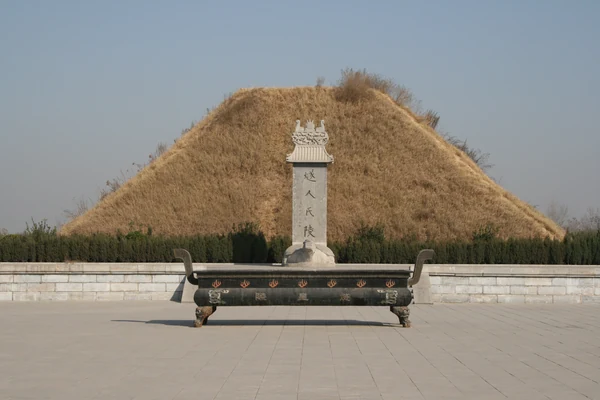
At the Suihuang mausoleum, the founding act of Chinese culture is a piece of wood, a bird and a spark, told as a story rather than a proven date.
Read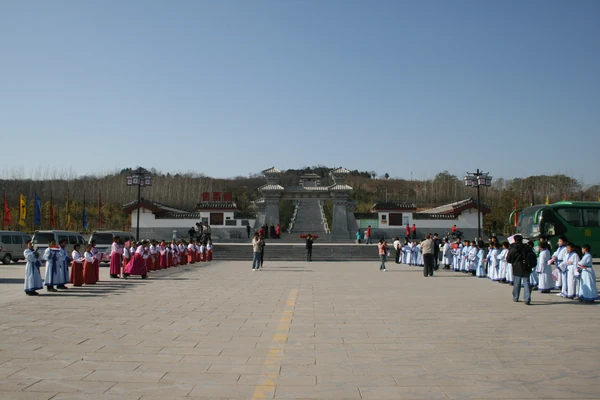
At Mangdangshan the kings of Liang did not build their mausoleums but removed the hills themselves, leaving chambers of rock, a painted mural and a platform on the summit.
ReadThe Ming-era Guiding prefectural town whose walls stand on the buried remains of six earlier capitals.
The landscaped tomb of the fire ancestor Suiren, about 1.5 km southwest of the old city.
Western Han kings of Liang whose rock-cut mausoleums were carved into whole hills above Yongcheng.