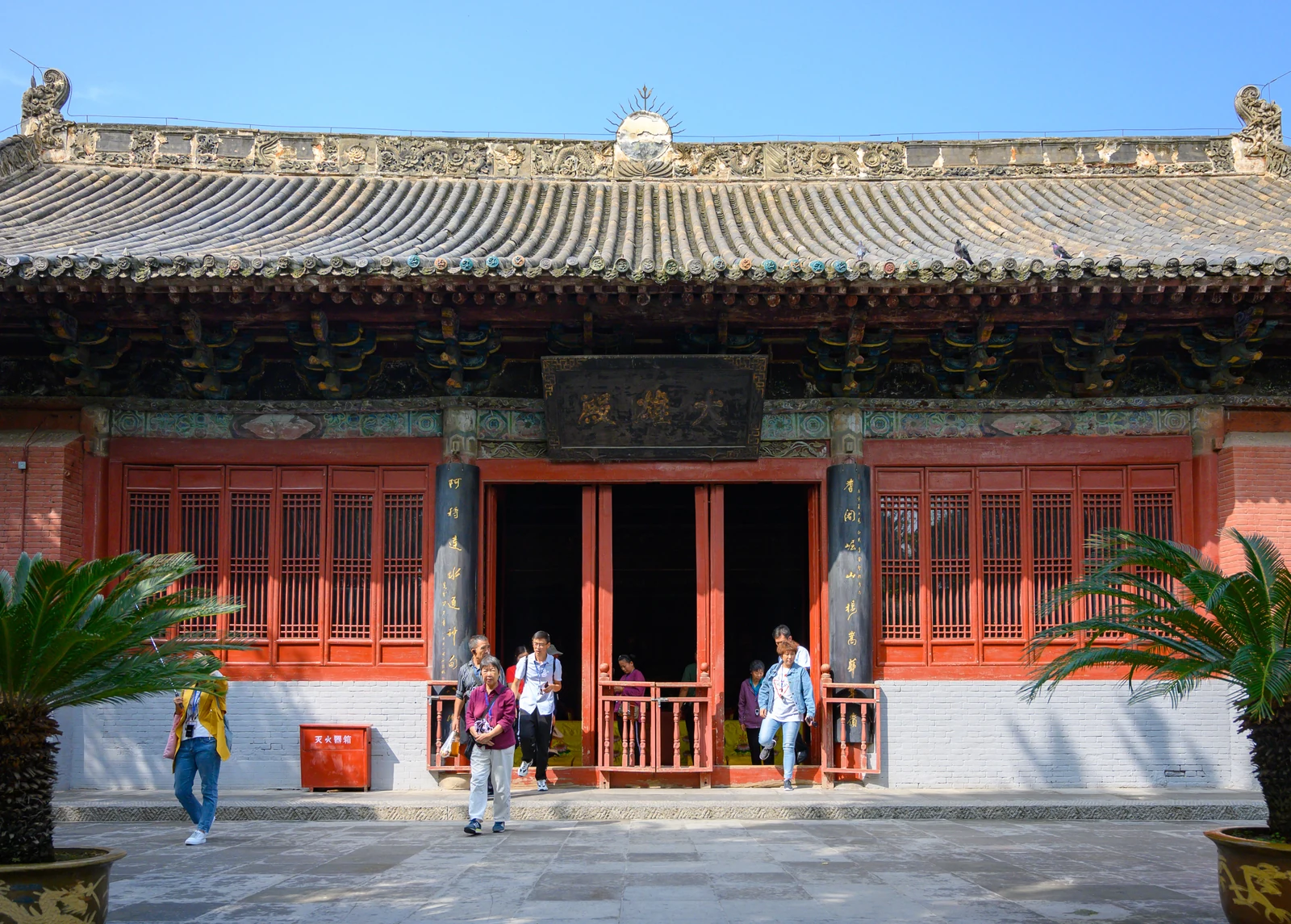
White Horse Temple: Song Stone Horses and Five Halls
A temple dated to 68 CE, two Song-dynasty stone horses, and a 1556 restoration bring different periods of Luoyang’s Buddhist history together.
White Horse Temple is laid out on a strict axis, running north to south across a rectangular enclosure of roughly four hectares. The gate was rebuilt in the Ming and presents three arched openings; outside it, a pair of Song stone horses about the size of real horses stand facing each other, and the lintel stones of some arches still carry the names of craftsmen in Eastern Han lettering. Inside, five main halls line the axis and side wings mirror each other. The temple was founded by imperial order in 68 CE and named for the white horses that carried scriptures back from the West; the monks Kasyapa Matanga and Dharmaratna translated the Sarvastivada Forty-Two Chapter Sutra here, the earliest surviving Chinese Buddhist scripture.
A temple dated to 68 CE, two Song-dynasty stone horses, and a 1556 restoration bring different periods of Luoyang’s Buddhist history together.