Erlitou Site

The site was found in 1959 by the archaeologist Xu Xusheng and has been excavated in campaigns ever since. The Luoyang Municipal Cultural Heritage Bureau dates it to roughly 3,800 to 3,500 years ago and describes a surviving area of about 3,000,000 square metres with cultural layers between one and six metres deep. What has been identified is a settlement with a palace zone, a street grid in the shape of the Chinese character 井, and separate workshops for casting bronze, firing pottery, working jade and working bone. It was listed as a national protected site in 1988 and entered the fourth batch of national archaeological site parks in 2022. The Erlitou Xia Capital Museum opened in 2019. Its galleries are divided into the First Dynasty, the Great Xia Capital and Century of Exploration.

Erlitou Site

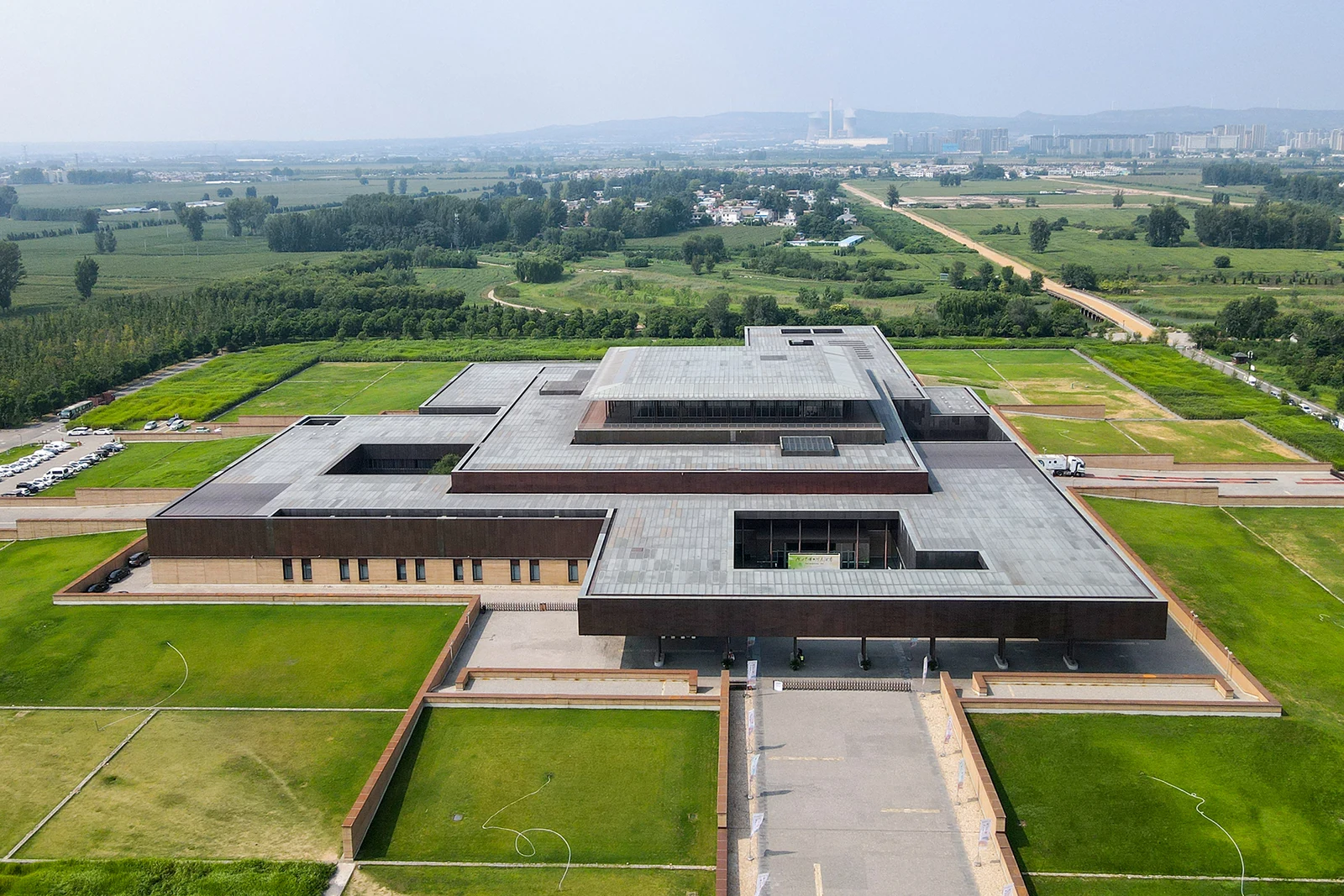
The exterior of the Erlitou Xia Capital Site Museum.

Erlitou: City Roads and the Turquoise Dragon

At Erlitou, a planned road network and a 64.5-centimetre turquoise dragon bring an early urban landscape into view. The site is often linked with a Xia capital, an identification that remains an archaeological interpretation.

Read
Photo credits and rights
  1. The exterior of the Erlitou Xia Capital Site Museum.Windmemories · CC BY-SA 4.0 Photo source ↗ Rights information ↗ Display and thumbnail images resized and converted to WebP.