Before there is a bite, there is a small act of unwrapping. A tie loosens, a leaf opens, and the rice keeps the shape that the wrapping gave it. Zongzi are parcels of glutinous rice, often translated as sticky-rice dumplings. The English word glutinous describes the cooked rice's stickiness. In Jiaxing, savoury versions with pork are a familiar local expression; other fillings and sweet versions belong to the wider family. Expect a substantial, close texture, with the filling enclosed rather than laid on top.
Jiaxing
Rice, folded in a leaf
Jiaxing's zongzi turns a few ordinary materials into a compact lesson in texture, shape and handwork.
Opening the parcel
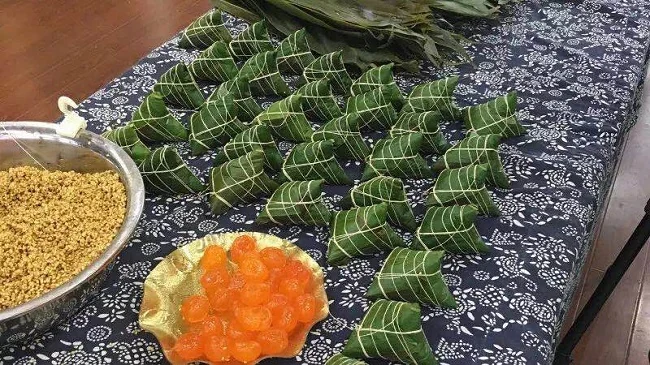
A shape made by hand
A broad leaf has to become a container. It is folded, filled and closed, then secured so that the parcel holds together during cooking. The interest is in this practical sequence: a soft material becomes a temporary mould, and loose grains become something that can be carried in one hand. Different makers use different leaves, fillings and folds. Jiaxing's food culture is large enough to include established producers and modern production methods as well as handwork; a traditional shape can travel through changing ways of making.
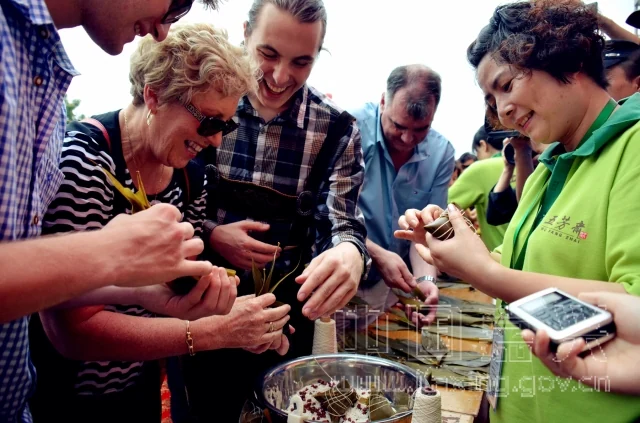
The season, and the city
Across China, zongzi have a close connection with the Dragon Boat Festival, a celebration in the fifth month of the traditional lunar calendar. In Jiaxing their presence also reaches beyond the festival into the city's food identity. The local zongzi museum places them within a longer story of rice-growing and rice foods. That is a useful thread to keep: water helps shape the region, rice becomes a staple, and a pair of hands finds a way to wrap it. The landscape has become a parcel.