From the journal

Mazu of Meizhou: A Sea Goddess and the Communities Who Remember Her

The tradition of Mazu connects a rescue story on Meizhou Island with temple ritual and maritime communities far beyond Putian.

In the same city · Putian ↗
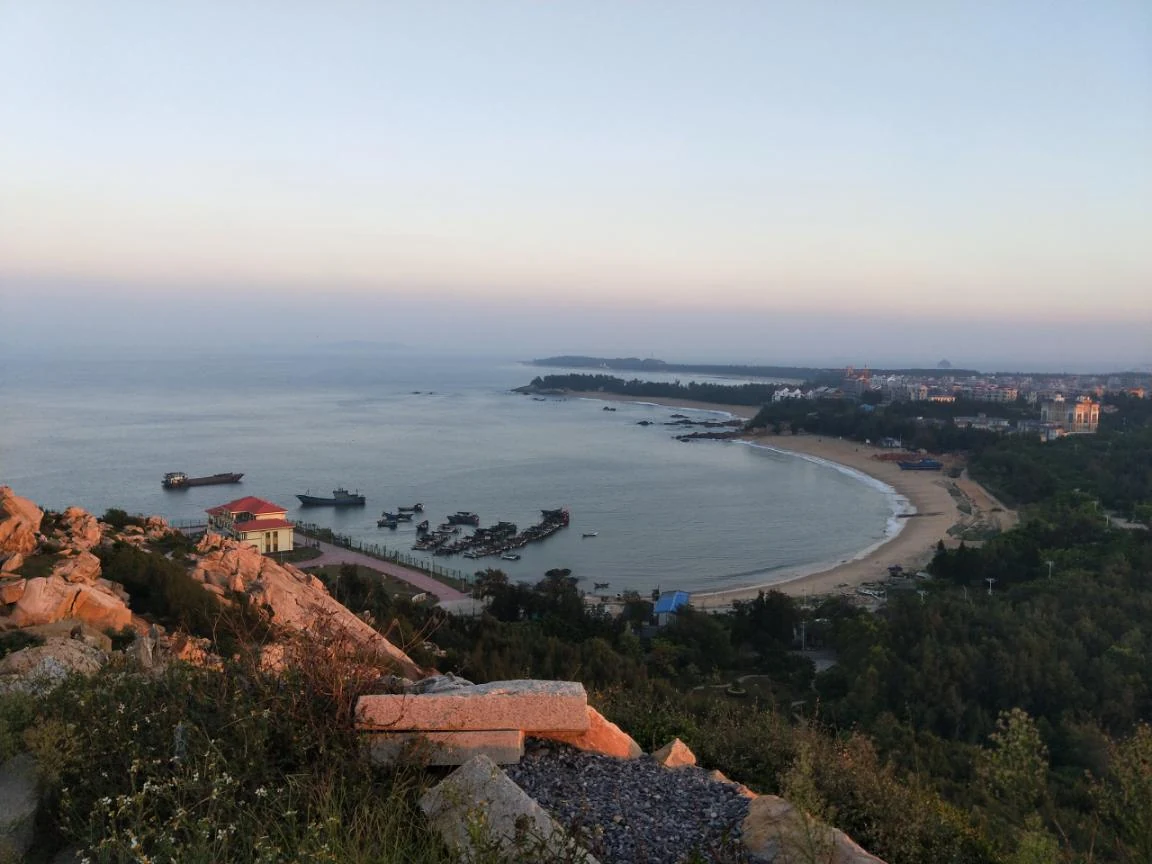
A curved bay with moored boats, coastal buildings and rocks in warm evening light.
The shore at Xiashan village on Meizhou Island.

A rescuer at the centre of the story

In the tradition told on Meizhou Island, Mazu began as a young woman remembered for helping others. Known as Lin Mo or Lin Moniang, she is placed in the tenth century, during the early Song period. Stories describe her care for her neighbours and her efforts to save people in danger at sea. After her death, local people honoured her, and devotion to her grew.

The narrative gives the sea goddess a recognisable human beginning. Before there are ceremonial robes and an elaborate temple, there is someone who responds to another person’s peril. For coastal families, the emotional logic is immediate. A voyage leaves those ashore waiting, while the people aboard must live with weather and water that cannot be fully controlled.

From maritime protection to a wider concern

Mazu’s devotion developed through both popular practice and official recognition. Titles such as Tianhou, Heavenly Empress, and Tian Shang Sheng Mu, Holy Mother of Heaven, appear in the wider tradition. The affectionate name Mazu remains especially familiar.

Although maritime protection gives the tradition its strongest geographical setting, worship also addresses family well-being and other everyday concerns. A prayer need not be about a ship. This breadth helps explain why the goddess remains significant in communities whose members no longer depend directly on fishing or sea trade. The bond can be maintained through family memory, a neighbourhood temple or a festival. What began as a story located beside the sea can speak to uncertainty in a much wider range of lives.

Care expressed through an ordered rite

At Meizhou’s ancestral temple, a major celebration marks Mazu’s birthday on the twenty-third day of the third lunar month. The formal rite brings together music, offerings, a written invocation and sequences of bows. Different roles must be learned and coordinated for the ceremony to proceed.

These details give devotion a public form. Sound announces transitions; offerings occupy a prepared place; gestures allow many people to act together. The ceremony is not simply decoration placed around a statue. It turns shared regard into an event with order, memory and collective participation. The lunar date also belongs to a different calendar from a fixed day in the Gregorian year, so the annual celebration moves within the calendar familiar to many international readers.

A maritime network with local homes

Migration and commerce carried Mazu devotion to other coastal places, including Taiwan and communities in Southeast Asia. A temple could become a familiar point in a new setting, linking a local congregation with a remembered place of origin. Meizhou retained an ancestral role within that network, while individual communities developed their own histories and forms of celebration.

UNESCO inscribed Mazu belief and customs as intangible cultural heritage in 2009. The subject is this living body of stories, practices and relationships. The island matters as a centre of devotion, but the inheritance also exists wherever people sustain those connections. Mazu’s maritime world is therefore larger than a map of voyages. It includes the people who depart, the people who wait and the communities that continue to remember a protector long after the original journey has ended.

Continue exploring · Meizhou Island ↗
Photo credits and rights
  1. The shore at Xiashan village on Meizhou Island.Fujian Provincial Department of Culture and Tourism / Department of Housing and Urban-Rural Development · unknown Photo source ↗ Original aspect ratio retained. Display copies resized only when needed; no enlargement, crop or retouching.