From the journal

Shangxiahang: Fuzhou’s River Trade Behind the Guild Hall Door

Porcelain, merchant associations and a house rebuilt above itself reveal the commercial world behind Fuzhou’s Shangxiahang streets.

In the same city · Fuzhou ↗

The river behind the shopfront

A cup of tea beside the Sanjie River belongs to the present-day pleasure of Shangxiahang. The neighbourhood’s older life involved moving goods: tea, porcelain, textiles, medicines and dried provisions passed through this commercial part of Fuzhou. The Min River connected a coastal port with the province’s interior, making exchange part of the district’s reason for being.

Commerce leaves a different architectural record from an official’s residence. It needs places to store, meet, negotiate and recognise people who can be trusted. The guild hall is one answer. Known in Chinese as a huiguan, it could give merchants from a shared home region a collective address in another city. Behind a handsome entrance stood a practical network of relationships.
Two counties in a single name

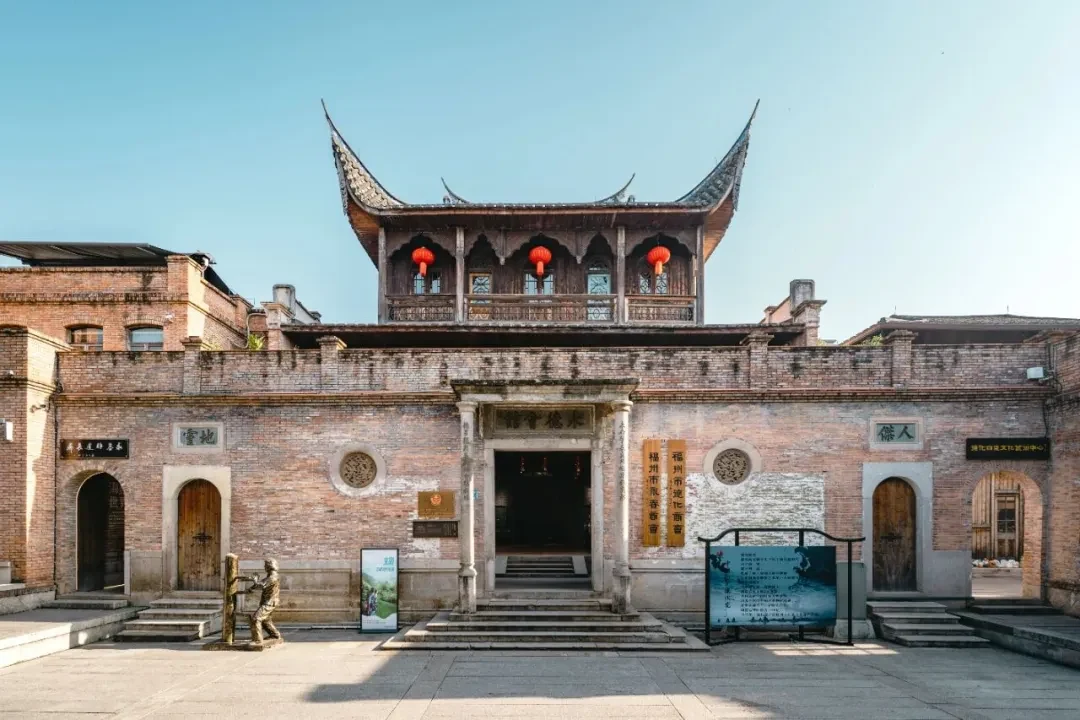
Yongde Guild Hall takes one character each from Yongchun and Dehua, two places farther south in Fujian. Merchants from those counties founded it together. Dehua’s porcelain helps explain the setting: the local place-name Gaichengli recalls a ceramic market, and the hall stood within that trading world.

The building makes an unusually clear visual argument about change. Its lower storeys use Western-influenced elements, including stone columns at the entrance. During rebuilding in 1931, the traditional hall from the earlier guild building was reassembled above them. The upper roof therefore carries one architectural language while the floors below speak another. The combination is more informative than simply calling the building ‘East meets West’: the merchant community retained an old ceremonial space while changing the structure that supported it.

The brick front of Yongde Guild Hall, with paired entrance columns and a traditional roof above.
Yongde Guild Hall in Shangxiahang combines a columned entrance with an upper timber hall and upturned roof.

Business had a communal interior

A guild hall helped newcomers find people with shared speech and local connections. Institutional research on Shangxiahang describes halls used for discussion and the exchange of commercial information. Religion could occupy the same premises. Nanjun Guild Hall, for example, incorporated worship of Mazu, the sea goddess associated with safe voyages.

These functions were not strange neighbours. A merchant’s prosperity depended on things that were difficult to control: water, weather, distant partners and the safe arrival of goods. A shared hall could accommodate practical cooperation and the expression of shared hopes. Its architecture made a group visible within the city. A theatre, worship space or gathering hall also required money, maintenance and agreement, turning commercial success into a continuing collective responsibility.

A different kind of customer

New businesses now occupy parts of this inherited landscape. Caifeng Villa, built in 1920 with funding from overseas Chinese businessman Yang Hongbin, has been adapted for a café, restaurant and bookshop. Tea shops and other leisure venues along the river draw people who come to stay for an afternoon rather than dispatch a shipment.

The change is substantial, even when an old window or tiled floor survives. Earlier trade made the district a hinge between production and distribution; its new economy often sells the experience of spending time in the district itself. Both depend on the appeal of place, but in different ways. Yongde’s layered building and the reused villa keep that distinction visible. Shangxiahang’s strongest story is not that time stopped by the river. It is that commerce repeatedly found new forms in the same streets.

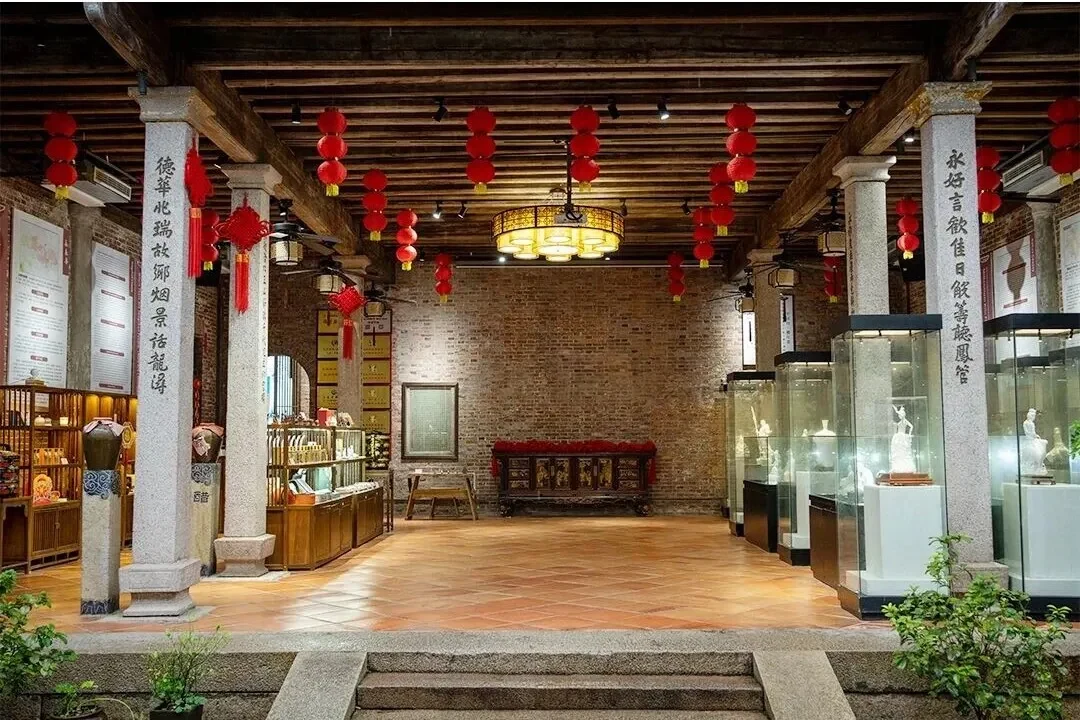
Stone columns and timber beams frame an exhibition hall with porcelain display cases.
Yongde Guild Hall now presents local history and products within its columned interior.
Continue exploring · Shangxiahang ↗
Photo credits and rights
  1. Yongde Guild Hall in Shangxiahang combines a columned entrance with an upper timber hall and upturned roof.福州名城保护开发有限公司;走进福州古厝专题(与福州晚报合作) · Rights status unspecified Photo source ↗ Original aspect ratio retained. Display copies resized only when needed; no enlargement, crop or retouching.
  2. Yongde Guild Hall now presents local history and products within its columned interior.福州名城保护开发有限公司;走进福州古厝专题(与福州晚报合作) · Rights status unspecified Photo source ↗ Original aspect ratio retained. Display copies resized only when needed; no enlargement, crop or retouching.