From the journal

Yantaishan: A Fuzhou Hillside with Many Lives

Stone churches, consular history and reused homes reveal how Fuzhou’s Yantaishan changed from a treaty-port neighbourhood into a contemporary city quarter.

In the same city · Fuzhou ↗

A church with a local name

On Lequn Road, a stone church gives Yantaishan one of its clearest architectural encounters. Pointed arches and stone walls identify a building tradition different from the white-walled courtyard houses elsewhere in Fuzhou. Its everyday name, Shicuo Church, is thoroughly local: cuo means a house in local speech, so Shicuo is simply the stone house.

The building’s making was international in a concrete sense. Foreign residents raised funds, an engineer from Hong Kong supplied the design, and local craftspeople carried out the construction. That chain is more revealing than a label such as ‘European architecture’. A design still had to become masonry on this particular hillside, through the knowledge and labour of people who worked here.
The hill and the opened port

Yantaishan stands in Cangshan, south of the Min River. Fuzhou became one of the treaty ports designated in 1842, after the First Opium War. A British consulate followed on the hill in 1845. Foreign commercial and diplomatic activity subsequently brought new institutions into the neighbourhood.

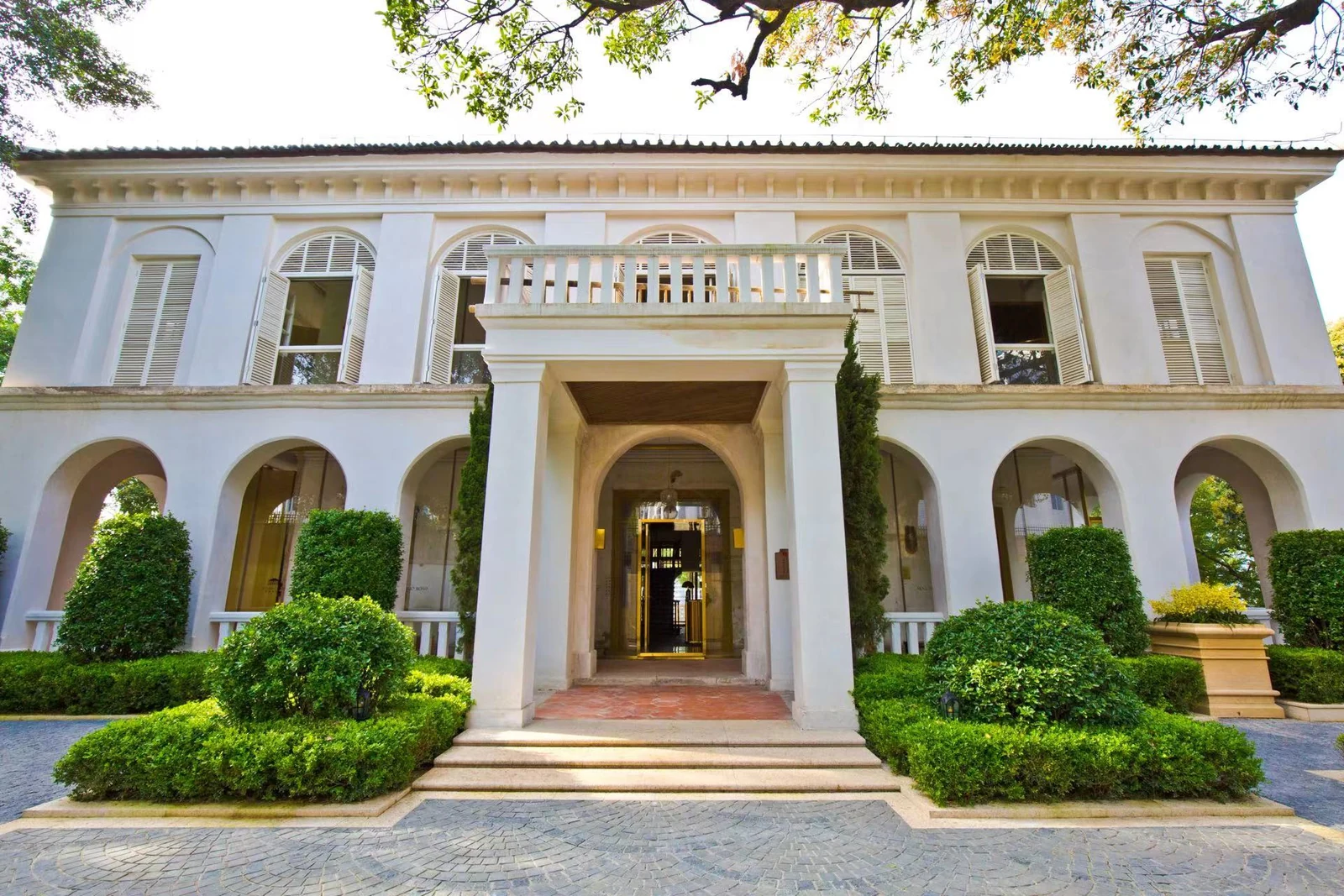
The story cannot be understood from façades alone. A consulate, a trading company, a school and a hospital performed different tasks, even when all appear in a heritage list of foreign-associated buildings. They linked the port to systems of administration, education, commerce and care. The circumstances of the treaty-port system were unequal, while daily life inside it involved many kinds of contact. Keeping both facts in view gives the architecture a fuller history than a parade of national styles.

The years between then and now

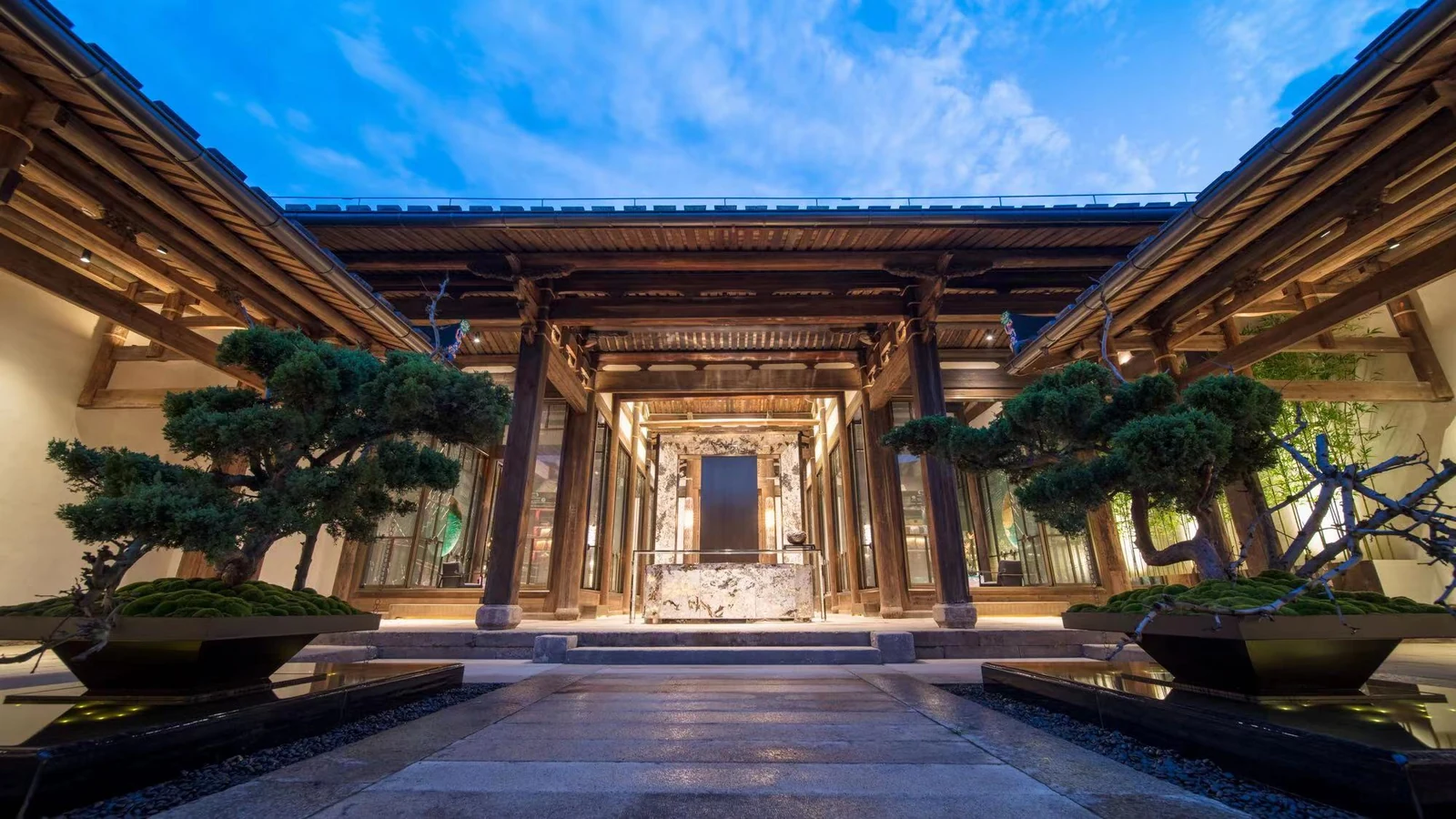
The end of the old port institutions did not leave an empty architectural museum. After 1949, many buildings became public housing and were divided among residents. Over time, additions and inadequate services created difficult living conditions. Later renewal involved repair, infrastructure work and the relocation of households, alongside the introduction of new public and commercial uses.

This middle period matters. It explains why conservation is more complicated than removing a recent sign to reveal an elegant old house. A building might preserve evidence of its original function, decades of domestic adaptation and a newly restored surface at the same time. Residents made lives in spaces originally designed for other purposes. Their chapter belongs to the neighbourhood even when a restored exterior now directs attention further back.

A timber-framed courtyard with potted trees and illuminated interiors at dusk.
A renewed historic courtyard in Fuzhou’s Yantai Hill area.

The scale of a neighbourhood

In 2023, Xinhua profiled Zou Yuansheng, who had opened Light and Dust Coffee in an old wooden house after living overseas. Fuzhou-dialect phrases and a magazine about local traditions connected the business to the city around it. A new use could carry local references as well as coffee. The hillside streets connect such individual ventures at a walking pace: a staircase changes the angle of a doorway, and a turn brings one building into the company of another.

A church wall can be appreciated as workmanship without assuming that every interior is accessible. A former institution can be read as part of port history without requiring the whole neighbourhood to return to that period. Yantaishan is most intelligible as a place with successive lives. Its local name for a foreign-associated church is a good beginning: an unfamiliar form became a recognisable part of Fuzhou, and the city kept finding ways to live around it.

A pale two-story building has arched windows, open shutters and a central entrance balcony.
An arcaded historic building in Fuzhou’s Yantai Hill area.
Continue exploring · Yantaishan ↗
Photo credits and rights
  1. A renewed historic courtyard in Fuzhou’s Yantai Hill area.福州市历史文化名城管委会;供稿福州市仓山区烟台山管理委员会 · Rights status unspecified Photo source ↗ Original aspect ratio retained. Display copies resized only when needed; no enlargement, crop or retouching.
  2. An arcaded historic building in Fuzhou’s Yantai Hill area.福州市历史文化名城管委会;供稿福州市仓山区烟台山管理委员会 · Rights status unspecified Photo source ↗ Original aspect ratio retained. Display copies resized only when needed; no enlargement, crop or retouching.