From the journal

Meizhou Pilgrimage: The Work of Returning to an Ancestral Temple

Behind a procession on Meizhou Island are temple relationships, practiced roles, shared food and the organisation that makes a pilgrimage possible.

In the same city · Putian ↗

A return can include a statue

Pilgrimage to Meizhou is often described through the language of returning home. The expression can apply to a group of people and to the Mazu image they bring with them. Branch temples maintain devotional relationships with temples regarded as their source, and a journey of incense offering renews those connections.

This is a form of ritual kinship. It does not mean that every Mazu temple belongs to one centrally managed organisation. Temples have their own communities, histories and relationships. For a visiting group, the ancestral connection provides a reason to make the journey together. The destination is important, but so is the collective act of bringing the relationship into public view.
The people behind the procession

A ceremonial arrival requires more than a route and a banner. People must coordinate the group, care for the image, prepare offerings and know what happens next. Meizhou’s safeguarding account describes dedicated ritual, chanting and arts teams involved in maintaining and presenting the tradition.

The skill can be easy to overlook because the completed event is so visually strong. Yet a shared sequence has to be rehearsed and passed on. Someone must know a musical cue, the handling of an object or the correct point for a gesture. A procession is therefore also a temporary working community. Its movement depends on cooperation among people whose responsibilities are not all equally visible to a spectator.

The ancestral temple is not the whole island

Meizhou’s religious life extends beyond its best-known temple. A 2019 safeguarding report describes Lantern Festival activities organised by fourteen local temples during the first lunar month. This local calendar gives the island another rhythm beside the large ancestral-temple celebrations that attract distant groups.

The distinction matters when imagining everyday life. An inhabited island is not waiting in ceremonial dress for a visitor’s arrival. Households, local temple communities and incoming pilgrims participate at different times and in different ways. Some visitors come to worship, others to see the buildings or coast. The public importance of pilgrimage does not make every person on the island a pilgrim, and a quiet day remains part of the place’s living character.

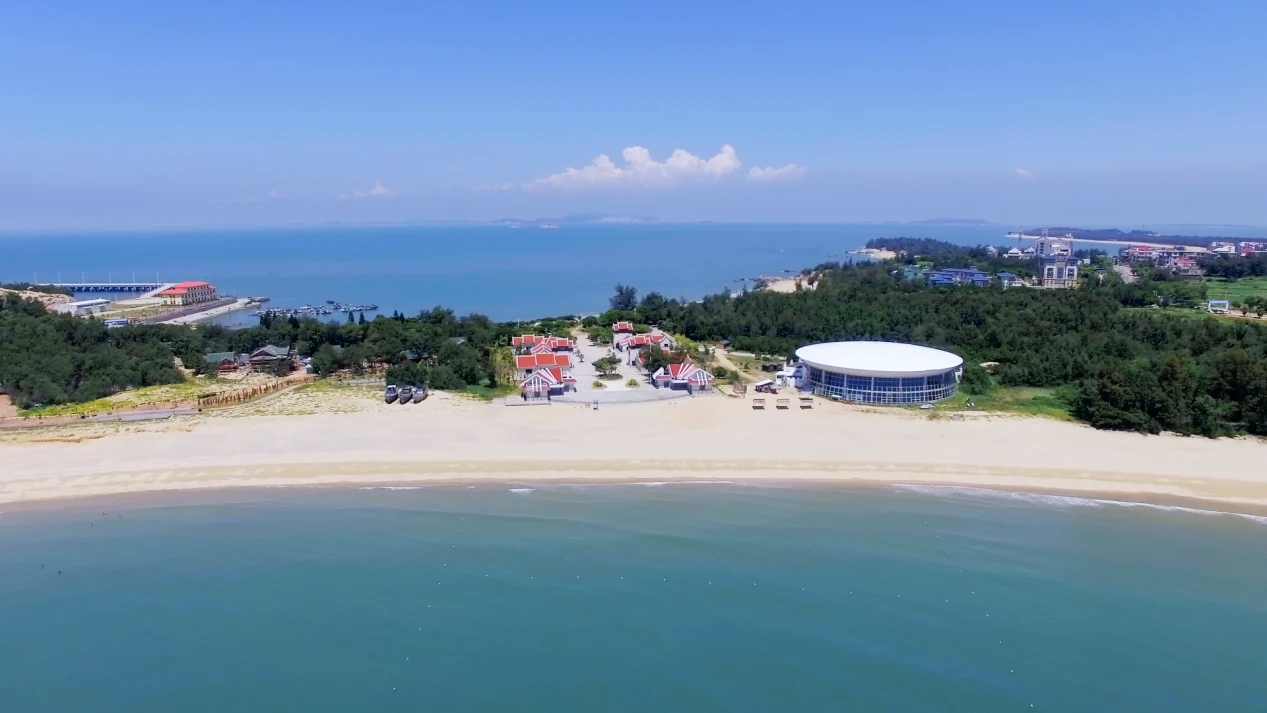
An aerial view of a sandy beach, blue water and red-roofed visitor buildings among trees.
Beach and visitor buildings at Xiashan, Meizhou Island.
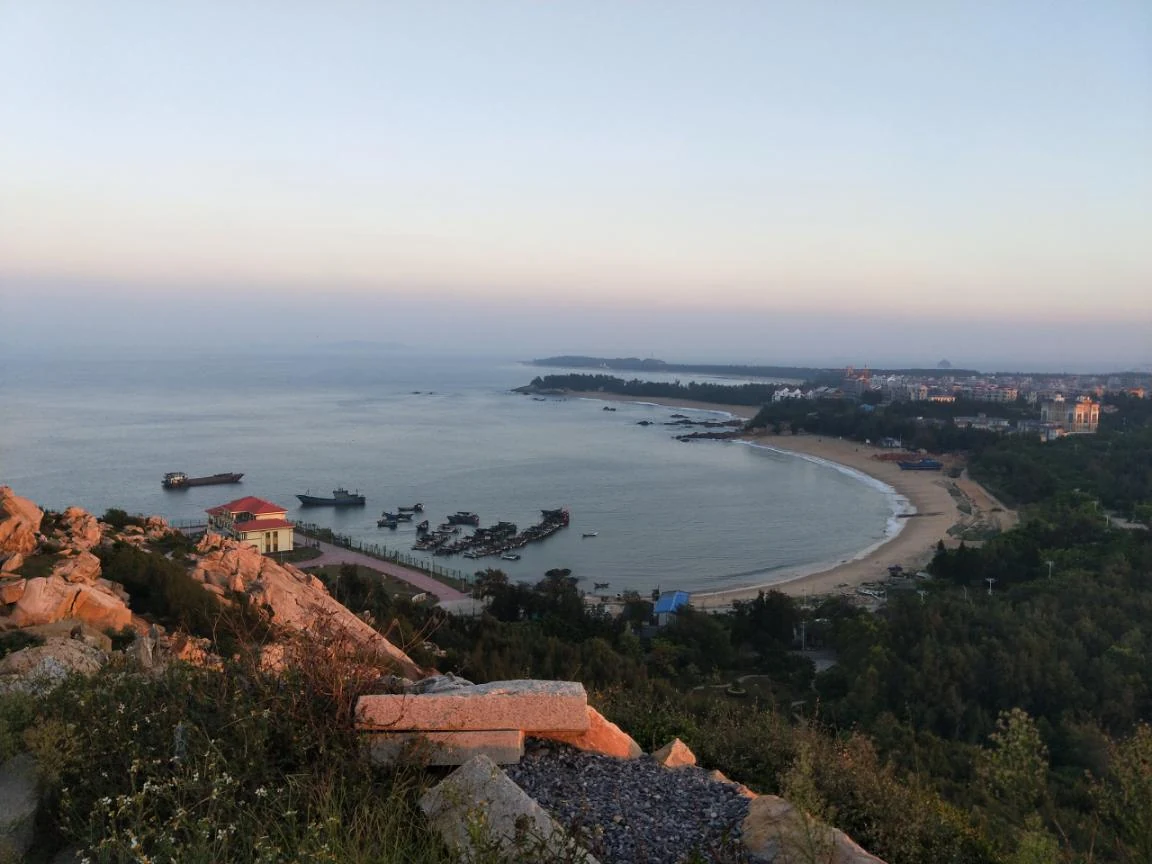
A curved sandy bay with moored boats, coastal buildings and warm light on foreground rocks.
The shore at Xiashan village, southern Meizhou Island.

Food, records and journeys outward

Food preparation and material skills also sustain the tradition. Heritage research records offerings, fish rice, peace cakes and peace noodles among Meizhou’s associated cultural forms. Safeguarding work has included documenting older fishing equipment and clothing, as well as supporting food-making skills. The inheritance is carried in objects and actions as well as in a large ceremony.

Movement is not only toward the island. Organised journeys have taken the Meizhou Mazu image to other communities, including Malaysia and Singapore in 2017. An ancestral centre remains important partly because relationships continue to be renewed in both directions. The most useful way to understand a pilgrimage scene is therefore to imagine the work around it: the preparation before departure, the practiced roles during worship and the return to a local community afterward. A few visible hours belong to a much longer relationship.

Continue exploring · Meizhou Island ↗
Photo credits and rights
  1. Beach and visitor buildings at Xiashan, Meizhou Island.福建省文化和旅游厅 / 福建省住房和城乡建设厅 · Rights status unspecified Photo source ↗ Original aspect ratio retained. Display copies resized only when needed; no enlargement, crop or retouching.
  2. The shore at Xiashan village, southern Meizhou Island.福建省文化和旅游厅 / 福建省住房和城乡建设厅 · Rights status unspecified Photo source ↗ Original aspect ratio retained. Display copies resized only when needed; no enlargement, crop or retouching.