A pelt on a wall
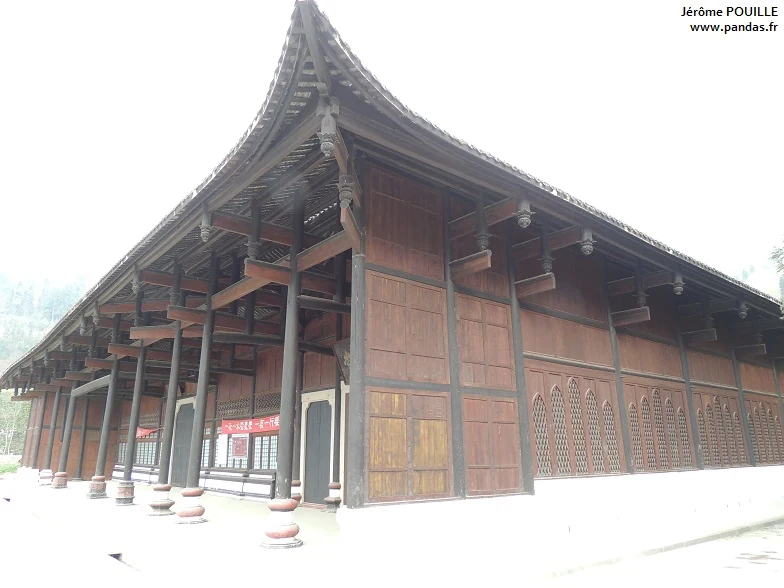
Armand David reached Dengchigou in 1869. In the home of a family named Li he saw a black-and-white skin and thought it might belong to an unknown species. Local people already knew the animal; David's contribution was to send a specimen to Paris, where it was described and named. The giant panda entered Western science through a pelt and a letter, not through a photograph. The valley remembers the encounter with a small church, a discovery centre and a story that is told to every busload of visitors.
A valley, not a zoo
Dengchigou sits in the transition zone between the Sichuan basin and the highlands. The slopes are wooded, the water is fast and the village is small. The old Catholic mission still stands, a reminder that the discovery was part of a wider missionary and scientific network. The panda is not the only animal here: the valley is part of a corridor that connects populations across the Qionglai and Min mountains.
A park larger than the county
More than 81 percent of Baoxing's land, about 2,545 square kilometres, lies inside the Giant Panda National Park. The county records 1,837 species of higher plants and 1,083 animals, including the green-tailed monal, a bird that has been bred in captivity here. The park is not a fence around a single species; it protects a habitat that also holds golden monkeys, dove trees and other rare plants. Tourism now funds some of that protection, and the tension between access and conservation is part of the story.