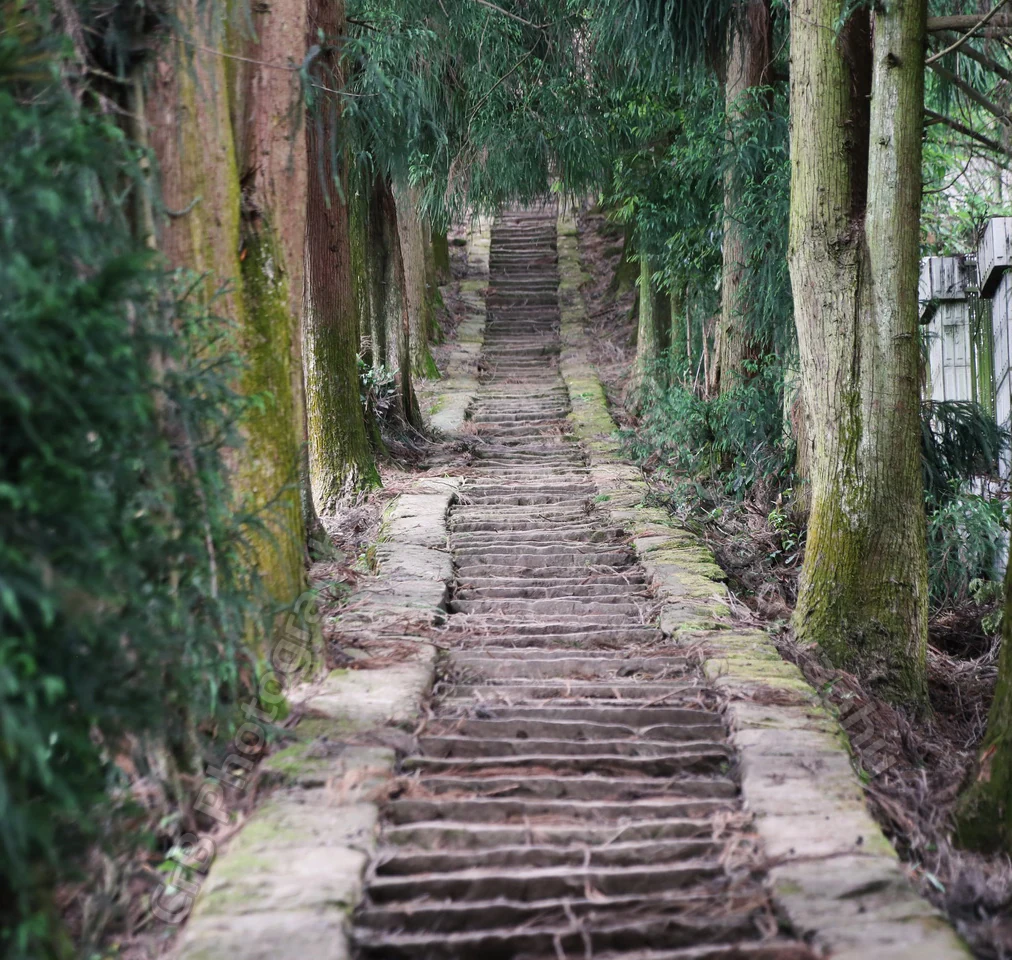
Seven trees and a name
Mengding has five peaks, and the highest is Shangqing. Tradition says a monk named Wu Lizhen brought tea seeds and planted seven trees there. The story is repeated by the Ministry of Agriculture's own tea feature, but it is introduced as tradition, not as a dated record. What is documented is the mountain's long association with tea: the five peaks, the named spring, the idea that this was the first place in Sichuan where tea was cultivated deliberately.
From seven trees to a tribute garden
In the Song period the seven trees on Shangqing were treated as extraordinary, and their tea was sent to the court. A stone enclosure was built around them and named the Imperial Tea Garden. The phrase matters because it separates two things: a living plant and a political claim. The garden is a small plot, not a large estate. Its importance came from the story of the seven trees and from the court's willingness to accept the tea as tribute.
The steps are still a route
The tea horse road crossed this mountain, and a flight of stone steps still climbs through the tea terraces. Pickers work the bushes in spring, taking the young shoots that become Mengding ganlu. The tea is green, tightly rolled and lightly fragrant. The mountain is not a museum of tea: it is a working landscape with paths, sheds and wet stone. The best visit is a walk rather than a tasting, because the slope explains why the tea is picked by hand.