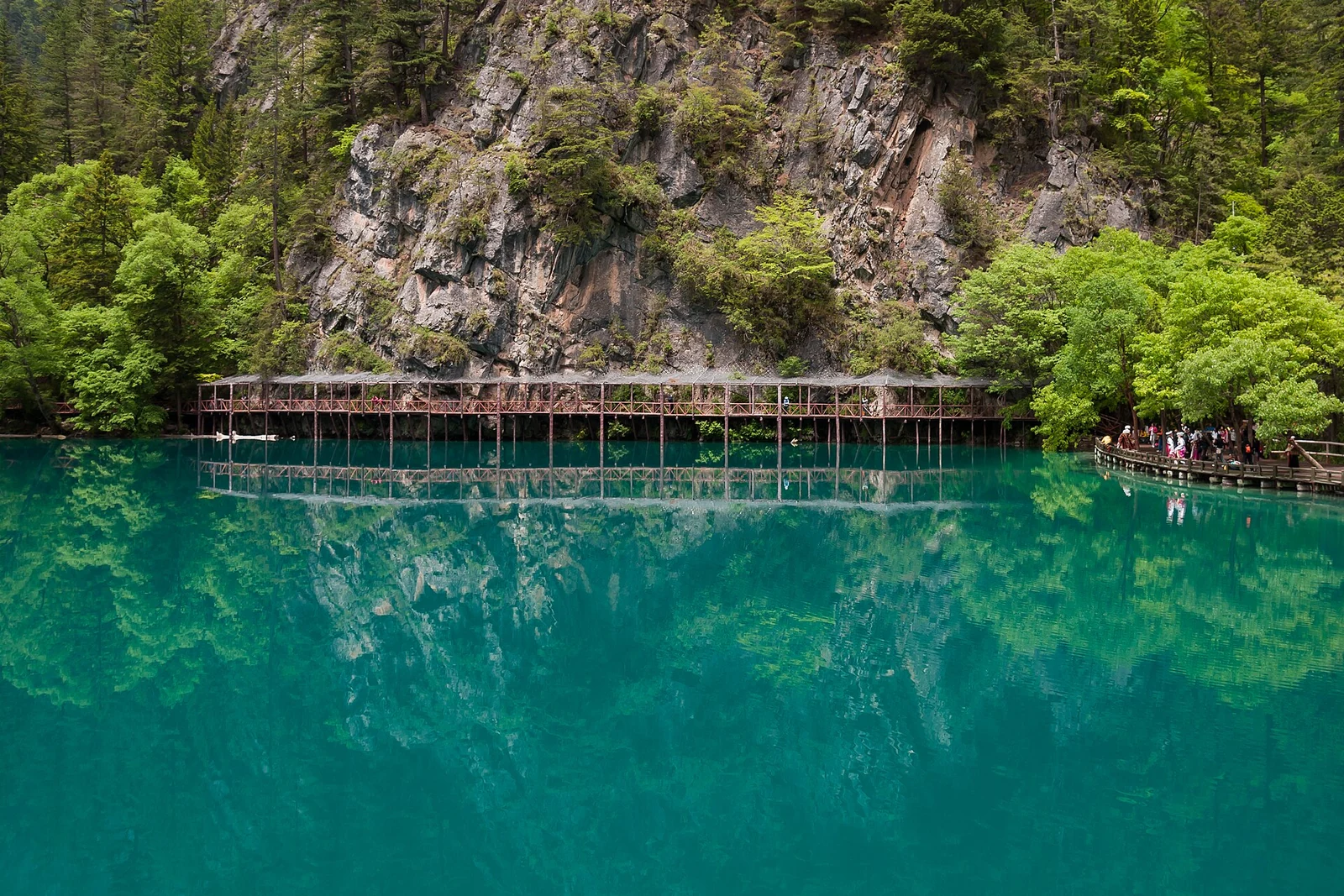
A valley in three branches
Jiuzhaigou runs north from the Min mountains, with two main side valleys meeting in a Y. The scenic area covers about 720 square kilometres. The mouth of the valley is around 2,000 metres above sea level; the ridges reach 4,000 and the southern edge 4,500. The main valley is more than thirty kilometres long. The name comes from nine Tibetan villages that stood in the valley, and three of them, Shuzheng, Heye and Zechawa, are still inside the park.
Calcium, wood and light
The lakes are not simply deep water in rock basins. Travertine, calcium carbonate deposited by the streams, builds low barriers across the valley floor. Water flows over them, drops to the next lake and deposits more calcium. Fallen trees sink and are coated, forming dams and platforms under the surface. The colour changes with depth, mineral content and the angle of light. The park calls its six wonders lakes, waterfalls, coloured forest, snow peaks, Tibetan culture and blue ice; the first four are all versions of the same water.
Three villages remain
Jiuzhaigou was inscribed on the World Heritage List in December 1992. Tourism is now the valley's main economy, and the relationship between the park and the villages is carefully managed: residents still use the land, but the visitor route is fixed. The remaining villages are not exhibits. People live in them, and the fields and roofs are part of the landscape. A visit that only looks at the water misses the reason the valley has a name and a working calendar.