Ming Xiaoling and the Sun Yat-sen Mausoleum occupy the wooded landscape of Zhongshan, also called Purple Mountain. Their proximity invites a comparison more revealing than a list of architectural differences. Both use a mountain setting to give political memory weight, and both lead the visitor through deliberately ordered space. Yet they commemorate radically different relationships to government: an emperor who founded a dynasty and a revolutionary associated with the creation of a republic. The mountain is the common ground; the meaning of authority changes upon it.
Nanjing
One Mountain, Two Visions of Authority
Compare Ming Xiaoling and the Sun Yat-sen Mausoleum through their approaches, materials and different ideas of political remembrance.
In the same city · Nanjing ↗Begin with the shared mountain
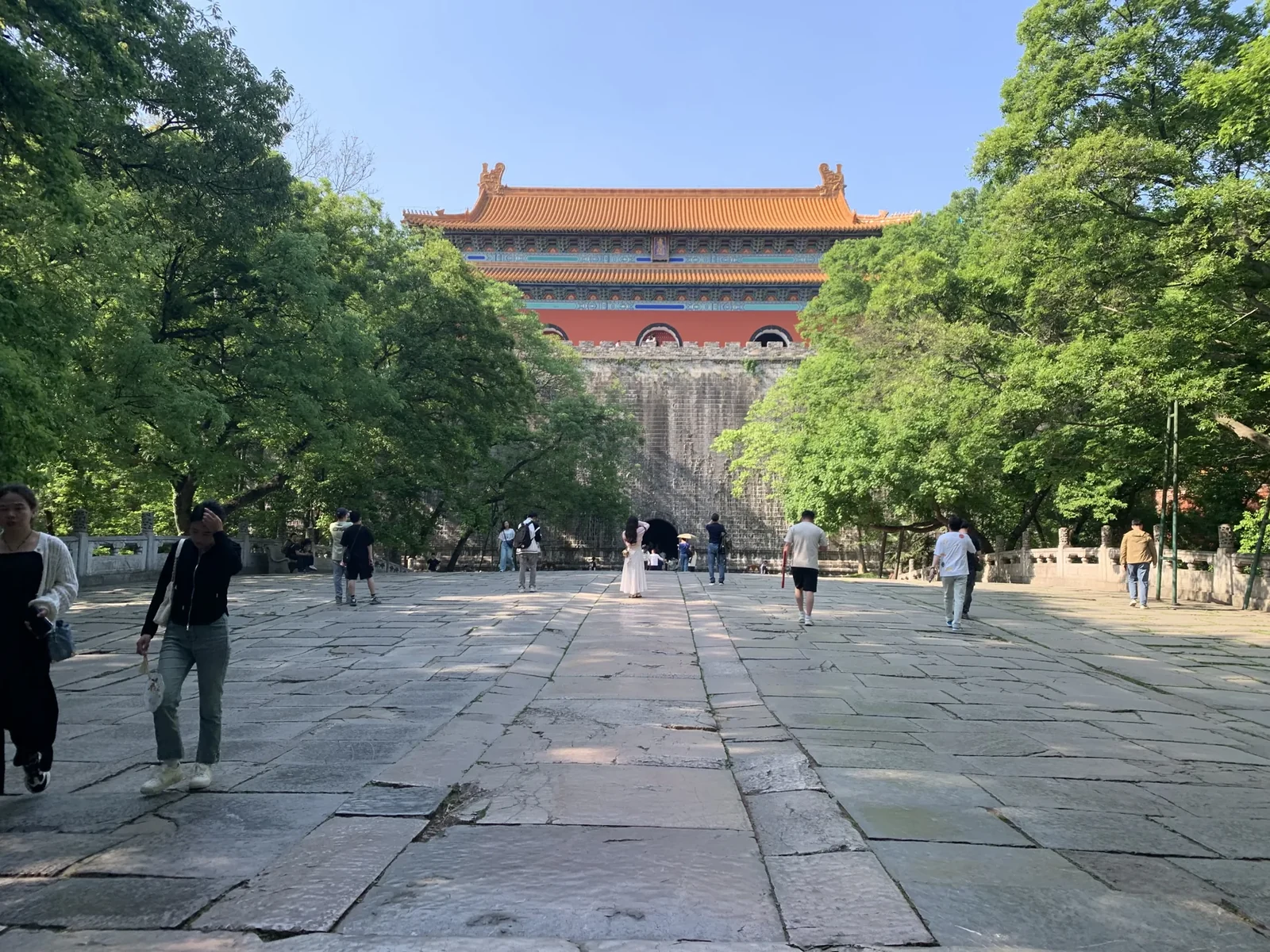
Xiaoling: a court extended beyond death
Xiaoling is the burial place of Zhu Yuanzhang and Empress Ma. UNESCO identifies it as a model for later Ming and Qing imperial mausoleums, combining landscape, ceremonial architecture and hierarchy. The sacred approach belongs to that structure of authority. Stone animals and figures are more than photogenic objects beside a path: their repeated positions establish a ceremonial company around the dead. Notice intervals, facing directions and the change from one group to another. This is an ordered setting in which the ruler’s importance continues after death. The landscape participates in the statement rather than simply providing a quiet background.
Read fragments as well as monuments
At Xiaoling, surviving stonework and foundations deserve as much attention as the most complete-looking structures. An empty base can tell you that the place once contained more architecture than the present view suggests. Look for the distinction between an original remnant, a surviving architectural volume and later presentation. The mausoleum administration also records names, offices and places on masonry near the sacrificial-hall foundations. These marks belong to an accountability system familiar from Nanjing’s wall. An imperial burial landscape, seemingly dedicated to one ruler, can therefore preserve evidence of the workers and officials responsible for making it. Monumentality and labour occupy the same surface.
Sun Yat-sen: an axial ascent
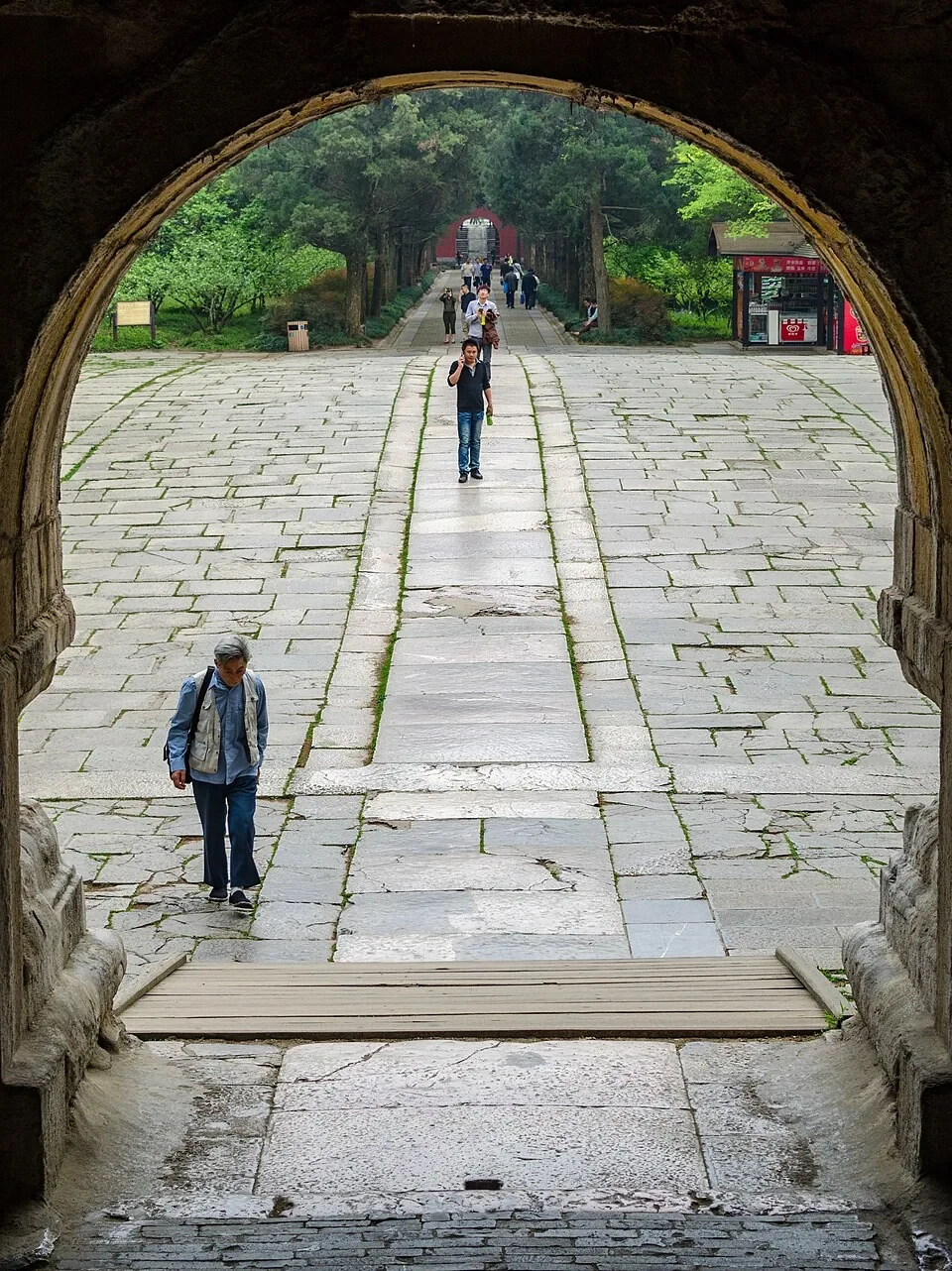
The Sun Yat-sen Mausoleum was designed by Lü Yanzhi, with construction beginning in 1926 and the main structures completed in 1929. Here the central approach and rising terraces give the memorial a strongly directed movement. White granite, reinforced concrete and blue glazed tiles bring traditional architectural forms into a modern building project. Rather than reducing the design to a single symbolic explanation, notice what its arrangement does: it gathers attention, raises the body through a sequence of levels and fixes the hall as the destination. Against Xiaoling’s successive encounters with stone figures and historical fragments, the ascent makes a different kind of public commemorative statement.
Public monument, private mourning
A smaller building complicates the grand comparison. Yongmu House was constructed in 1928–1929 as a place for Sun’s family to keep vigil; Soong Ching Ling and Sun Fo stayed there. Its domestic scale introduces grief into a landscape otherwise dominated by political symbolism. The original house and adjoining pavilion suffered wartime destruction, and both were restored in 1993. That history prevents the memorial grounds from appearing frozen at the moment of their creation. Family mourning, later conflict and restoration all belong to the place. Read the two principal mausoleums together, but keep this smaller story in view: the public work of remembering a national figure never entirely replaces the private loss of a person.