Huai'an

Hexia: merchant streets and the making of a literary hometown

Explore Wu Cheng'en's remembered world through Hexia's trading streets, restored residence and continuing culture of storytelling.

In the same city · Huai'an ↗

Start outside the famous house

In Hexia, it is easy to let one celebrated book absorb an entire neighbourhood. Wu Cheng'en, traditionally credited with Journey to the West, is the obvious literary presence. But begin outside his memorial residence. The streets make more sense when considered as part of a trading settlement connected to the canal, where the movement of goods supported a substantial cultural life.

Huai'an's cultural authority describes the area's rise through canal commerce and salt merchants, linking that history to places such as Chenggong Bridge and named streets. This provides a useful way to walk: choose a short sequence of places and ask what kinds of exchange might have connected them. Avoid treating every old-looking shopfront as evidence that exactly the same trade has operated there without interruption.
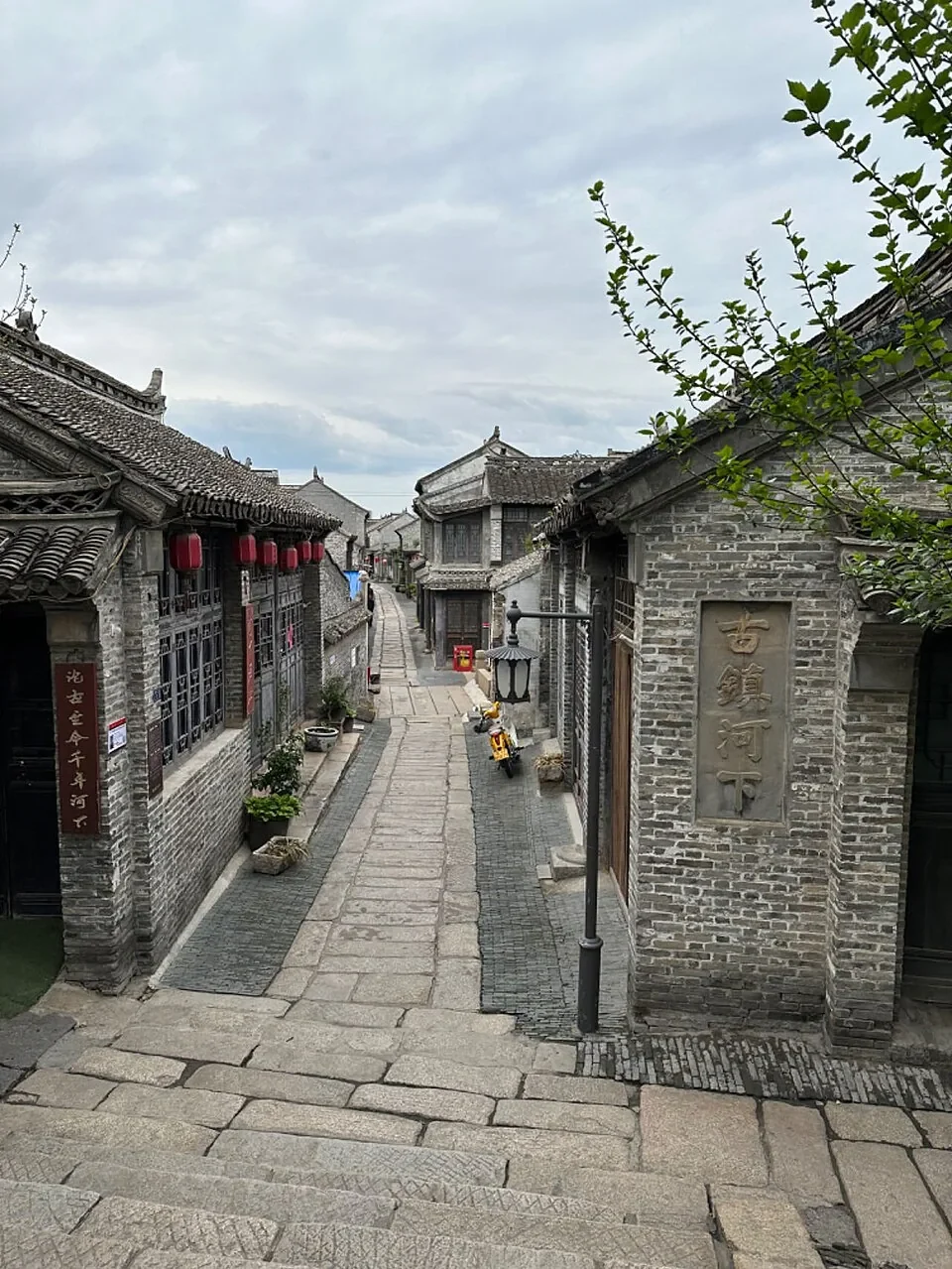
A narrow paved lane between gray-brick buildings near the south entrance of Hexia Ancient Town.
A quiet lane by the south entrance of Hexia Ancient Town in Huai'an.

A familiar author, a qualified attribution

Wu Cheng'en's association with Huai'an is central to local memory. His relationship to Journey to the West needs slightly more careful wording than many visitor displays allow. The novel is traditionally and widely attributed to him, but its authorship has been debated by scholars. Research on the attribution examines later records and the complicated history through which the name became attached to the hundred-chapter work.

That qualification does not empty Hexia of literary meaning. It changes the question from 'Can this room prove the book was written here?' to 'How did a community come to remember the writer and the book together?' A literary hometown is made through reading, commemoration, performance and scholarship as well as biography. In Hexia those activities are part of what there is to see.

What a rebuilt residence can tell you

The memorial residence on Datong Lane is a complex of buildings and displays, not simply an untouched Ming house. An eyewitness recollection published in Huai'an's local-history series describes the decision in 1981 to rebuild the residence in connection with commemorations of Wu Cheng'en. It also describes later changes to surrounding access and the wider district.

Knowing this helps you read the site fairly. A study presented as the writer's working environment can be useful interpretation without being an intact room that authenticates the composition of particular chapters. Gardens, memorial displays and performance-related collections introduce different periods of remembrance. Ask which layer a room belongs to before assuming it is direct biographical evidence.

The official description also includes a Xuanzang memorial space and a Monkey King family-art collection. These widen the story from an attributed author to the historical pilgrimage tradition and the later performing life of the novel. They are connected subjects, but they are not interchangeable.

The neighbourhood keeps making culture

Hexia's contemporary cultural programme includes Huai opera, craft workshops and food traditions. The municipal account names tea sanzi and soup buns among the practices represented in the neighbourhood. These details are a better starting point for curiosity than the promise that an entire street is 'authentic'. Ask how something is made, who continues making it, and whether a demonstration is everyday work or a presentation for visitors.

The same principle applies to literary storytelling. A costumed scene, an inherited performance technique and a scholarly display all tell us something, but they make different kinds of claims. Enjoy the imaginative forms without requiring them to serve as historical proof.

Leave time to return to the street after the residence. A small lane, a trading name and a modern cultural workshop offer a useful counterweight to the scale of a great novel. Hexia becomes richer when it is allowed to be both a remembered literary world and a changing neighbourhood. The connection is not that every detail directly inspired a famous episode. It is that commerce, local life and the repeated act of telling stories have made this a place where the book continues to belong.

Continue exploring · Hexia and Wu Cheng'en's Memorial Residence ↗
Photo credits and rights
  1. A quiet lane by the south entrance of Hexia Ancient Town in Huai'an.Kmchang28 · CC BY-SA 4.0 Photo source ↗ Rights information ↗ Resized and converted to WebP.