From the journal

The Many Lives of Guilin’s Princely City

Duxiu Peak anchors Jingjiang Princes’ City, where Ming rule, Qing examinations, modern education and archaeological remains occupy the same Guilin compound.

In the same city · Guilin ↗
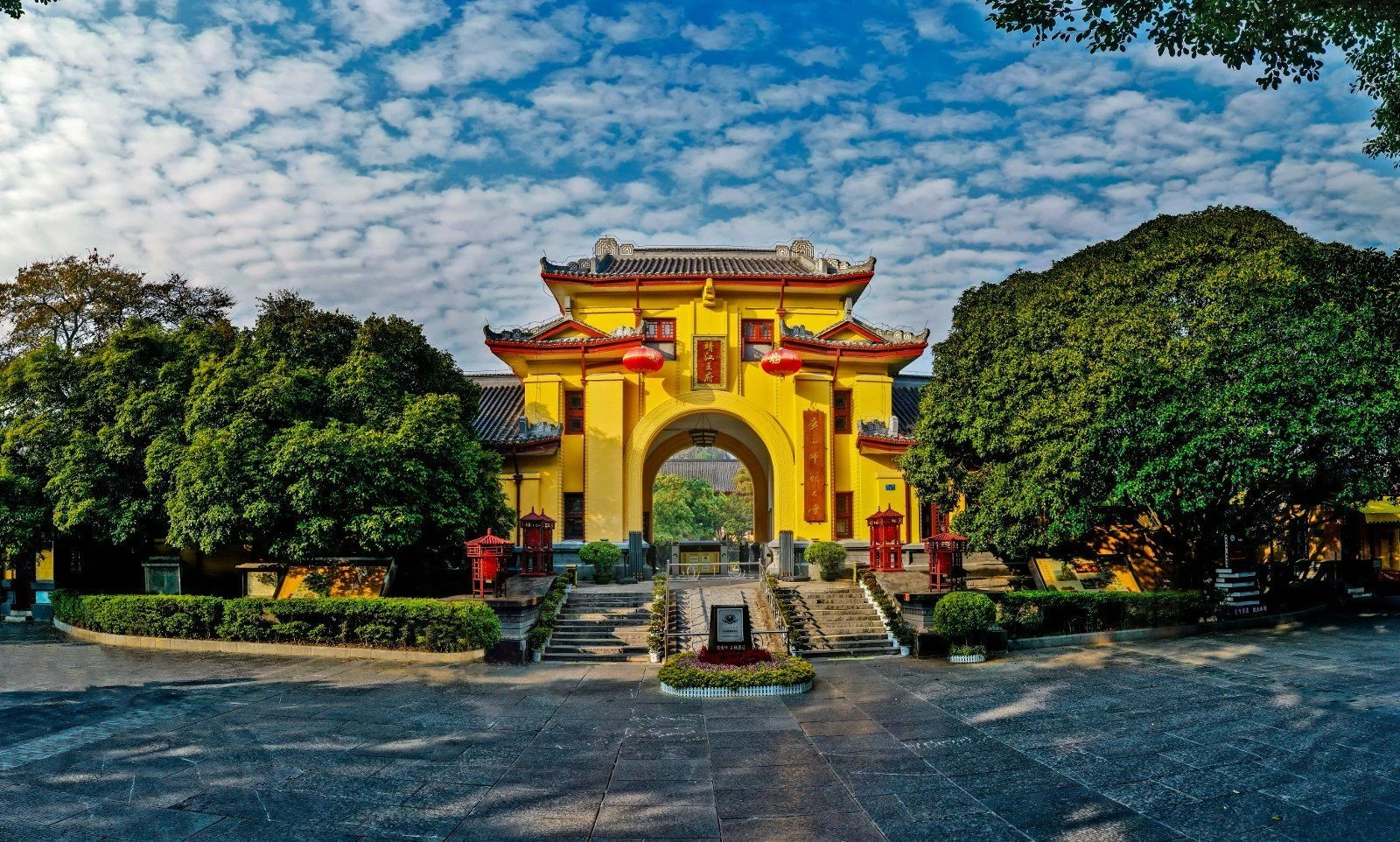
Yellow entrance gate at Jingjiang Princes’ City framed by trees and a blue sky.
The present-day entrance to Jingjiang Princes’ City in central Guilin.

A royal place around a limestone peak

Jingjiang Princes’ City occupies a central Guilin site organized around Duxiu Peak. The Ministry of Culture and Tourism dates the establishment of the princely residence to 1372. Its royal connection was to the Ming dynasty’s Jingjiang line, not to an imperial capital.

The peak anchors the site’s arrangement of enclosed space, approaches and halls. A palace is more than a collection of named buildings: position and access give its spaces meaning. Here, the natural landmark and the institutional compound are best understood together. The cliff inscriptions add another history within that setting.
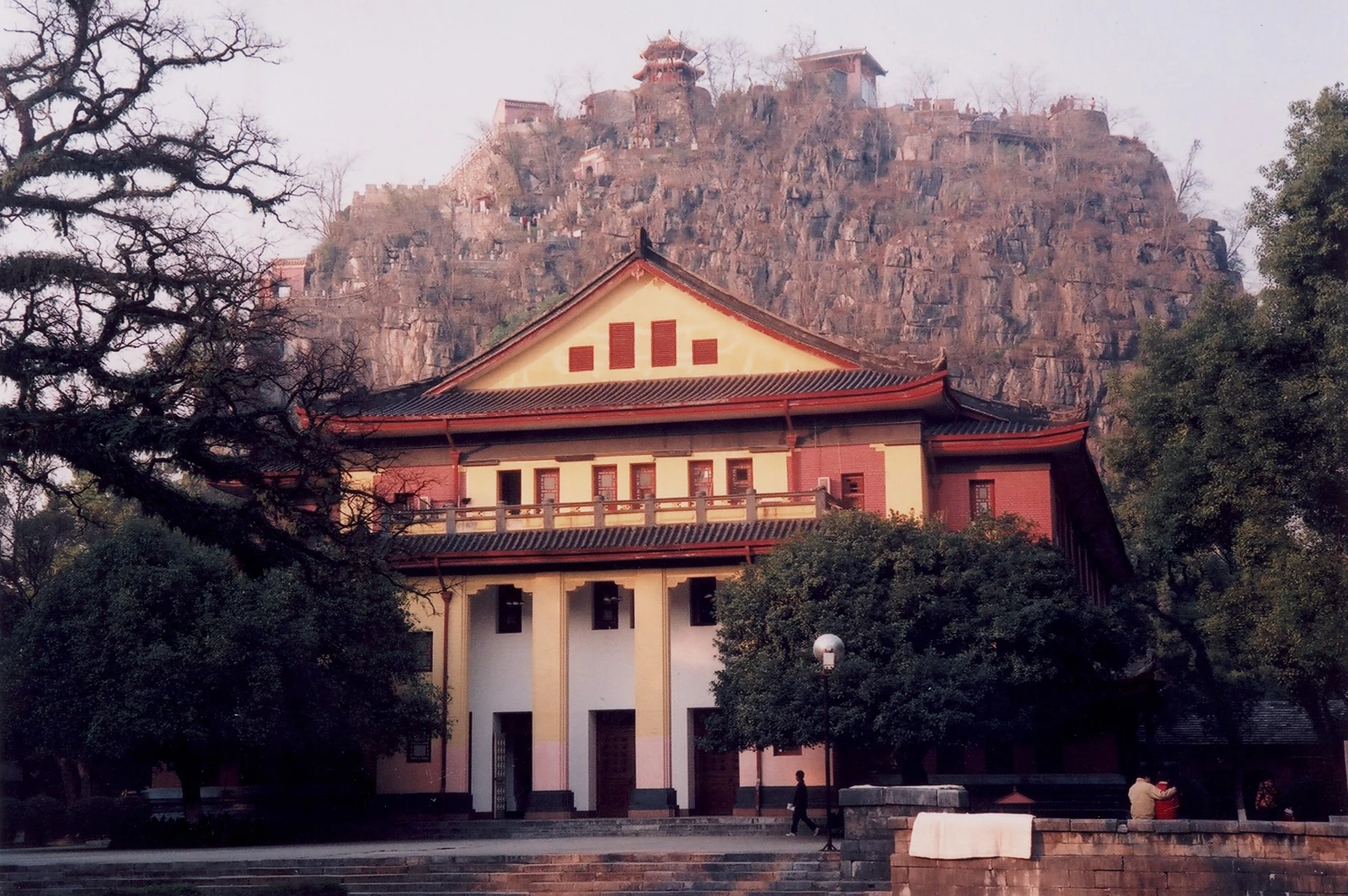
Duxiu Peak rises behind a large building and courtyard in Guilin.
An undated archival view of Duxiu Peak in Guilin.

The stone beneath the building

A 2012 China Network Television account distinguishes the surviving stone platform, balustrades and ceremonial steps from palace buildings destroyed in war. The distinction shows why an old foundation and the building above it need not share a date.

Platforms establish elevation and formal thresholds; stairs guide an approach, while balustrades articulate an edge. Their survival preserves parts of an earlier spatial order even when the buildings above them have changed. The surviving stonework carries the earlier spatial order into later uses of the compound.

From royal residence to examination ground

Under the Qing, the compound served as the Guangxi provincial examination establishment. Later republican uses included political and administrative functions. Historian Zhou Changshan’s university lecture traces these changes through to the site’s use as an educational campus. Guangxi Normal College moved into the compound in 1954; the institution became Guangxi Normal University in 1983.

Each change gave the enclosure a different purpose. A residence associated with inherited rank became a place for examinations and later for modern teaching. These institutional shifts transformed who entered and what activities the compound supported, while the buildings and grounds carried traces of earlier arrangements into each new period.

Archaeology beyond the obvious monument

The Guangxi archaeological institute reports investigations in 2013 and 2017 associated with conservation work in the East and West Lanes. In the east, excavators identified foundations of the princely ancestral shrine; in the west, remains of an altar to soil and grain. Deposits from the Tang through Qing periods add a longer urban sequence.

These finds extend the site beyond its most conspicuous halls. Ceremonial functions were not confined to the buildings most visible today. Foundations preserve arrangements that may be difficult to recognize from the present street level, giving archaeology a different view of the compound from a reconstructed façade.

Successive lives around one peak

The compound holds several kinds of continuity at once. Stonework may outlast the structures above it; a lost institution can remain legible in a layout; a modern campus can preserve remains from a princely residence. Physical age, documented use and restoration answer different questions.

Together they make Jingjiang Princes’ City a record of changing authority and purpose. The site’s history is not a single unbroken institution: it is a sequence of lives arranged around the same peak.

Continue exploring · Jingjiang Princes’ City ↗
Photo credits and rights
  1. The entrance to Jingjiang Princes’ City in central Guilin. Its present appearance should not be read as entirely surviving Ming fabric.Duxiu Peak–Royal City Scenic Area · Rights information Photo source ↗ Resized and converted to WebP; full composition retained.
  2. An undated archival view of Duxiu Peak in Guilin.Michael Wood · CC BY-SA 2.0 Photo source ↗ Rights information ↗ Resized and converted to WebP; full composition retained.