Silver, about three metres
The figure in the main hall is a silver Sakyamuni, seated on a lotus. The Yuquan government page puts its height at about three metres. The same page says the image was cast in silver when the work finished in 1580, which is why the temple was also called the Silver Buddha Temple. Golden dragons, more than ten metres high, climb the two columns in front of it.
Two dates on one page
The page opens by saying the temple was founded in 1579, the seventh year of the Wanli reign, under the Mongolian name Ikhe Zuu, a great temple. Later it says Altan Khan met the Third Dalai Lama in Qinghai in 1578 and that the building was finished in 1580. Both sentences are on the district page. A visitor does not need to pick a winner. The useful fact is that the hall, the silver and the argument about which came first are all older than the modern street grid.
A temple at the end of the street
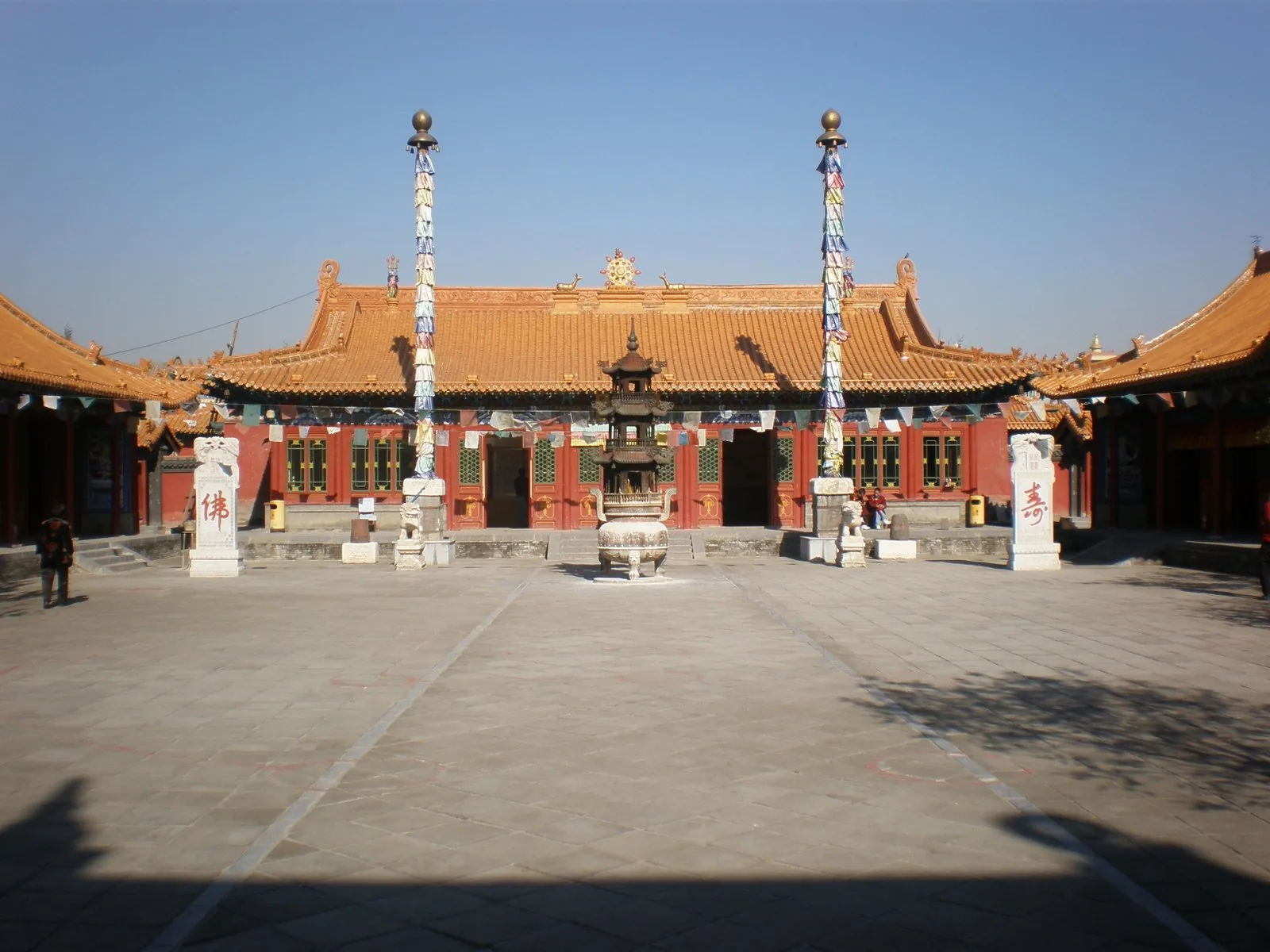
Dazhao stands at the north end of Dazhao Front Street in Yuquan District, on about 30,000 square metres. The page calls it a national-level protected site. The axis runs from a decorated arch and the gate, through the hall of heavenly kings, to the scripture hall and the Buddha hall under one yellow-tiled roof. Hohhot's own environment bureau explains the city name as the cyan city. A culture-bureau page calls Hohhot the capital of the autonomous region. The temple is the older object in that name: a working hall, not a model of one.