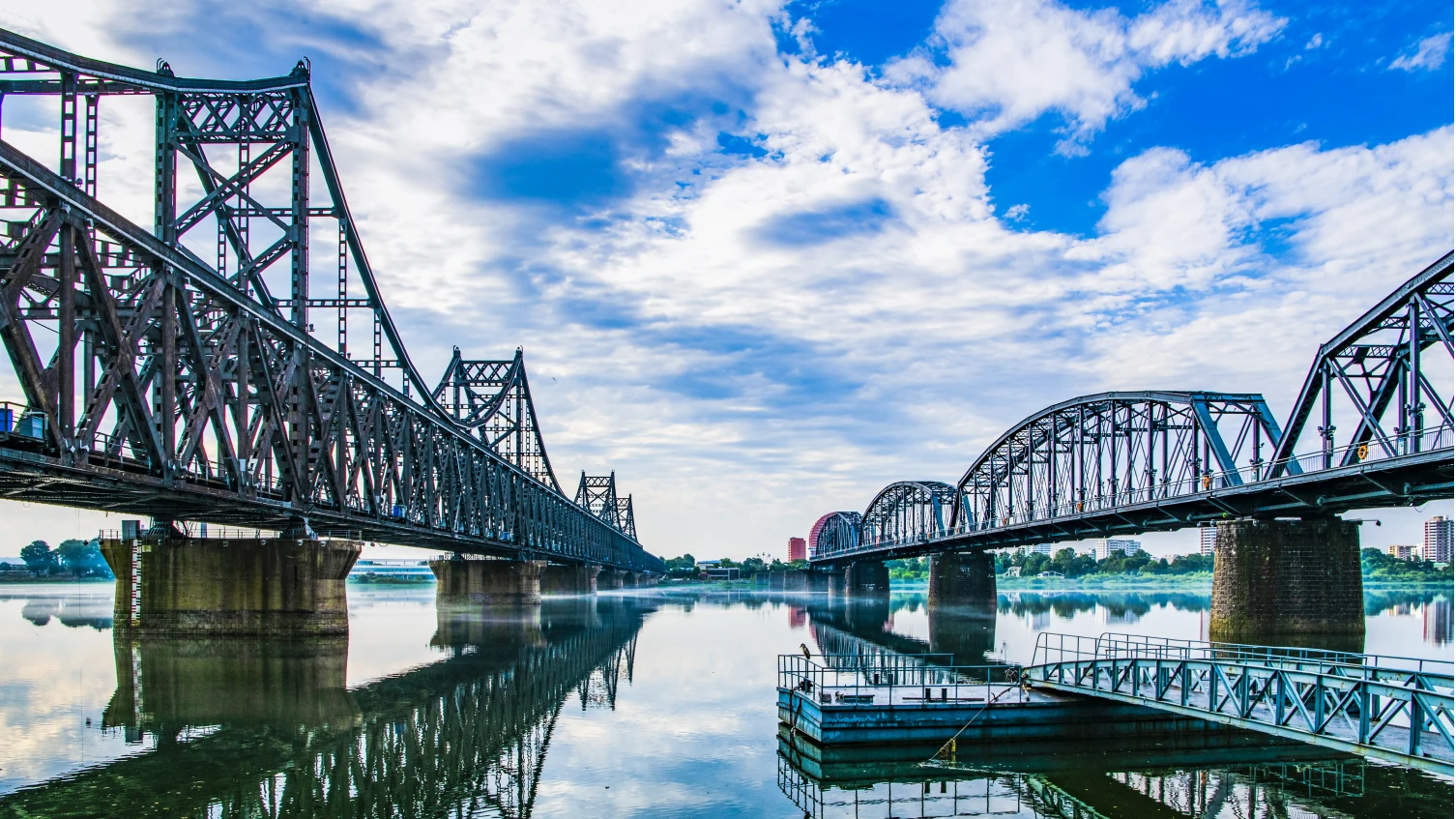
The bridge completed across the Yalu in October 1911 had twelve spans. Its fourth span from the Chinese bank could rotate to open a passage for vessels. A crossing for traffic above the water also had to accommodate movement along the river below. The structure’s history began with that practical negotiation between two routes.
The rotating span gives the old bridge a more particular identity than a generic steel silhouette. It was a mechanism as well as a link. The span could change position so that the river remained navigable, briefly interrupting one kind of passage to allow another.