From the journal

Two Zu Family Arches, Two Ways of Carving Honour

Stone arches on Xingcheng’s Yanhui Street commemorate two Zu cousins through distinct dates, inscriptions and carving styles.

In the same city · Huludao ↗
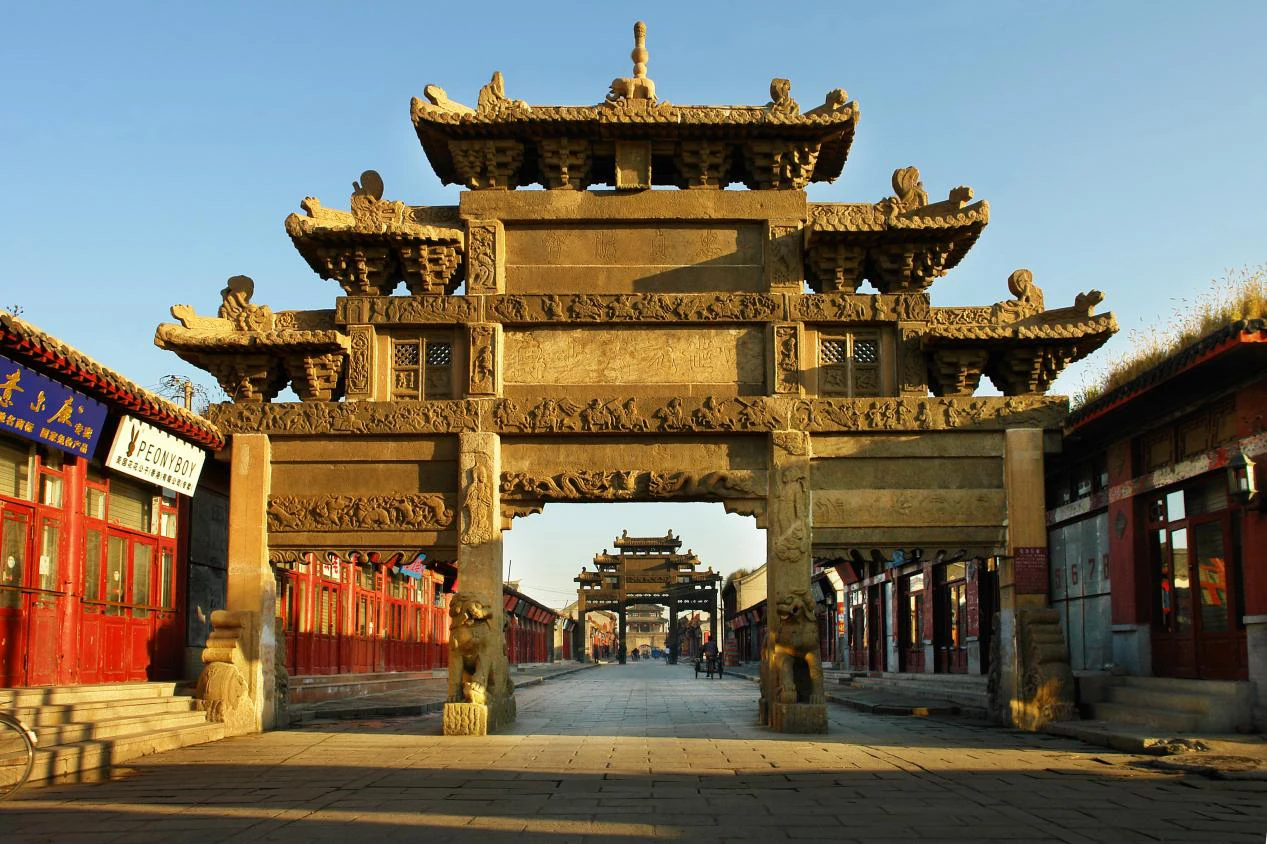
A carved stone archway fills the foreground, with another arch and a tower aligned along the street beyond.
Carved stone archways in Xingcheng Ancient City.

Which arch is which?

On Yanhui Street in Xingcheng Old City, two stone arches honour members of the Zu family. The southern arch was erected for Zu Dashou in 1631; the northern one for Zu Dale in 1638. The men were cousins, both military figures in the late Ming frontier world.

The dates help separate two monuments often compressed into one name. Coming from the south, the earlier arch is encountered first, which explains the local labels of first and second arch. Their purpose was public commendation: family achievement made visible in a street.

Their main south-facing plaques offer another clue: Zhongzhen Danzhi, praising loyalty, courage and wisdom, identifies Zu Dashou’s arch; Dengtan Junlie identifies Zu Dale’s. The inscriptions make each honour specific rather than leaving two similar structures anonymous.

A wooden language in stone

Each arch uses four main pillars and three openings beneath tiered roof-like forms. The carving imitates components associated with timber architecture, translating an assembled building vocabulary into stone.

The southern arch is densely worked with relief figures and narrative scenes. The northern one gives more emphasis to pierced carving, flowers, birds and animals. Solid relief and light-pierced ornament give the two monuments different visual weight.

These are monuments to honour, but their makers had a second task: distributing a large amount of visual information across pillars, crosspieces and small roofs. The eye is offered several places to stop.

Lions and later hopes

The stone lions have acquired a social life beyond the formal commendation above them. Writer Bai Qiu’s 2025 account of the Lantern Festival describes local people gathering at the arches and touching the lions while expressing wishes for wellbeing and prosperity.

A public monument can gather meanings its patrons did not prescribe. Official praise, family remembrance and a neighbourhood festival occupy the same piece of street architecture, without becoming the same story. The reported custom is best understood as part of that afterlife; the carvings themselves are protected fabric to observe according to the site’s conservation rules.

Seven years separated the two commissions. Their different honourees and ornamental schemes remain visible above a street where later generations have gathered for purposes beyond the original military commendations.

Continue exploring · Xingcheng Old City ↗
Photo credits and rights
  1. Carved stone archways in Xingcheng Ancient City.Source: Liaoning Provincial Department of Culture and Tourism / People’s Government of Liaoning Province. Rights not independently licensed. · Rights status unknown Photo source ↗ Original aspect ratio retained. Display copies resized only when needed; no enlargement, crop or retouching.