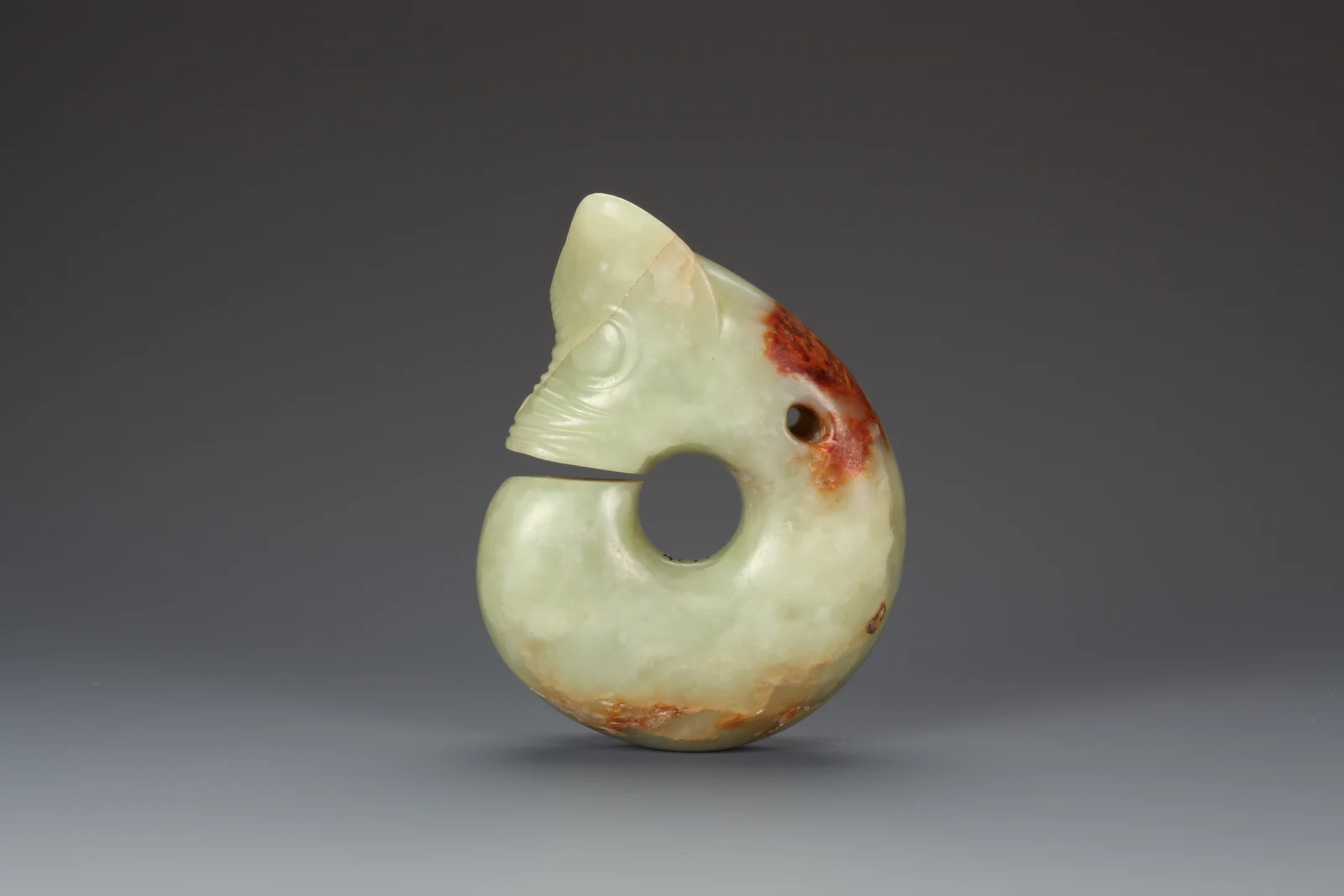
A jade figure from Niuheliang stands with bent elbows and hands raised in front of its chest. The National Museum of China’s exhibition catalogue records it as N16M4:4: Locality 16, tomb 4, object 4. It was found outside the deceased person’s left pelvis, with its back facing upward.
A flat jade bird, conventionally called a phoenix, came from the same tomb. It lay beneath the skull, face upward. Those positions preserve information that a photograph of either object alone cannot supply. Beauty is only one part of their archaeological identity; placement is another.