From the journal

North Pagoda: A City Folded into a Tower

Successive builders wrapped earlier structures, while a hidden chamber preserved a carefully assembled Buddhist deposit.

In the same city · Chaoyang ↗
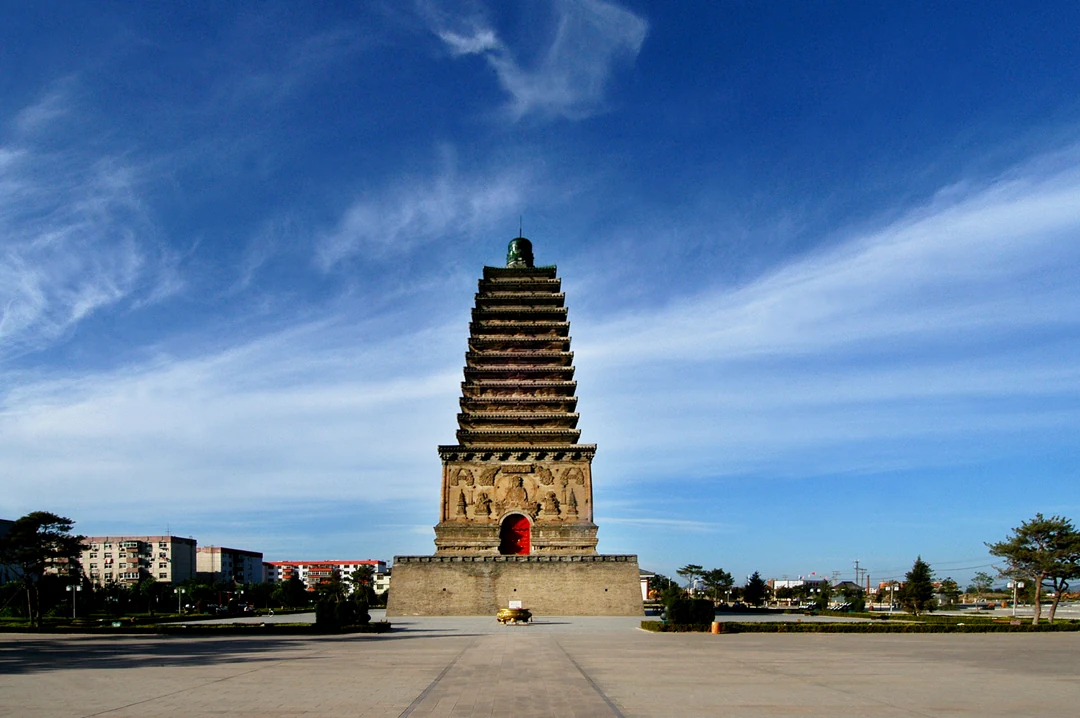
A square brick pagoda with closely spaced eaves stands on a raised platform beneath a blue sky.
The exterior of Chaoyang North Pagoda.

The outline and the core

Chaoyang North Pagoda has a square plan and thirteen closely spaced eaves. Its repeated horizontal lines make a strong silhouette, but the visible outline cannot tell the whole age of the building.

The site incorporates rammed-earth remains associated with the palaces of the Three Yan kingdoms, which ruled here during the fourth and fifth centuries. A Northern Wei Buddhist tower followed; later brick construction supplied the Sui–Tang core, and Liao work shaped the exterior. Reused foundations, retained fabric and successive building campaigns are combined within the tower’s present structure.
Images at street level

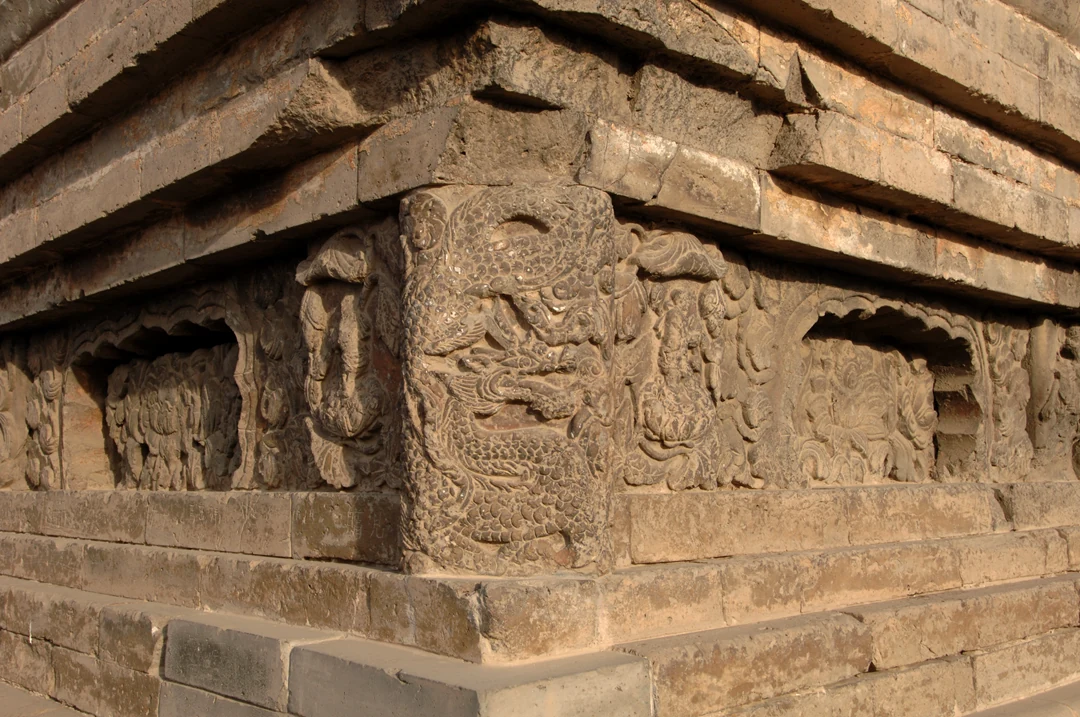
The tower’s carved programme rewards looking across its faces. Buddhas associated with the four directions, smaller pagoda forms and guardian figures turn brick architecture into a Buddhist visual setting. Musicians and dancers appear in niches around the base.

These are different scales of address. A distant viewer sees the rising outline; someone closer can read an individual figure or the repeated arrangement around a face. The tower was designed to communicate from outside, while some of its most important contents were deliberately concealed.

Weathered figures and ornamental panels are carved around a projecting corner of a brick pagoda base.
Carved figures around the base of Chaoyang North Pagoda.
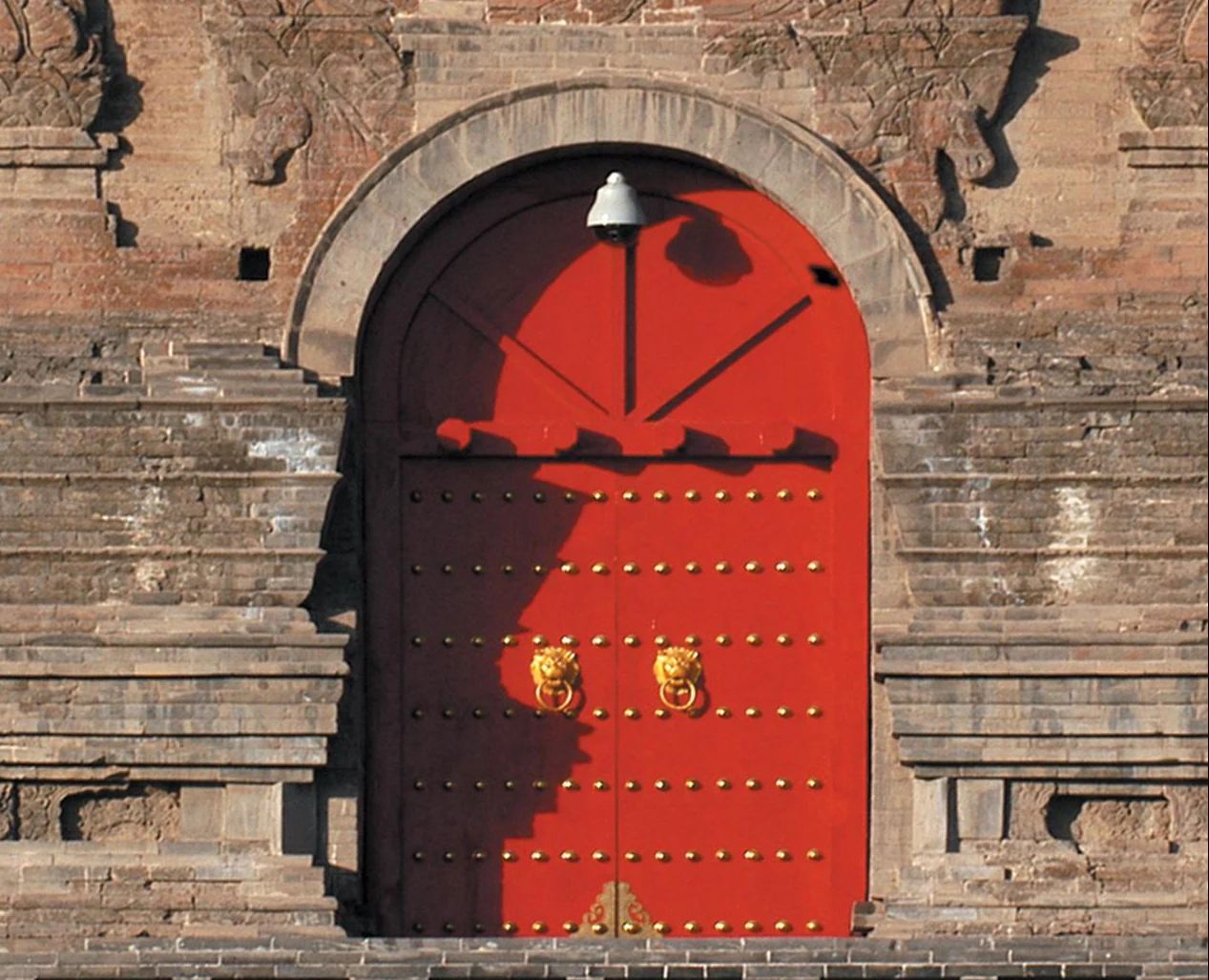
A red arched double door with gold-coloured studs and ring fittings is framed by brickwork and carved figures.
A doorway and its carved surround at Chaoyang North Pagoda.

A room high in the tower

Repairs carried out from 1984 to 1992 became an archaeological investigation as well as a structural one. In 1988, an upper chamber near the twelfth eave yielded a rich deposit of Buddhist objects. Metal containers, agate, glass and other carefully worked materials belonged to a devotional arrangement centred on relics venerated as those of the Buddha.

A relic chamber differs from a modern exhibition case. Its contents were placed within the sacred building, not originally arranged for everyday public viewing. Their recovery changed their visibility and made the relationship between container, enclosed object and architectural setting available for study.

The names inside the deposit

The deposit also preserves work by people whose names might otherwise disappear behind a dynasty label. A 2017 study of the tower’s reliefs examines inscriptions associated with its small metal reliquaries. In 1043, the official Xuanyuan Xiang wrote a Sanskrit dharani, a sacred formula, and the artisan Zhang Congdao engraved the writing onto copper.

Writing and engraving were separate contributions. The account brings an official’s textual knowledge and a craft worker’s tools into the same devotional project. A container could protect a sacred object while carrying another form of sacred presence in its inscribed words. Patrons, scribes and metalworkers all contributed to the deposit’s devotional purpose.

The museum and the monument

The North Pagoda Museum interprets the tower and its Buddhist archaeology. It allows the story to move between scales: a city’s long building history, the dimensions of a hidden chamber, and the workmanship of a small object.

The tower’s exterior preserves a public programme of Buddhist images, while excavation recovered objects once sealed away. Display and architectural study bring these two aspects of devotion together: the carved monument addressed the surrounding city, and the chambers protected offerings within its fabric.

Continue exploring · Chaoyang North Pagoda ↗
Photo credits and rights
  1. The exterior of Chaoyang North Pagoda.Source: Liaoning Provincial Department of Culture and Tourism. Photographer and image license not stated. · Rights status unknown Photo source ↗ Original aspect ratio retained. Display copies resized only when needed; no enlargement, crop or retouching.
  2. Carved figures around the base of Chaoyang North Pagoda.Source: Liaoning Provincial Department of Culture and Tourism. Photographer and image license not stated. · Rights status unknown Photo source ↗ Original aspect ratio retained. Display copies resized only when needed; no enlargement, crop or retouching.
  3. A doorway and its carved surround at Chaoyang North Pagoda.Source: Liaoning Provincial Department of Culture and Tourism. Photographer and image license not stated. · Rights status unknown Photo source ↗ Original aspect ratio retained. Display copies resized only when needed; no enlargement, crop or retouching.