From the journal

A Capital Built with the Mountain

Wunushan’s cliffs were part of its architecture. Archaeology shows how a Koguryo city fitted defenses and buildings to a difficult site.

In the same city · Benxi ↗
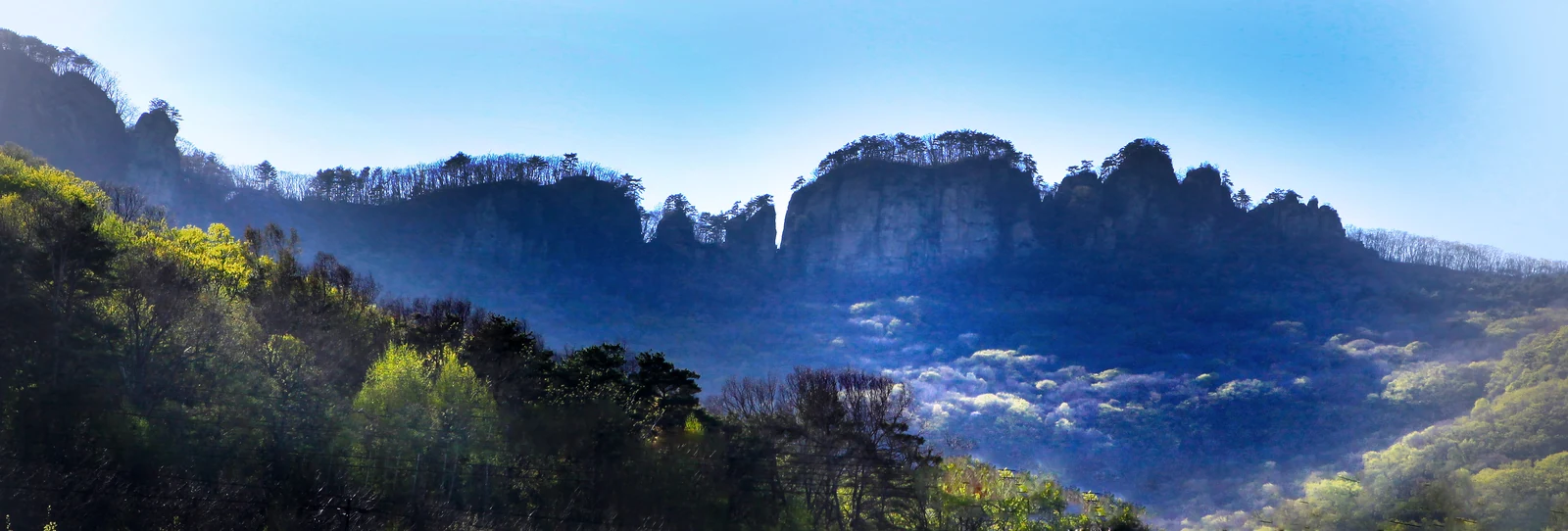
A long rocky escarpment rises above wooded slopes, with a narrow gap in the cliff rim and trees along its edge.
Wunüshan’s cliff rim above the wooded slopes in Huanren.

Where masonry stops and rock begins

At Wunushan, the boundary of a city is not a continuous belt of masonry. Steep rock provides much of the enclosure, while built walls reinforce places where the mountain offers less protection. The more accessible eastern side required a different response from the cliffs. Defense began with choosing the terrain, then adding construction where it was needed.

The site rises above the Hunjiang in Huanren Manchu Autonomous County, within Benxi. A relatively level summit made occupation possible above the difficult slopes. That combination matters: a strong position also needs space for people, stores and buildings. The mountain was useful because it offered both enclosure and an inhabitable interior.
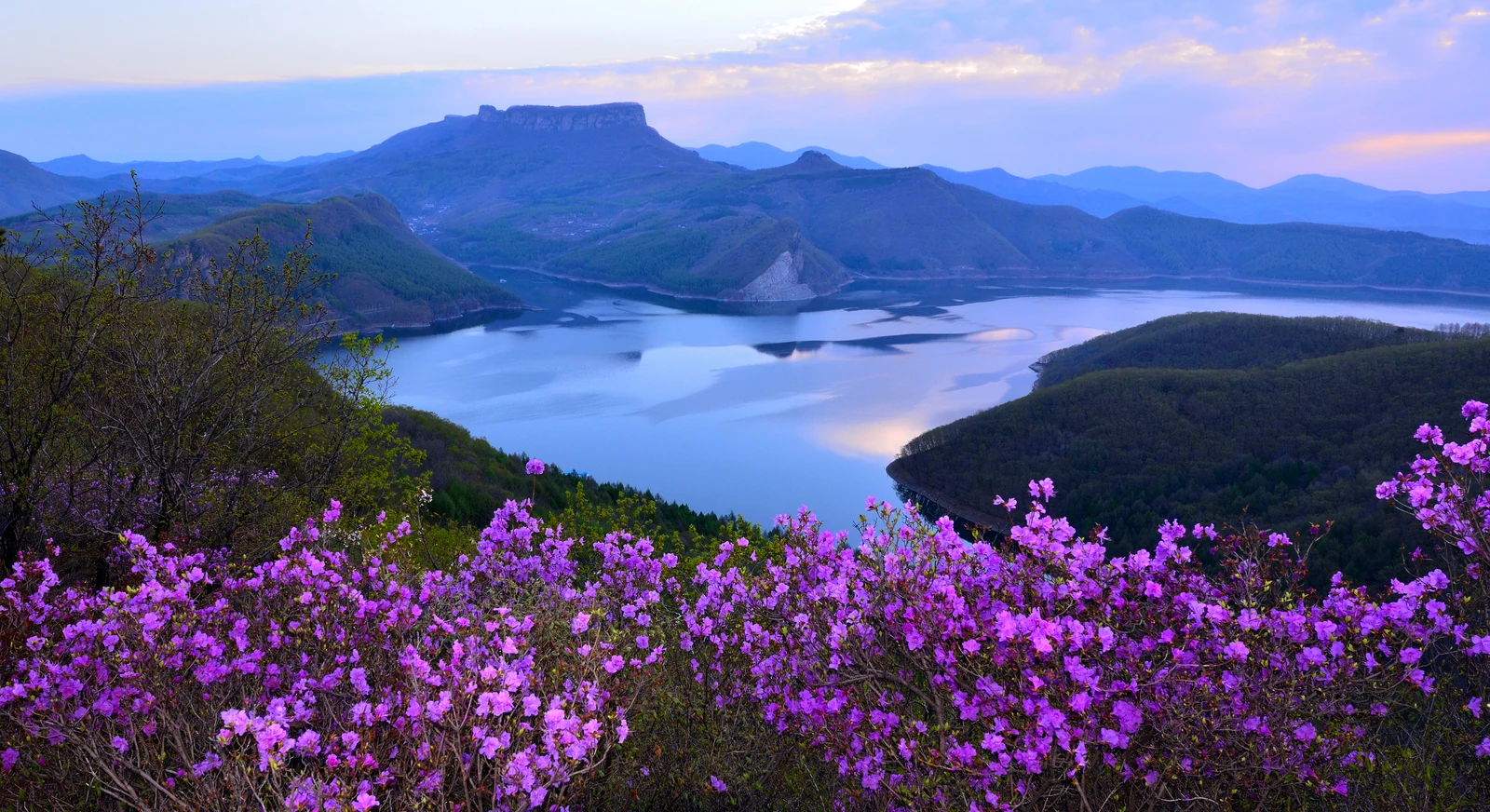
Purple-pink flowers frame a lake and forested slopes, with a flat-topped mountain on the far shore.
Wunüshan rises beyond water and wooded slopes.

An early centre of Koguryo

Koguryo, also commonly spelled Goguryeo, was an ancient kingdom whose territories extended across parts of northeast China and the northern Korean Peninsula. UNESCO’s detailed account identifies Wunu Mountain City with its first capital, established in the first century BCE. Later centres lay elsewhere, including the Guonei and Wandu city sites near present-day Ji’an.

The long history is visible in an important qualification: the mountain’s founding date is not the date of all its surviving fabric. Provincial archaeologists assign the existing walls, on the evidence of their construction, to the later Wei–Jin period, spanning the third to early fifth centuries CE. The city changed after its beginnings. Its surviving masonry records later occupation as well as the choice of the original site.

From a silhouette to a settlement

Excavations conducted jointly by provincial archaeologists and the Benxi Museum between 1996 and 2003 gave the outline of the mountain a more detailed interior. The remains include a reservoir, a lookout, large buildings and areas interpreted as barracks and residences. Pottery and metal finds add smaller-scale evidence to the masonry.

One substantial building identified in the local account as Large Building No. 1 preserves evidence for columns. Column bases and foundations mark the supports of a largely vanished superstructure. They give the summit an architectural plan within the enclosure formed by cliffs and walls.

One mountain within a wider inscription

In 2004, UNESCO inscribed Capital Cities and Tombs of the Ancient Koguryo Kingdom. Wunushan is its Liaoning component. Guonei, Wandu and the forty tombs included in the property are in Ji’an, Jilin Province. The title names a connected body of evidence spread across more than one place.

Wunushan contributes a particularly clear relationship between a city and its natural defenses. Its cliffs explain the choice of site; the constructed walls explain the adjustments people made. Together they show a settlement that borrowed the mountain’s strength while solving the more ordinary problems of occupying it.

Continue exploring · Wunushan Mountain City ↗
Photo credits and rights
  1. Wunüshan’s cliff rim above the wooded slopes in Huanren.Source: Liaoning Provincial Department of Culture and Tourism; source credited as the Wunüshan scenic-area official website. Photographer not identified; rights unknown. · Rights status unknown Photo source ↗ Original aspect ratio retained. Display copies resized only when needed; no enlargement, crop or retouching.
  2. Wunüshan rises beyond water and wooded slopes.Source: Liaoning Provincial Department of Culture and Tourism / People’s Government of Liaoning Province. Rights not independently licensed. · Rights status unknown Photo source ↗ Original aspect ratio retained. Display copies resized only when needed; no enlargement, crop or retouching.