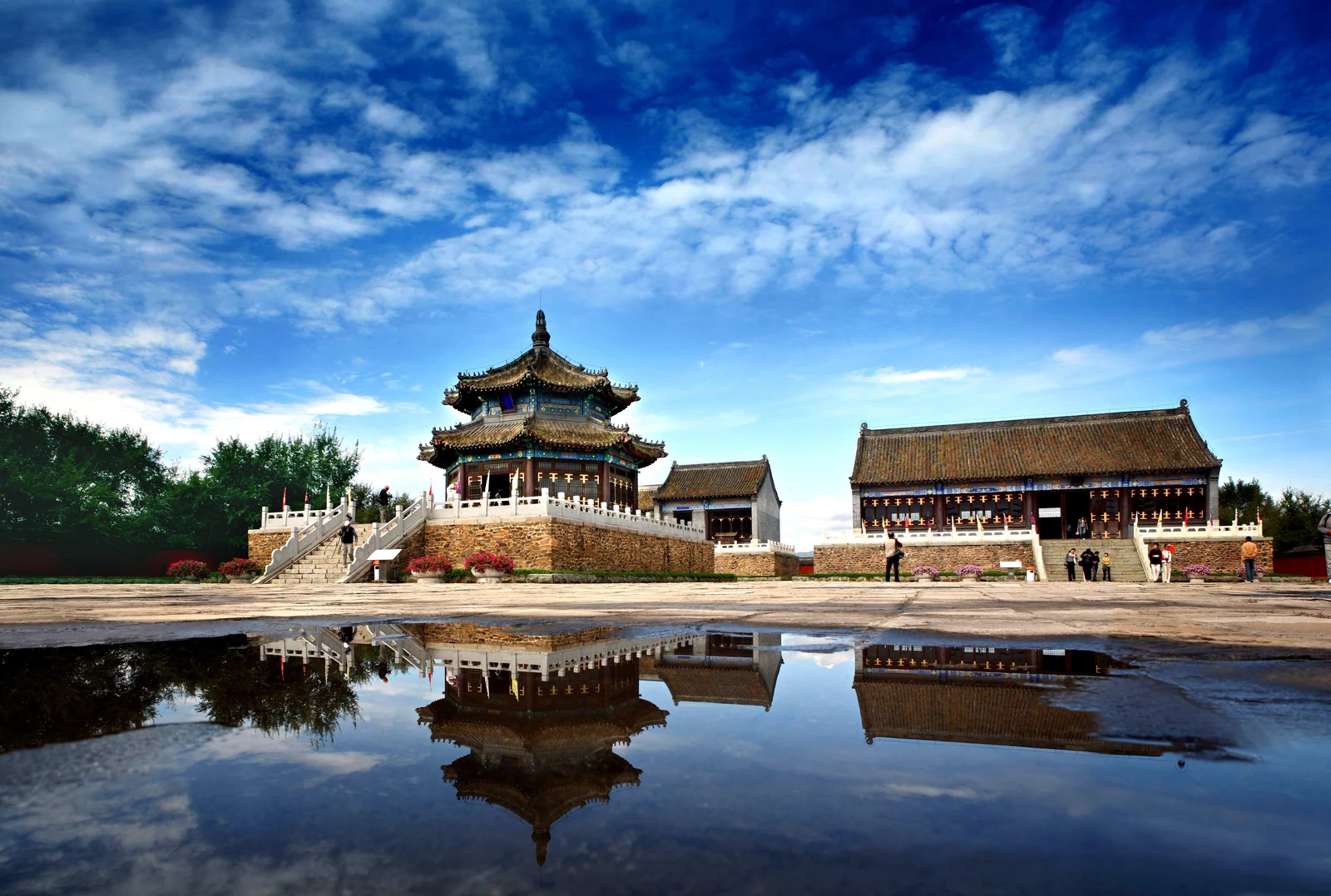
Nurhaci built Hetu Ala in 1603, and in 1616 made it the capital of the Later Jin state. The site is in today’s Xinbin Manchu Autonomous County, Fushun. The name Qing belongs to a later stage: Nurhaci’s son Hong Taiji adopted it in 1636, after the political centre had moved to Shenyang.
Hetu Ala served a state still taking shape, built around Nurhaci’s leadership and the households and military organisation supporting it. After the move to Shenyang, court building continued there under his son Hong Taiji and later Qing rulers. The dynasty’s early centres record successive forms of authority rather than a single, unchanging palace world.