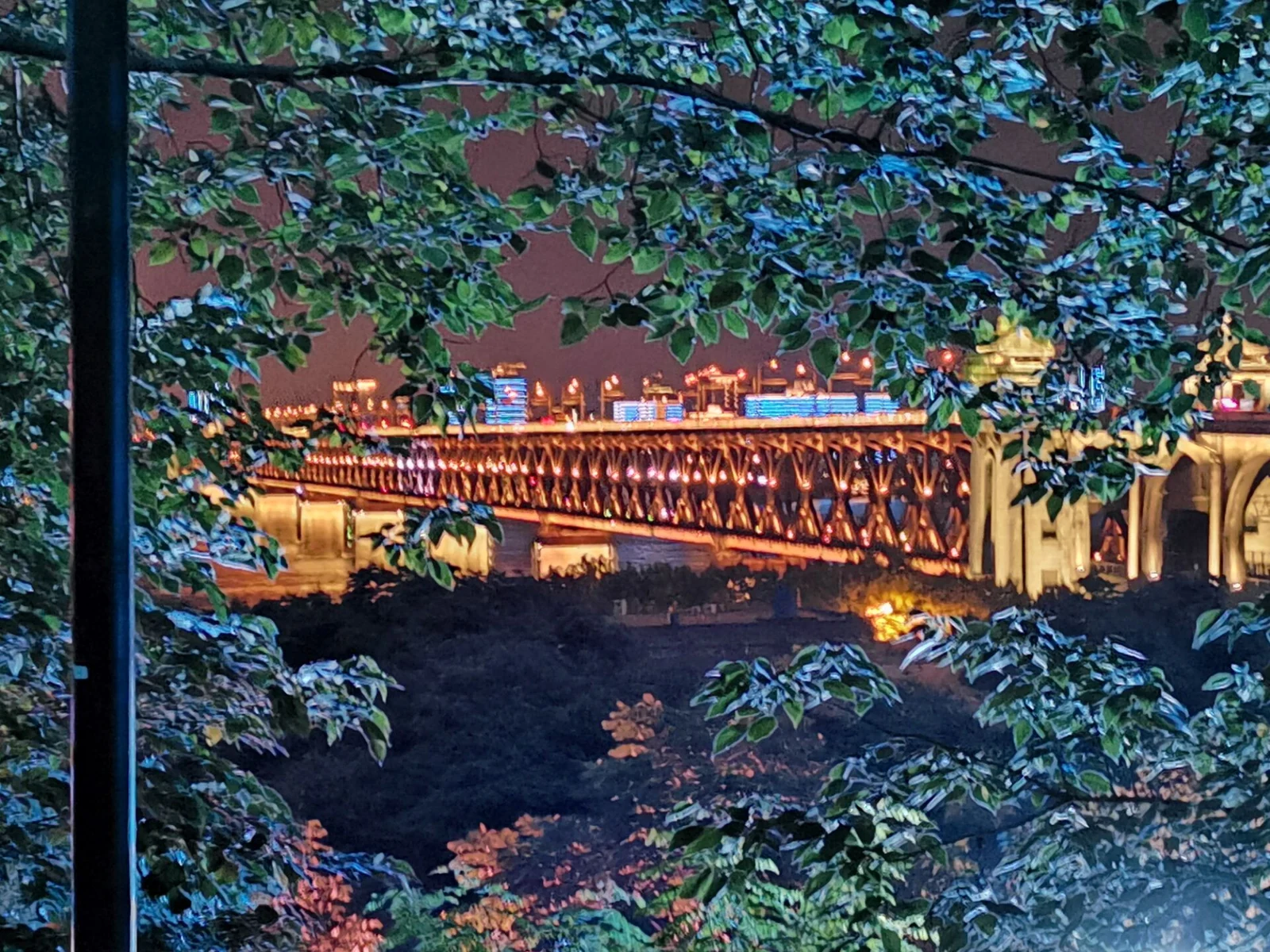
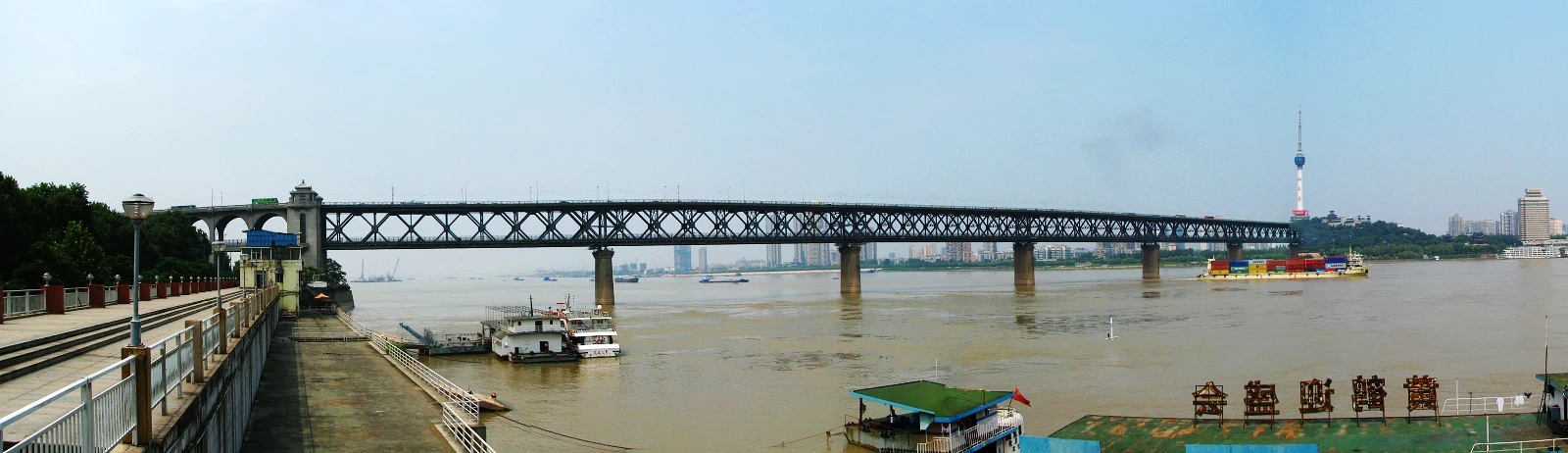
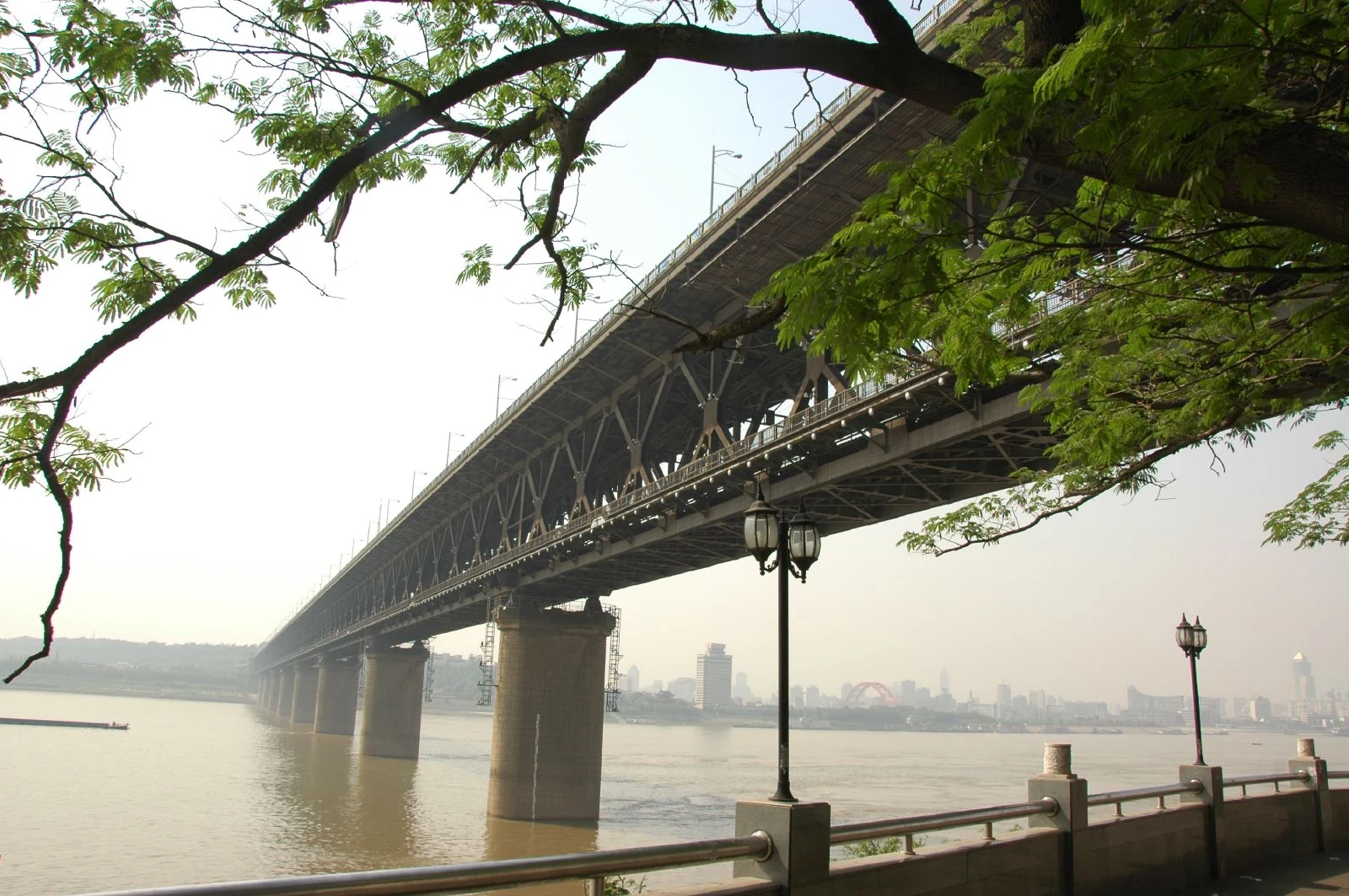
Yellow Crane Tower stands on Snake Hill in Wuchang, above the Yangtze. Its history is traditionally traced to a watchtower built in 223, when Sun Quan fortified the town. The building visitors see today opened in 1985. It occupies a different position from the old riverside tower, whose former site was affected by construction of the Wuhan Yangtze River Bridge. The move was along Snake Hill, not to another mountain.
From the journal
The Tower That Lives in Poetry
At Wuhan’s Yellow Crane Tower, successive buildings, the Yangtze Bridge and Tang poetry tell different chapters of the same riverbank.
In the same city · Wuhan ↗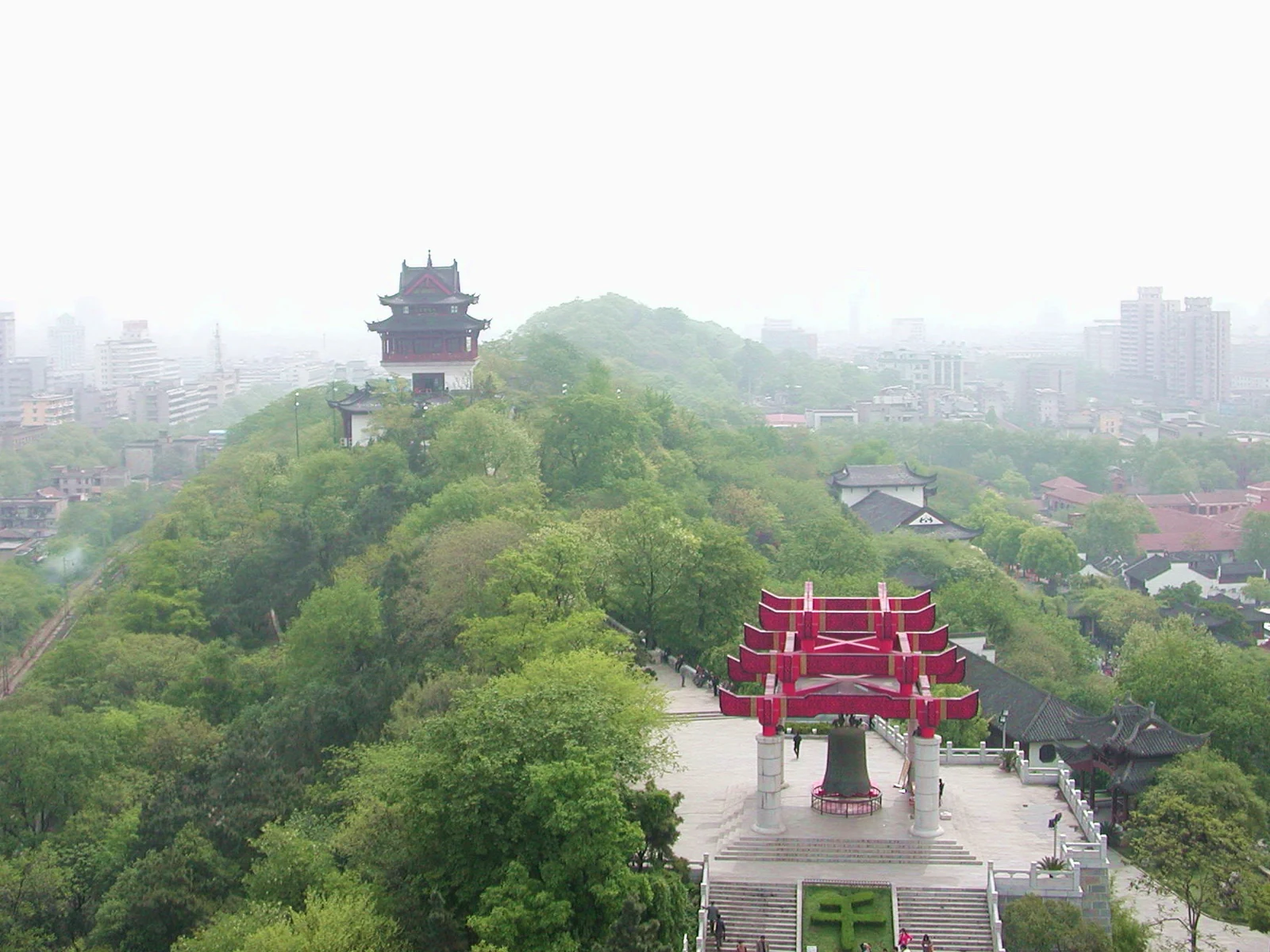
A tower above Wuchang
Rebuilding a landmark
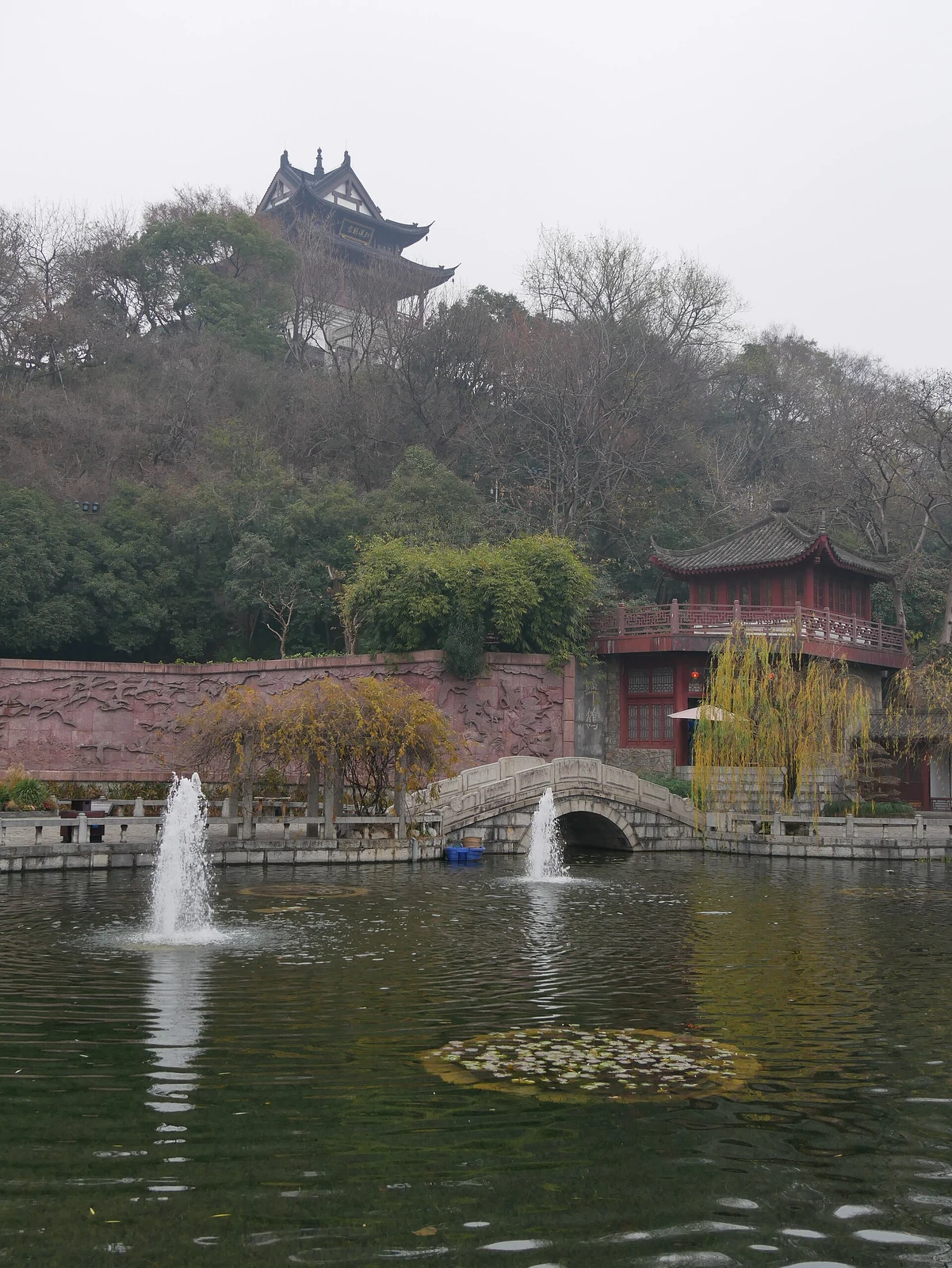
Fire and warfare repeatedly destroyed earlier towers. Rebuilding gave each generation a different structure around a familiar name. The present tower’s overlapping roofs and elevated galleries belong to a modern reconstruction drawing on historical forms. Looking between tower and bridge reveals two kinds of river landmark: one sustained by literature and repeated rebuilding, the other made for a railway and road crossing.
The view in a poem
Cui Hao’s Tang poem imagines the yellow crane gone and the empty tower left behind, before turning to trees, grass and homesickness. Li Bai’s farewell poem for Meng Haoran follows a departing sail until only the Yangtze remains. These poems make the river view more than a panorama: a distant boat or the opposite bank becomes a way to think about departure. The tower is an entrance into Wuhan’s literary landscape.