In 1978 archaeologists excavated the tomb of Marquis Yi of Zeng at Leigudun in present-day Suizhou. An exceptional set of bronze bells stood among the musical instruments. Zeng was a state closely connected with its powerful neighbour Chu, and the find opened a window onto that particular court. Today the bell frame anchors an exhibition at Hubei Provincial Museum in Wuhan, carrying the name of its owner into a very different city.
From the journal
Sixty-Five Bells, More Than One Voice
The bells of Marquis Yi connect a tomb in Suizhou with Wuhan’s Hubei Provincial Museum and the sound of an ancient court.
In the same city · Wuhan ↗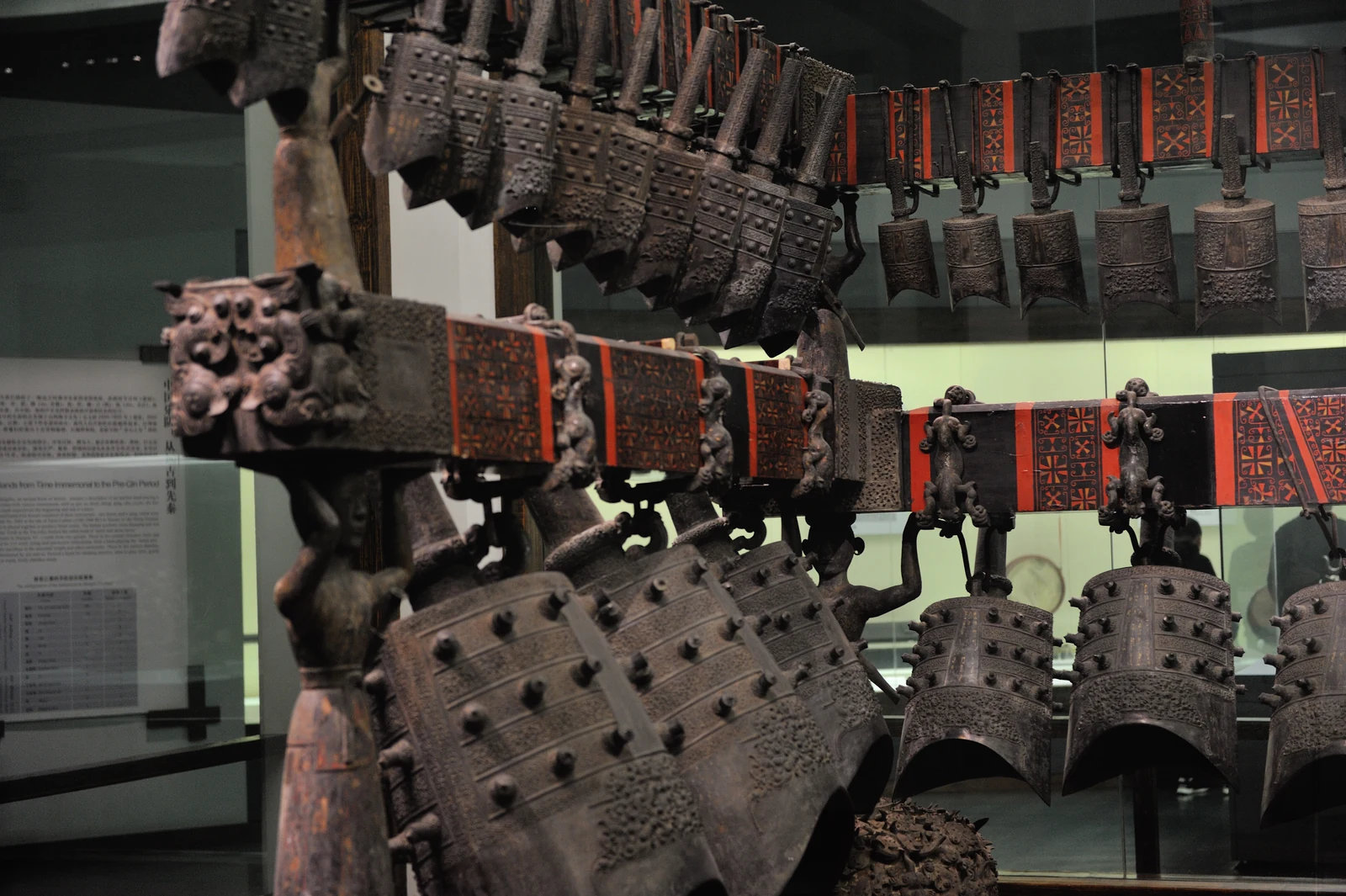
From Suizhou to Wuhan

Listening to bronze
Sixty-five bells hang on an L-shaped bronze-and-wood frame in three tiers. Their varying sizes give the installation both its visual rhythm and its musical range. Many of the bells can produce two distinct pitches when struck at different points. Inscriptions record musical names and relationships, making the objects evidence of musical knowledge as well as remarkable bronze casting. The shapes, suspension and striking points all matter to the sound.
An original and its echoes
Museum performances bring ancient bell music to present-day listeners through reproduction instruments. They should not be confused with routine playing of the excavated originals. The museum’s work on casting replicas, studying inscriptions and documenting the excavation allows the sound to travel while the archaeological objects are conserved. Reading the tomb alongside the displayed bells restores the two locations to one story: where the instruments were found and where they are studied and seen.