The tiger-based, bird-framed drum is among the most recognisable kinds of object from Chu burials in the Jingzhou area. A drum is suspended between long-legged birds standing on tigers. The support makes an instrument into a composition of animals, balancing the upright birds against the low bodies beneath them. It can be read first through its shape, before a visitor knows any dynastic names.
From the journal
A Drum Carried by Birds and Tigers
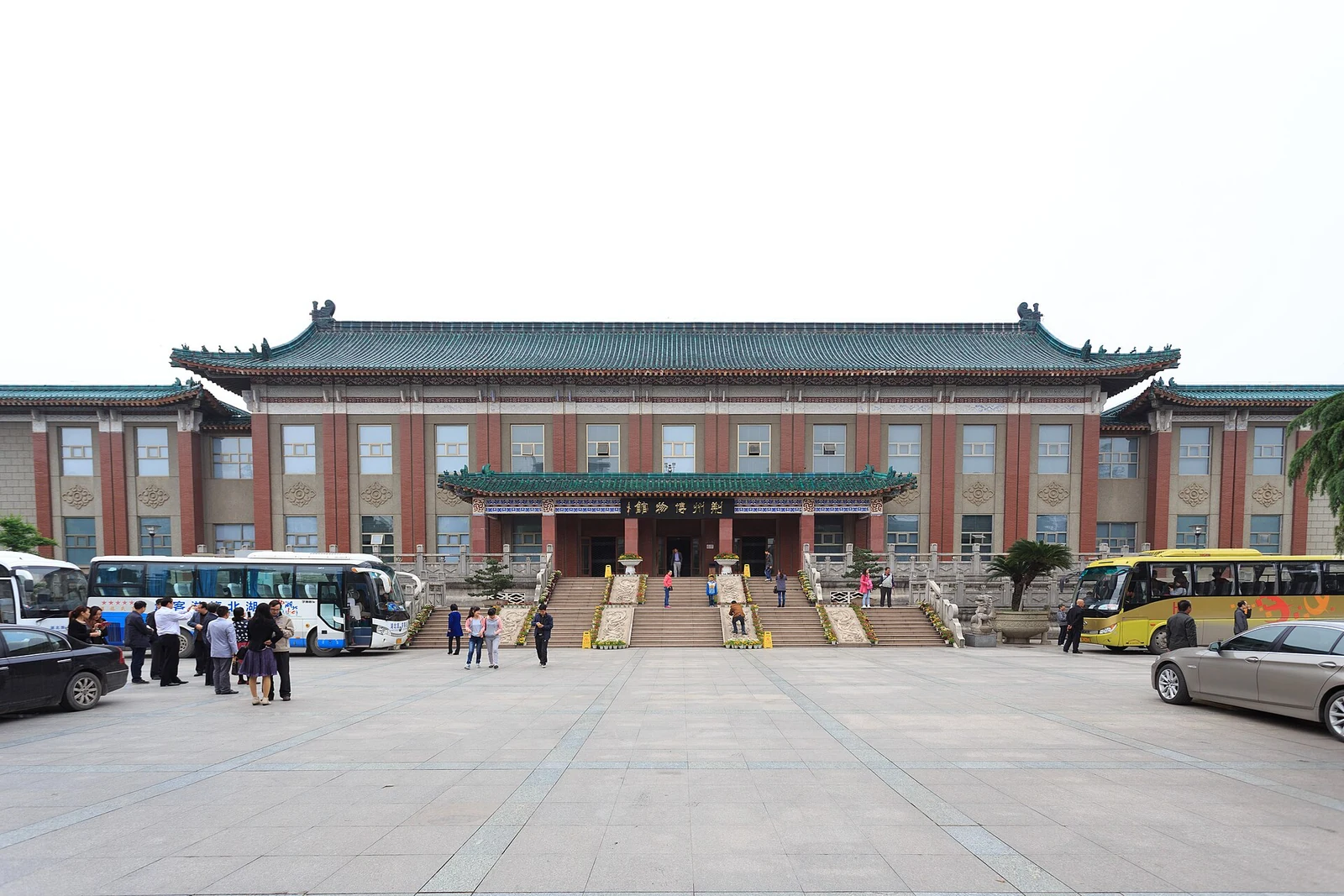
At Jingzhou Museum, a painted wooden drum support makes the sound-world and animal imagery of Chu visible in lacquer and carved forms.
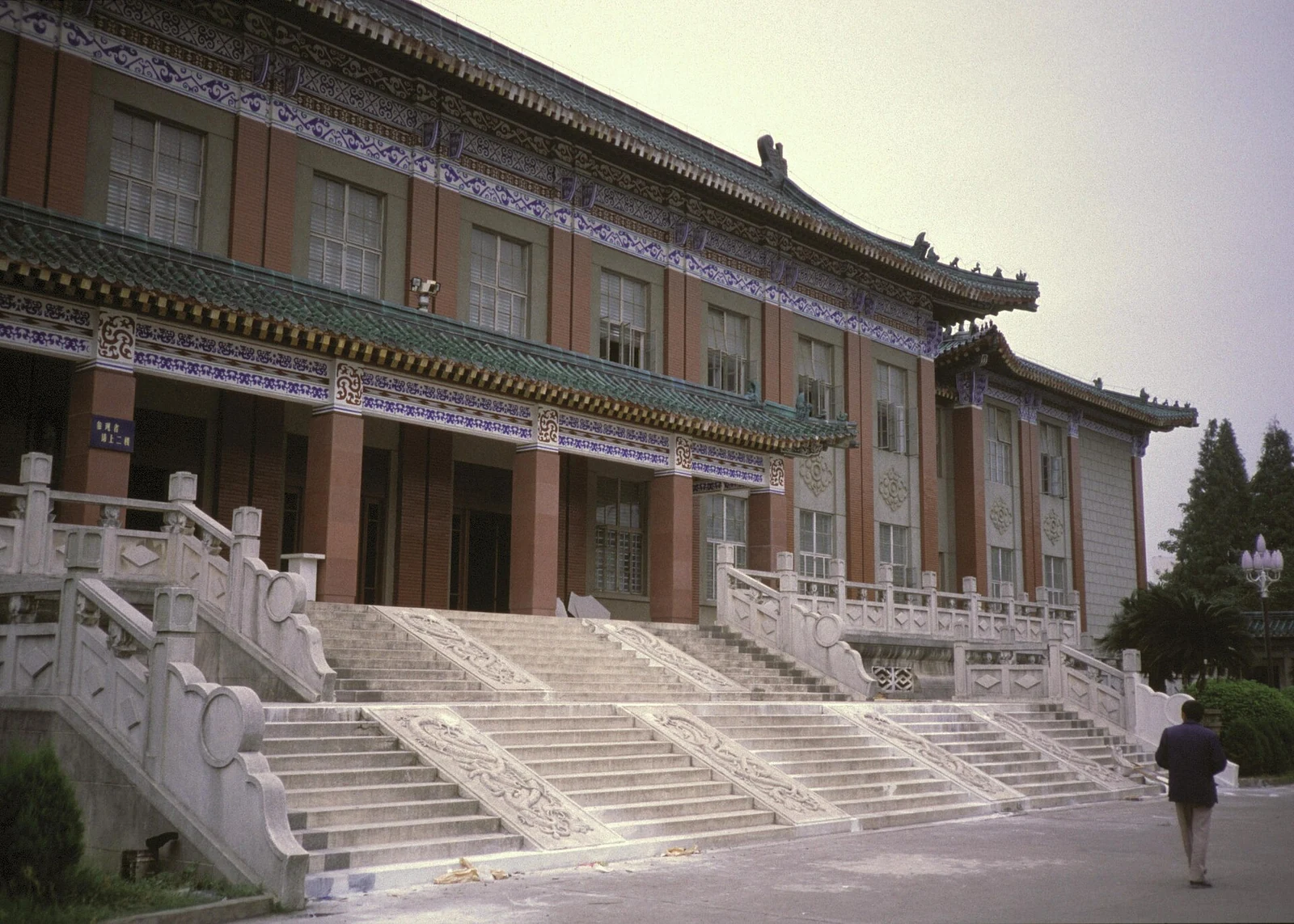
In the same city · Jingzhou, Hubei ↗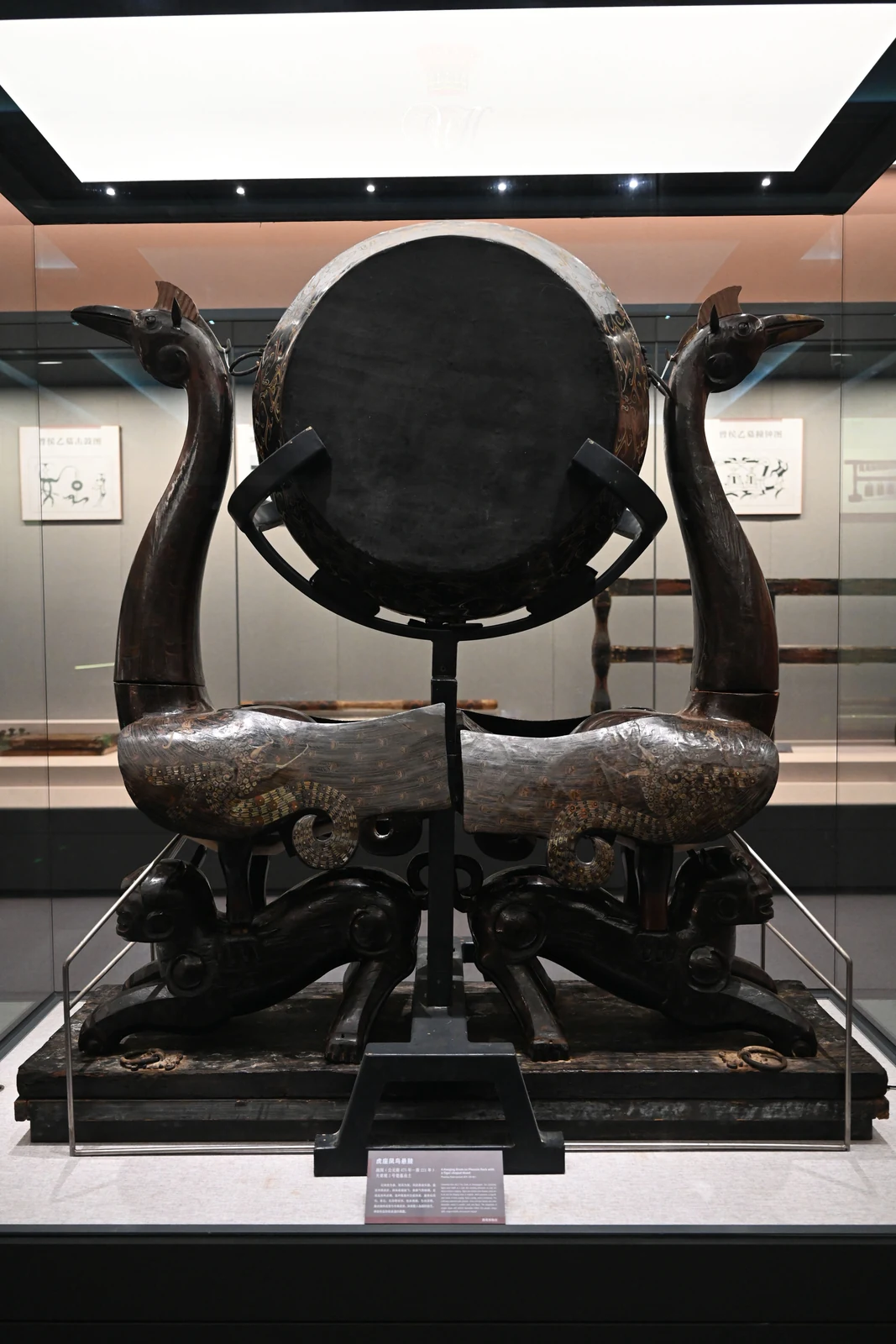
The drum has a body beneath it
Colour on carved wood
Lacquer protects and colours the wooden forms. Curving outlines, patterns and the meeting of animal bodies give the object a visual energy different from a plain wooden stand. The material matters: these are worked and painted wooden elements, not a bronze casting. Excavation and conservation make such vulnerable materials available to view long after the burial that preserved them.
Music given a visible shape
The drum belonged to a world in which instruments expressed rank, ritual and craft. At Wuhan, the bells from Marquis Yi’s tomb make another musical ensemble visible through bronze and suspension frames. The drum and bells come from different burials and use different materials. One gives sound a frame of carved animals; the other brings casting, inscriptions and carefully arranged bells into a courtly installation.