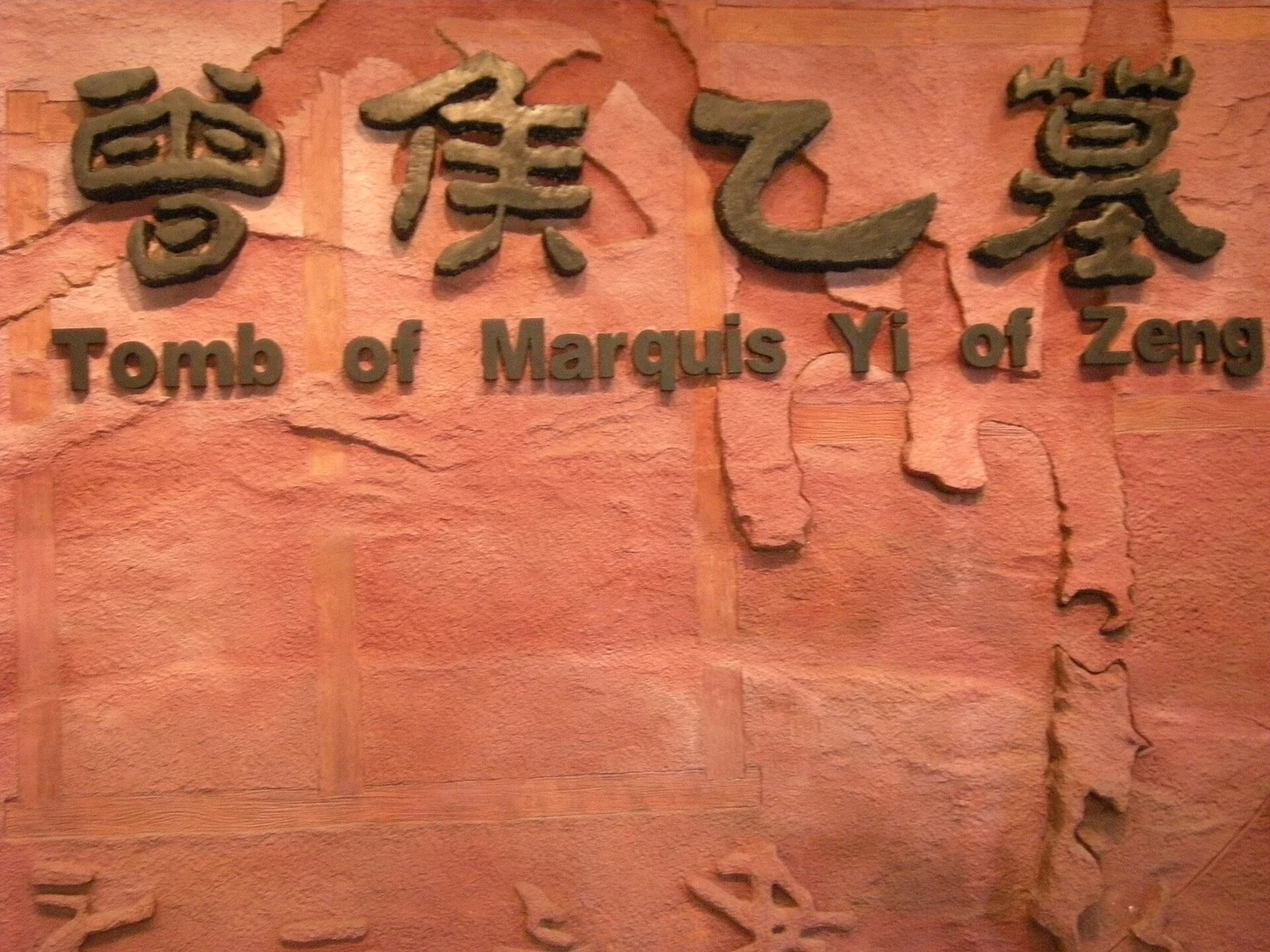
The tomb excavated in 1978 at Leigudun in present-day Suizhou belonged to Marquis Yi of Zeng. It is not in Shiyan’s Yunyang District. The burial’s wooden chambers held an extraordinary assembly of objects, including musical instruments and bronze vessels. Their arrangement offers a wider setting for the bells than the familiar image of the chime frame alone.
From the journal
The Tomb Behind the Bells
At Leigudun in Suizhou, Marquis Yi’s tomb places the famous bells within a burial containing instruments, vessels and a ruler’s ordered world.
In the same city · Suizhou, Hubei ↗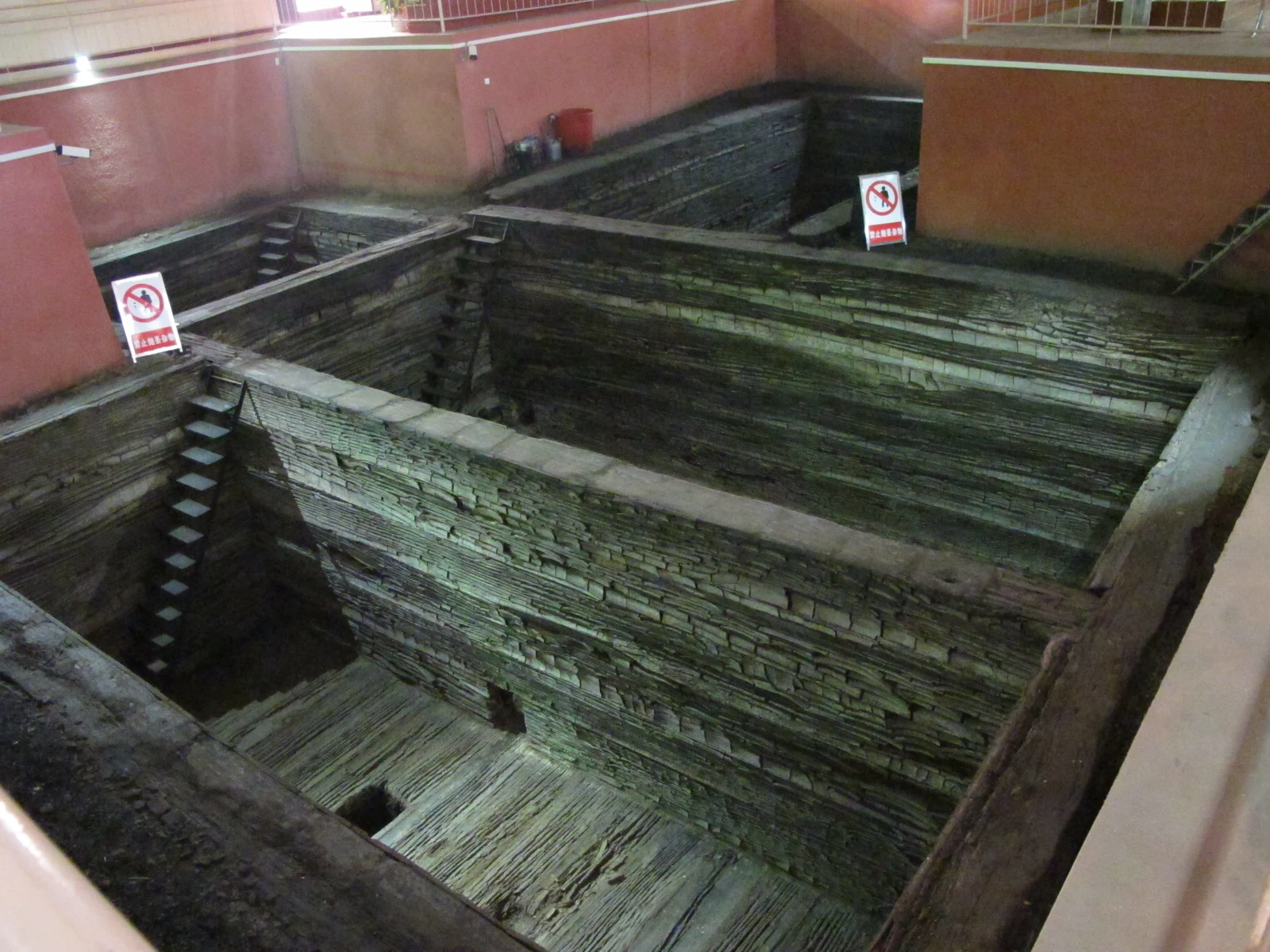
A discovery at Leigudun

An ensemble around a ruler
The bells formed part of a larger musical world that included stone chimes and other instruments. Bronze vessels, inscriptions and burial spaces help archaeologists interpret rank, ritual and connections between Zeng and neighbouring states. The name Zeng is important: the tomb preserves the identity of a particular polity, even while its objects belong to a wider history of exchange in the region.
The find and the collection
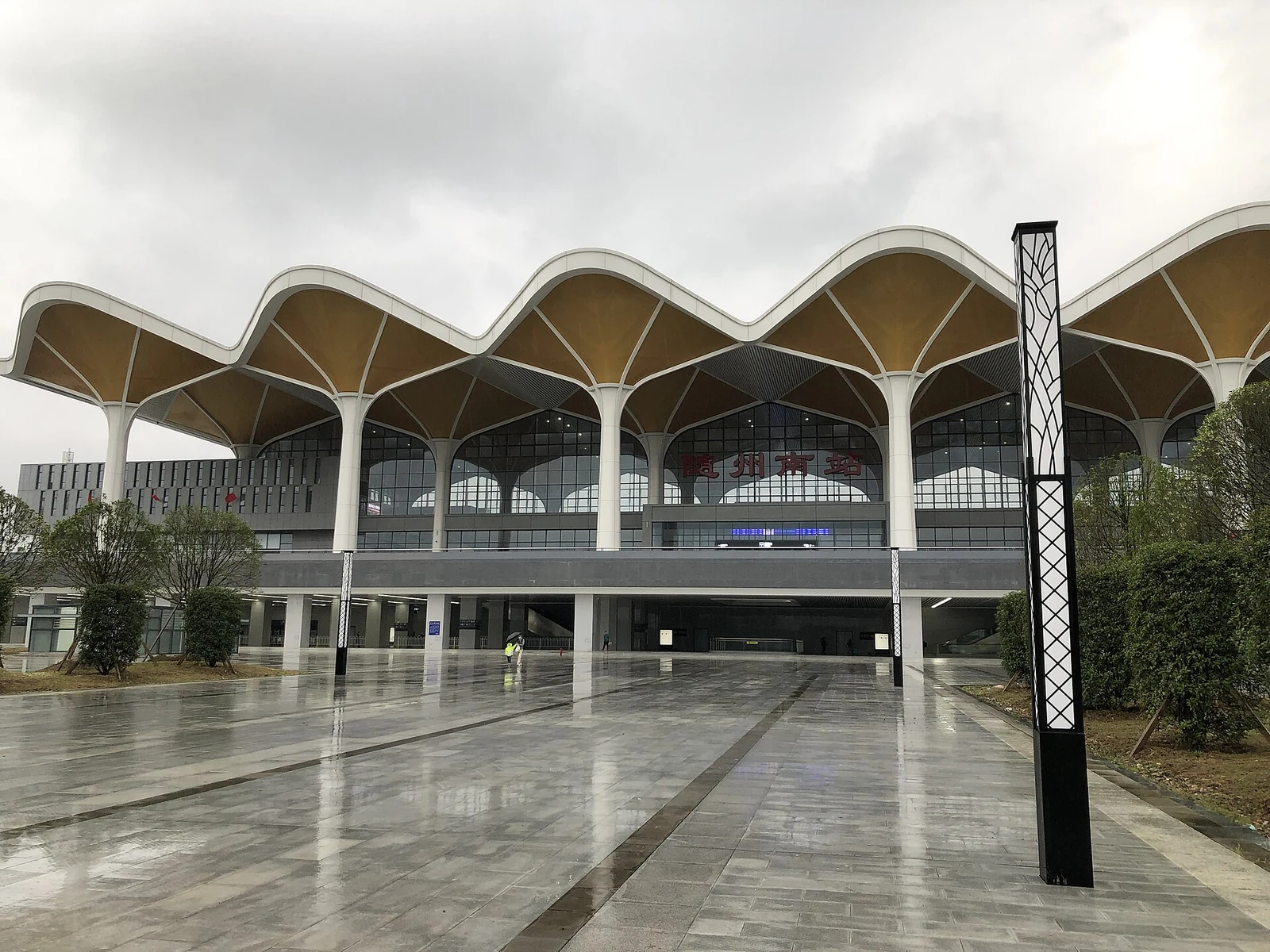
The excavation site remains in Suizhou, while the celebrated bell set is held by Hubei Provincial Museum in Wuhan. A view of the conserved instruments can be followed back to the chambers in which they stood. At the site, the shape of the burial gives objects a spatial setting; in the museum, conservation and display allow their materials and inscriptions to be examined closely. Together, the two locations keep the discovery in view.