Tang Xianzu (1550–1616) was a playwright, poet, and essayist from Linchuan, in present-day Fuzhou, Jiangxi. He passed the metropolitan civil-service examination in 1583, served in several government posts, and became county magistrate of Suichang in Zhejiang. After submitting a sharply critical memorial to the court in 1591, he left office and returned to his home region in 1598. He built a retreat called Yumintang, or Jade Camellia Hall, and wrote there. The four works later grouped as the Linchuan or Yumintang Four Dreams use dreamlike crossings to test what people desire and what society permits.
From the journal
Tang Xianzu, Du Liniang, and the Four Dreams of Linchuan
Du Liniang dreams of the scholar Liu Mengmei, dies of longing, and returns to life. Tang Xianzu’s other three “dreams” turn love, power, and ambition into different stories.
In the same city · Fuzhou ↗A playwright from Linchuan
Du Liniang meets Liu Mengmei
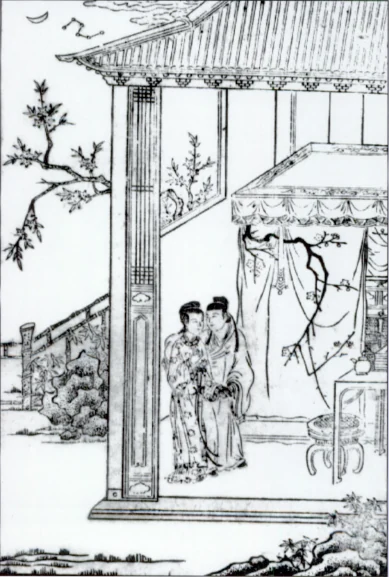
The best-known story begins with Du Liniang, daughter of Du Bao, a magistrate in the play. Her tutor reads the “Ospreys” poem from the Book of Songs; the lesson awakens questions about love and adulthood. One spring, her maid Chunxiang takes her into a neglected garden. There Du dreams of a young scholar, Liu Mengmei. On waking she searches the garden for him, but cannot find him. Her longing turns to illness, and she dies. The story is set in an imagined Southern Song world. Du experiences the dream as emotionally real, and the play lets that private awakening set its plot in motion.
A dream that reaches beyond death
Three years later Liu arrives to study for the examinations and stays at a monastery near Du’s grave. He finds her self-portrait, painted before her death, and is moved by the face and presence it preserves. The image gives him a way to know the woman he first encountered in a dream; Du’s spirit visits him, and their bond continues across the boundary of life and death. Liu opens her tomb, and Du returns to life. They marry, but her father refuses to accept either her return or a marriage made without his authority. To Du, the choice is the fulfilment of a bond she has claimed for herself; to Du Bao, it challenges the parental control by which he expects to arrange his daughter’s life. The conflict reaches the emperor’s court, where Du appears in the flesh and their marriage is finally recognised. The impossible return gives dramatic force to a human demand: a young woman’s desire and choice deserve to count.
Four dreams, four kinds of longing
The other plays widen the question. In The Purple Hairpin, Huo Xiaoyu and Li Yi fall in love, but a powerful official separates them; a yellow-robed stranger helps bring the truth to light. In The Record of the Southern Bough, Chunyu Fen dreams that he marries a princess in the ant kingdom of Huai’an and governs Nanke. Rank and success fill what seems a lifetime, then collapse when he wakes. In The Handan Dream, the poor scholar Lu Sheng sleeps on a magic pillow at an inn and experiences decades of office, wealth, and reversal before waking to find the innkeeper’s millet still cooking. Together, the works move from lovers’ claims to the seductions of status and power. Linchuan matters as Tang’s home and chosen place of work: he returned there and wrote there, giving the four plays a real local point of origin.