The academy stands at Jizhou, in the city that has been the seat of Ji prefecture since the Sui reorganised the region, on ground that the river now partly surrounds. The name records the place rather than the institution: the ji of Jizhou comes from a sandbar where the Gan and the En rivers run together, and the shape of that bar gave the prefecture its name. An academy here was built at a bend in a river, which is a different proposition from one built on a mountain road, and it explains the town's shape as much as the school does.
From the journal
The island of readers
A Song academy built on an island in the Gan River, and the boy who studied there in 1256.
In the same city · Ji'an ↗An academy on the water
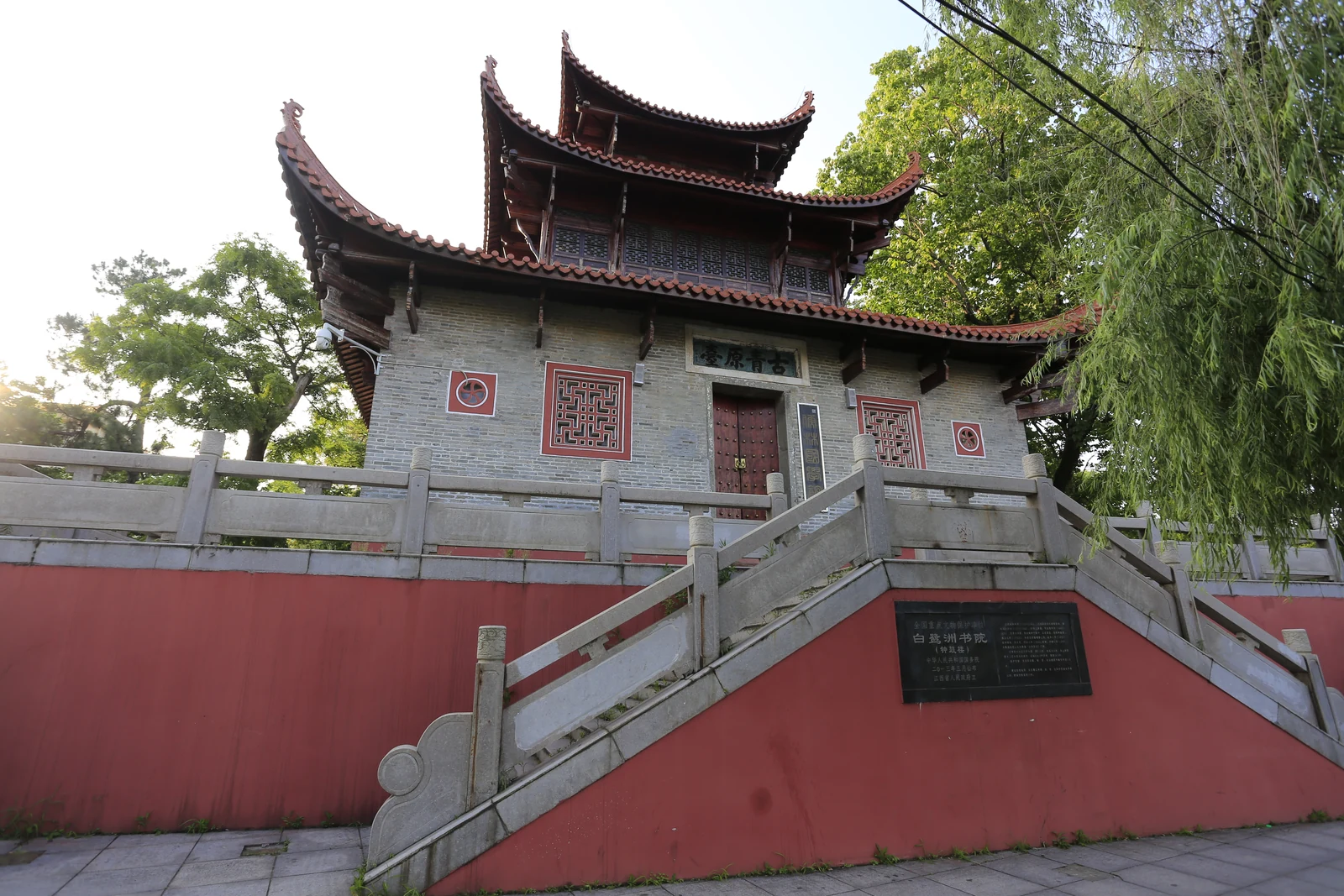
The student of 1256
In the Baoyou fourth year, 1256, Wen Tianxiang entered the academy to study, and in the same year he was selected as the provincial scholar of Jizhou and went with his father to the Southern Song capital for the examinations. He was born in 1236, in what is now Jishui County of Ji'an, and would take the metropolitan examination first place in his twenties. The academy is worth visiting for that reason, not as a shrine: it is the room where a twenty-year-old who would one day refuse to surrender was sent to learn.
What an academy was for
The Southern Song academy was an institution with rules, a curriculum, a teaching post and a name granted by the court, and that is a much more worldly thing than a commemorative hall. It existed to prepare men for the examinations while also, in the Confucian view, to make them fit to govern. The city's own history has been written around that function for eight hundred years. Read Bailuzhou as a working institution, and the other academies in Jiangxi, at Lushan and at Ehu, fall into the same pattern.