Work on the old Binzhou railway bridge began in May 1900; it was completed in August 1901, carried temporary traffic that October, and entered regular railway service in 1903. The Harbin Archives account follows construction below the trusses: south-bank piers were sunk in wooden caissons through winter ice to a depth of 14.6 metres, while north-bank piers used well foundations dug to 10.69 metres. The archive says 350 experienced caisson workers were recruited from Russia and eighteen caissons and wells were made in six months.
From the journal
Old Songhua railway bridge: foundations, floods and repairs
The old Binzhou railway bridge was built on deep caisson foundations, repeatedly repaired after cracks and floods, and preserved as a public park landmark after railway service ended.
In the same city · Harbin ↗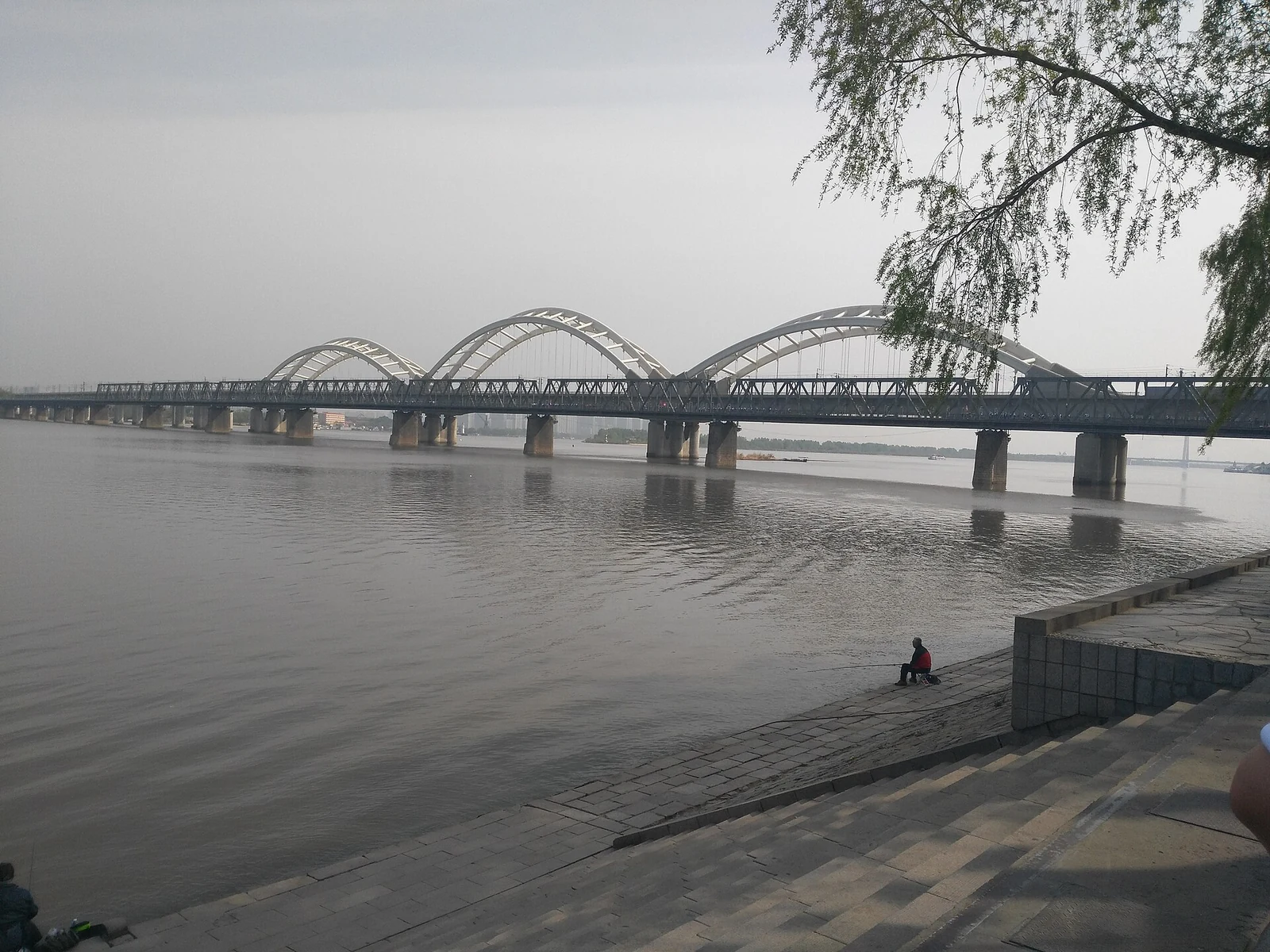
A crossing built through winter ice
Cracked beams and flood-shifted piers
A crack in the ninth span appeared in 1924; a 1928 overhaul replaced the damaged beam. In August 1932, floodwater pushed three piers northward, requiring another major repair. Later strengthening was just as specific: walkways were added along both sides in 1962, the south-side lower truss was replaced between September 1962 and August 1963, and the northern upper spans were replaced in 1971–72. The archive makes the bridge’s maintenance history part of its engineering story.
Railway service gives way to a park
In 2010, a revised plan kept the old bridge as a city landmark and put a new railway bridge more than 50 metres downstream. The last train crossed the old bridge in April 2014. Two years later, the Middle Eastern Railway Park opened along the preserved bridge and its associated lines, carrying the railway crossing’s history into a public riverfront setting.