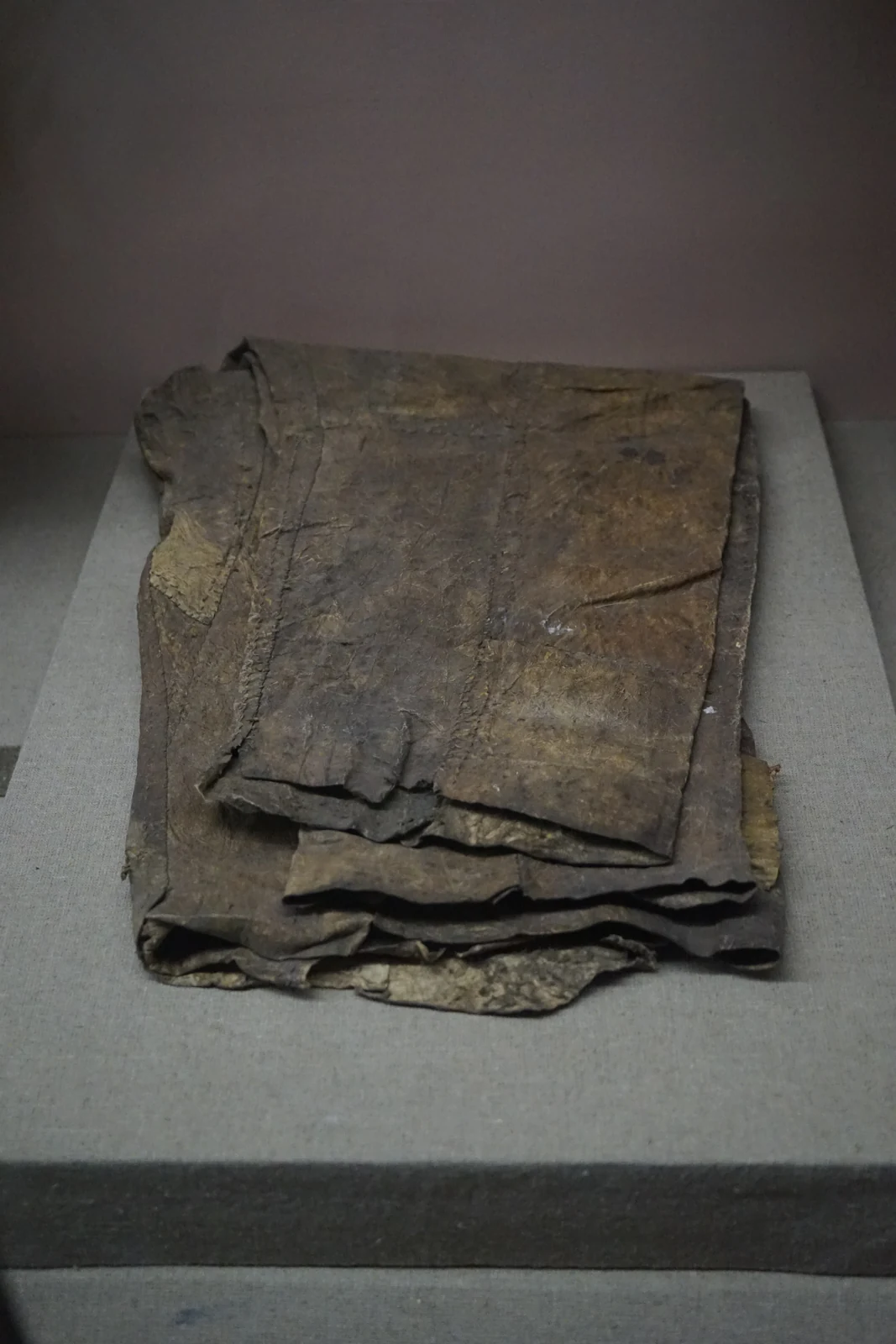
Imakan is a Hezhen oral tradition combining prose and verse in spoken and sung performance. In Jiejinkou, documentation, teaching and public performance have become part of a community-centred safeguarding effort.
Read ↗ Forty-five kilometres northeast of Tongjiang, Jiejinkou’s cultural village sits beneath Jiejin Mountain in the lower river country. Its public displays bring Hezhen history, fishing life, fish-skin culture and oral performance into one place.
Read ↗ Bachan’s fishing-and-hunting cultural area offers a distinct Hezhen perspective within Tongjiang. Municipal materials connect the site with fish-skin craft, Imakan performance, school teaching and heritage transmission.
Read ↗ 
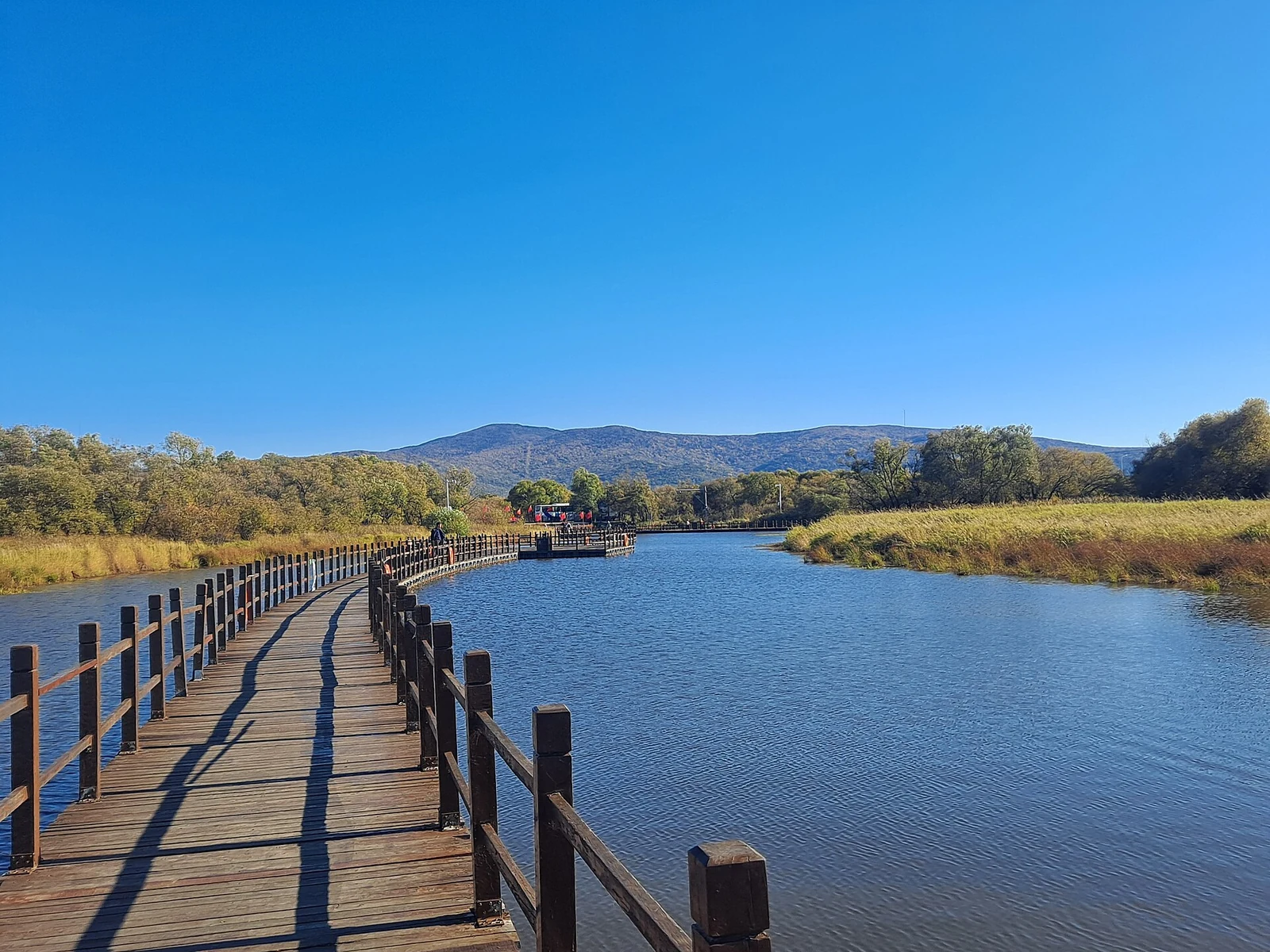
Fuyuan’s wetland park on Heixiazi Island uses wooden boardwalks to carry visitors through a landscape shaped by rivers, marsh and an international boundary.
Read ↗ Fuyuan’s Dongji Pagoda rises 81 metres above Heixiazi Island. Its nine storeys, octagonal form and symbolic plaza make a modern tower into a public expression of the city’s eastern identity.
Read ↗ Fuyuan’s fishing culture now includes cooperatives, cold-water fish branding and seasonal public events. A local cooperative’s live-fish sales show how river resources connect to modern livelihoods and conservation work.
Read ↗ A 2,200-hectare national wetland park sits within Fujin’s wider network of river margins, marshes and protected waters in the Sanjiang Plain.
Read ↗ Fujin’s rice landscape is built from water management, local labour and increasingly precise agricultural tools. A farmer’s account of smart irrigation shows how one field’s routine is changing.
Read ↗ In Huachuan, the Songhua and its tributaries form a water network that reaches from riverside settlements to marsh, island and farmland. A proposed forest park also links river wetlands with forest and archaeological landscapes.
Read ↗ Huanan’s woodlands support a diverse forest economy, from understory planting to berries and mushrooms. Local policy increasingly frames these products through cultivation and protection rather than unrestricted gathering.
Read ↗ Tangyuan sits between the eastern Xiaoxing’anling and the Sanjiang Plain. Its many tributaries, lowland ponds and a mid-century irrigation project show how forest, river and cultivated land fit together.
Read ↗