In Jiejinkou, a village of the Hezhen people in Tongjiang, fish skin is more than an unusual surface. China’s national intangible cultural heritage record describes northern cold-water fish skin as thick, resilient and durable enough for practical use. It records Hezhen people using fish in many ways: fishing and eating it, but also making fish skin into clothing, shelter and boats. The record identifies Jiejinkou as the place where this tradition continued from the Qing period into modern times. That history gives a fish-skin garment its meaning: it belongs to a way of making a life from the river, not to an exotic costume category.
From the journal
Fish Skin, Cut and Stitched: Hezhen Craft at Jiejinkou
At Jiejinkou, fish-skin making links Hezhen material knowledge to clothing, museum collections and contemporary fish-skin art. The work moves through distinct stages, from preparing a skin to cutting, joining and decorating it.
In the same city · Jiamusi ↗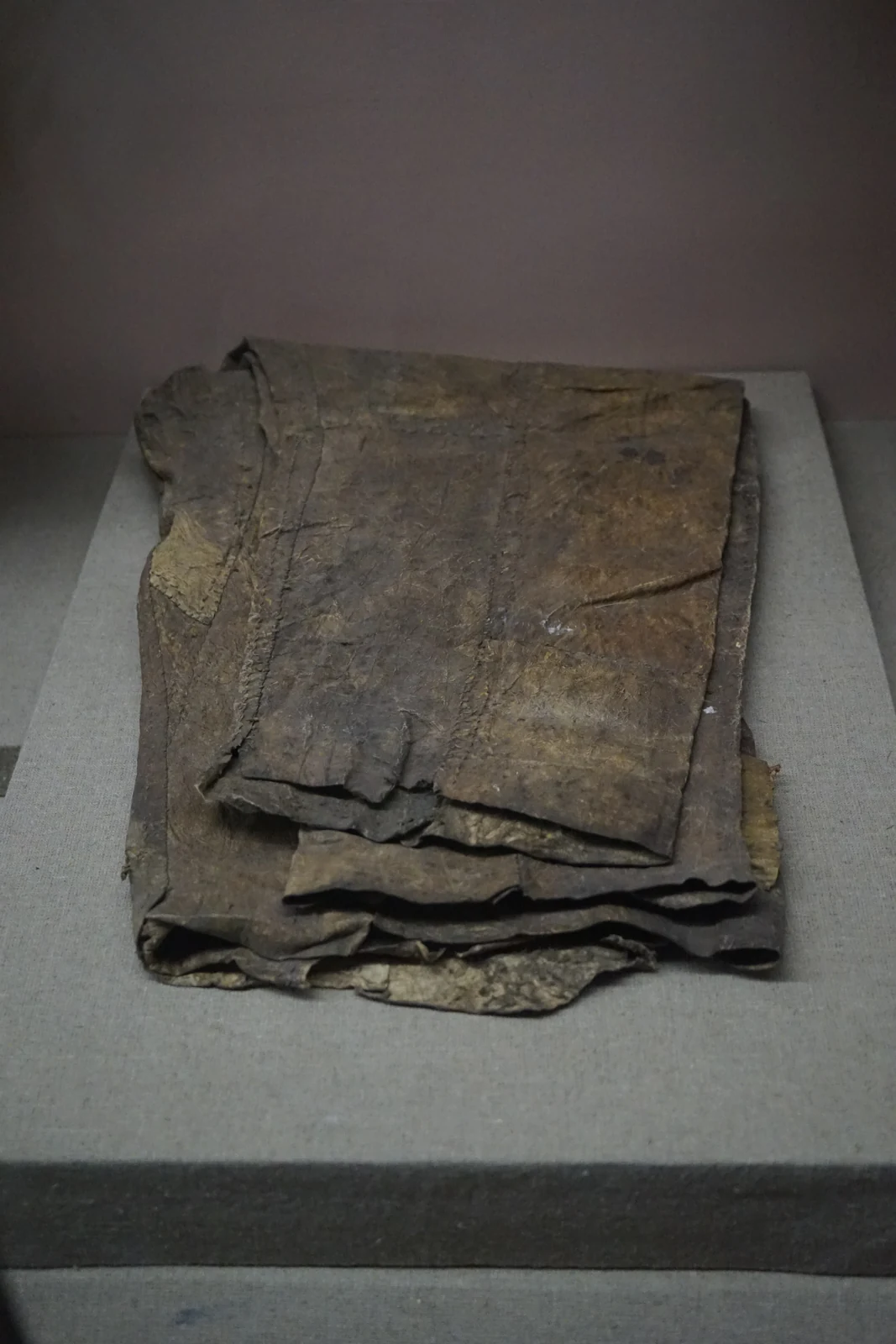
A material with a history
A sequence of careful work
The heritage record divides the craft into five broad stages: removing the skin, drying it, softening and preparing it, cutting and joining pieces, then adding artistic decoration. The sequence turns a pliable but durable material into an object that can be worn or used. The record describes a complex process rather than a single trick or tool. Its practical logic is visible in the stages themselves: a skin must be prepared before it can be shaped, separate pieces must be joined, and decoration comes after the object has been assembled. Each step carries knowledge of the material, from its thickness and resilience to the way it responds to cutting and stitching.
A craft that changed its purpose
Hezhen people historically used fish skin for clothing, shelter and boats, as well as making use of fish as food. The craft belonged to a river-based material culture in which one catch could meet several needs. In the mid-twentieth century, other materials replaced fish-skin goods and the skill began to decline. That shift changed the place of the craft in everyday life: what had been practical knowledge was increasingly carried by makers, collections and cultural memory. The history is not a simple story of an ancient garment surviving unchanged. It is a story of a material practice losing some of its former uses while remaining meaningful to the community.
From museum garment to contemporary art
Museum collections and cultural research gave older makers in Jiejinkou a reason to reproduce fish-skin clothing. The national heritage record also notes fish-skin shamanic garments and works based on Hezhen customs. Younger makers later adapted the traditional fish-skin cutting technique to contemporary crafts and paintings. A 2026 People’s Daily account describes Tongjiang craftswoman Yang Shuangyan cutting treated salmon skin into images of river waves, boats and flying gulls. Tongjiang’s 2025 government response describes training, school classes in fish-skin painting and demonstrations in visitor settings. Together, these examples show how a material skill has moved from practical objects into museum work, teaching and contemporary art, with each form serving a different purpose.