Luoyang water banquet is named for a movement, not an ingredient. The city's culture and tourism bureau explains the name in two parts: the dishes carry soup, so the liquid never stops coming, and each dish is cleared before the next arrives, so the meal runs like flowing water. The same page calls the banquet one of the three wonders of Luoyang, with the Longmen Grottoes and the peony, and dates it to the Tang court, from which it passed into ordinary life after the Song. The Ministry of Culture and Tourism's older account says the same and adds a third characteristic, vegetarian dishes cooked as meat, or made to imitate it. Those three ideas, soup, sequence and imitation, are the whole architecture of the meal.
From the journal
Twenty-Four Dishes, One Current
Luoyang’s water banquet follows a fixed sequence of 24 dishes: eight cold plates open the meal, soup dishes arrive in succession, and egg soup closes it.
Three Features and a Name
The Order of Service
The traditional banquet is described as 24 dishes. The city page groups them into eight cold dishes, four table dishes, eight large courses and four closing dishes. The Ministry of Culture and Tourism offers a closer view of the service: four meat and four vegetable cold dishes, then four large dishes, each accompanied by two smaller ones in a pairing called bringing the son to court. Sweet dishes, staple food and closing dishes follow; egg soup marks the end in this account. The sequence gives the meal its flowing rhythm, though a particular host or restaurant may arrange the service differently.
Turnip Into Swallow's Nest
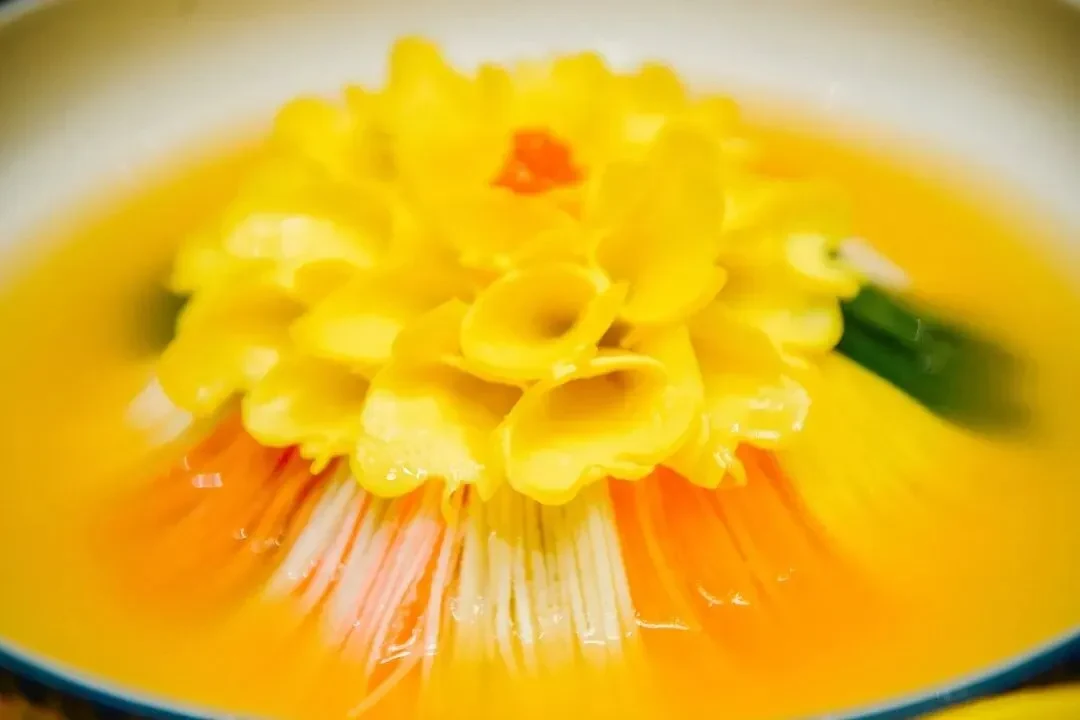
The most famous dish is made from a root vegetable. Peony swallow's nest, mudan yancai, began as Luoyang yancai, a soup of shredded white radish steamed and dried repeatedly until it took on the texture of bird's nest; the city page tells the story of an oversized radish presented to Empress Wu Zetian and turned by a court kitchen into a dish she named swallow's nest. In 1973, when Zhou Enlai brought the Canadian prime minister Pierre Trudeau to Luoyang, a local chef carved a peony from steamed egg yolk and set it in the middle of the bowl. Zhou's line, quoted on the page, was that Luoyang's peonies were the finest under heaven and now a peony had grown in the dish.
Fried Balls and False Sea Cucumber
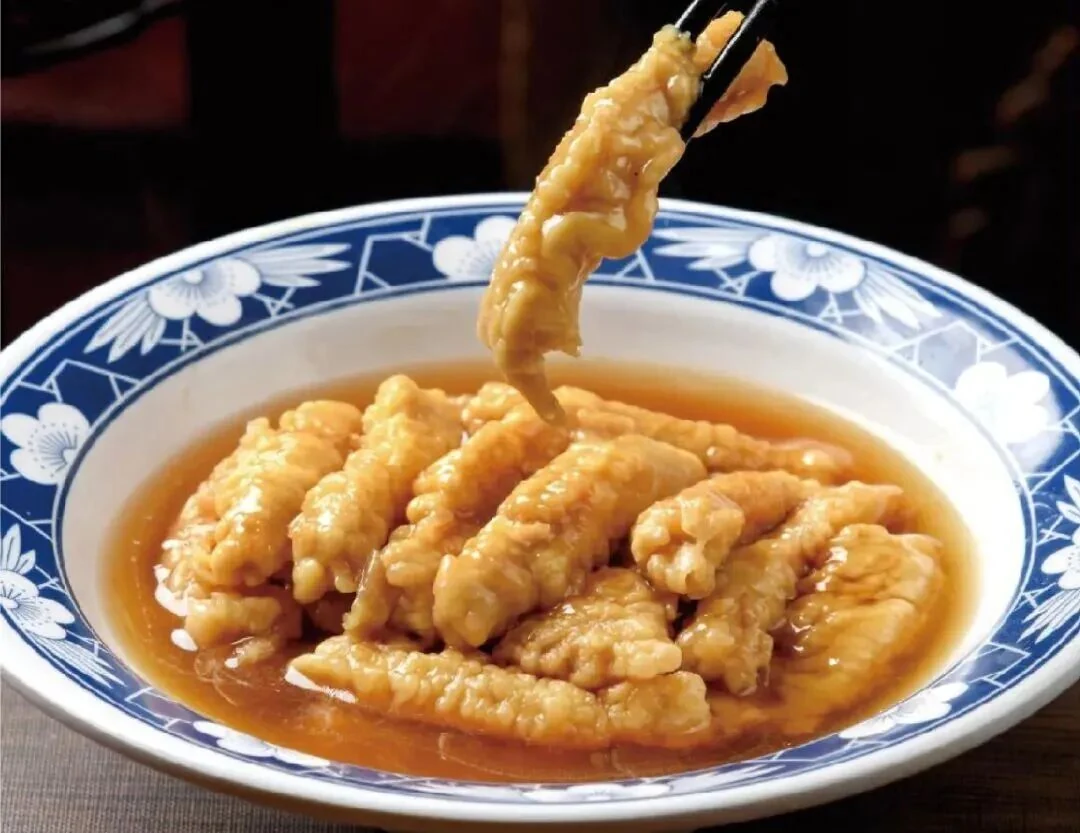
Two dishes show the kitchen's method better than the famous one. Fried meatballs are made from soaked glass noodles chopped with seasonings, flour and starch, shaped into balls, dried of their water in warm oil, then fried hard in hot oil and tipped straight into a hot-and-sour soup so that the crust is still crisp when it reaches the table. False sea cucumber takes sweet-potato noodles and sweet-potato starch, works them with meat stock into the shape of a sea cucumber, and braises the result in soup. Both are dishes of texture rather than luxury, and both depend on the same trick: a cheap material is given the mouthfeel of an expensive one, and the soup carries the flavour.