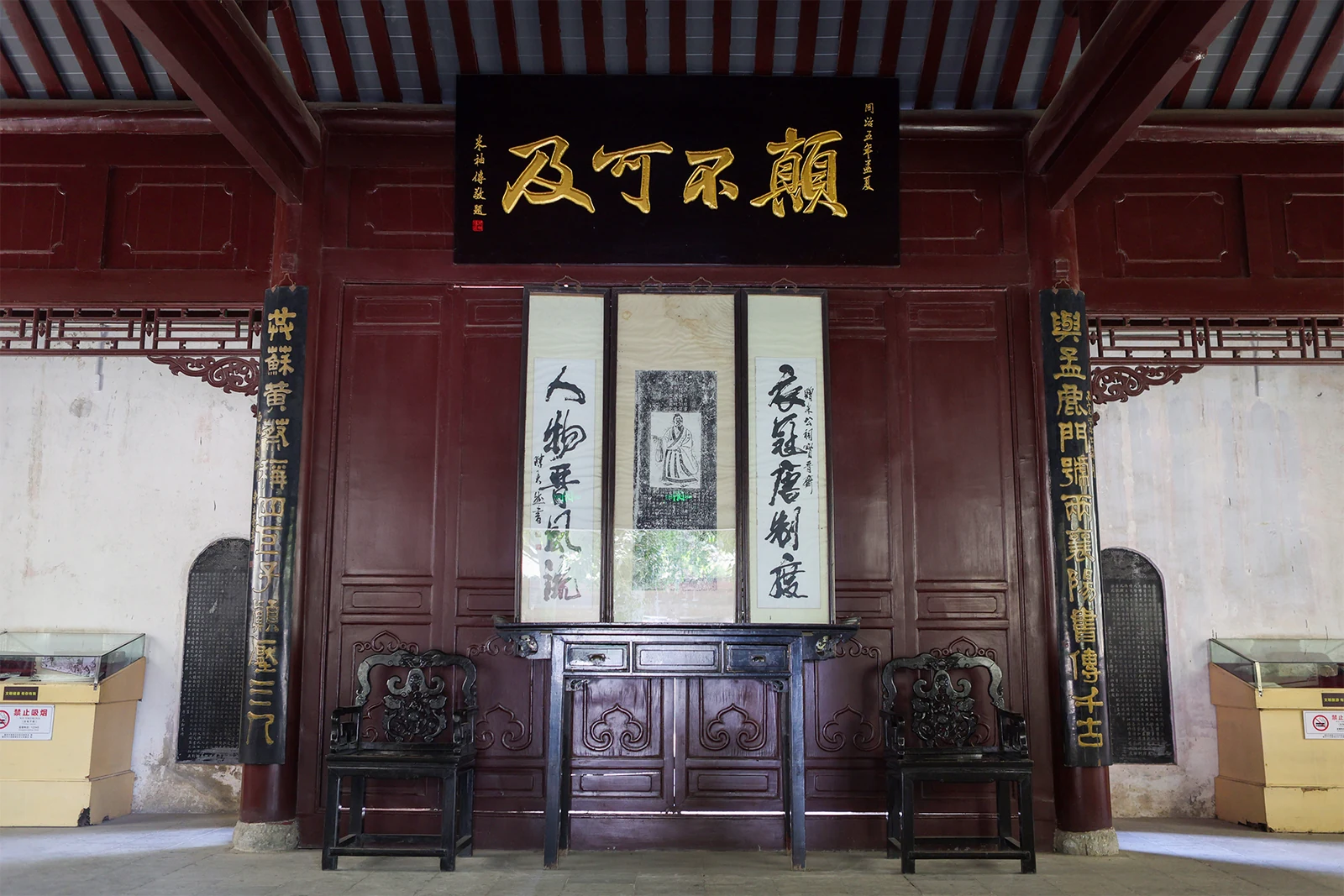
Mi Fu, who lived from 1051 to 1107, is remembered as a calligrapher, painter and connoisseur of the Song period. His association with Xiangyang made him an important figure in the city’s cultural memory. He belongs to a world of brushwork, collecting and exchanges between writers and artists.
From the journal
Mi Fu’s Brush, Remembered in Stone
At Mi Fu’s shrine in Fancheng, courtyards and carved calligraphy preserve the reputation of a Song artist through later acts of copying and remembrance.
In the same city · Xiangyang ↗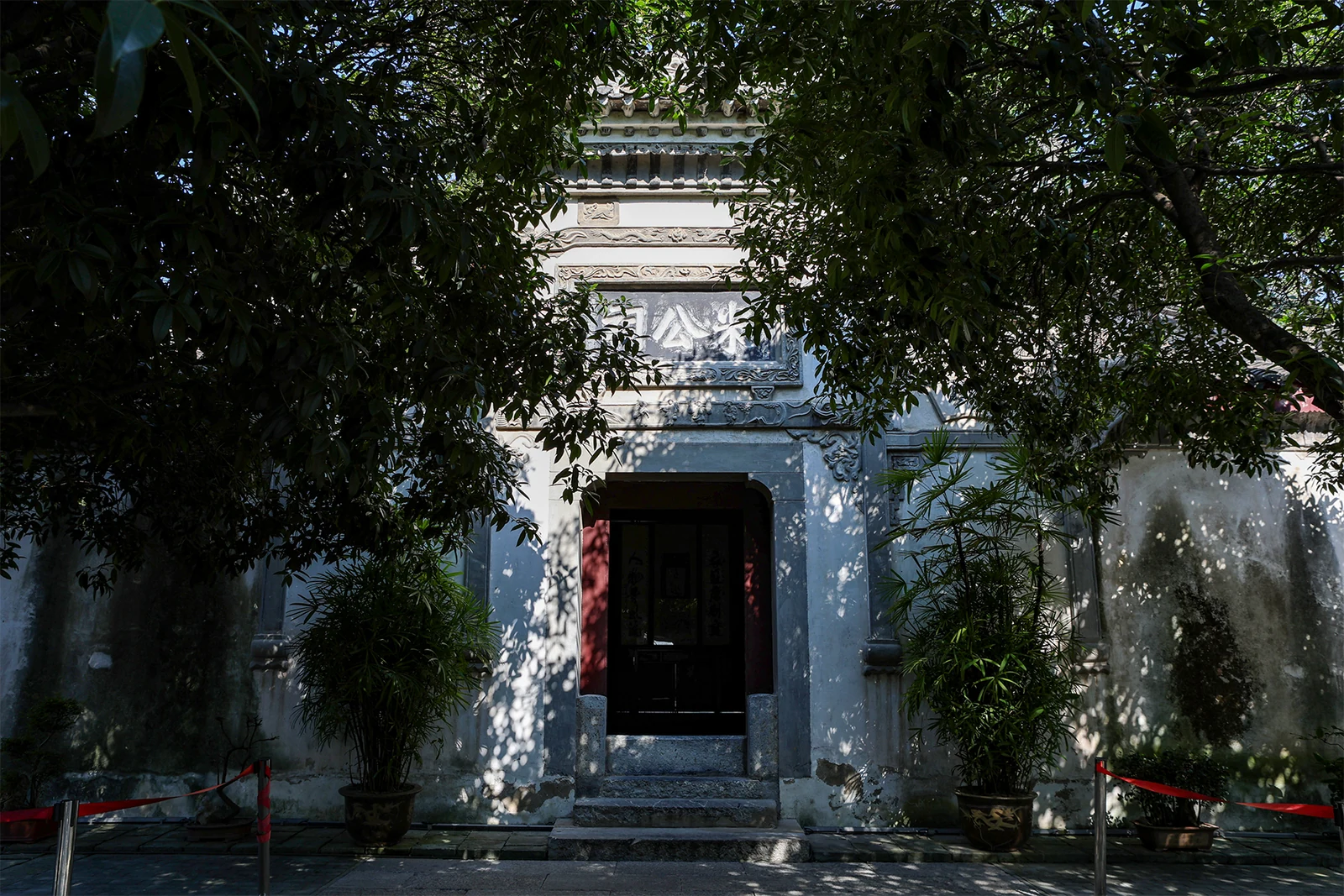
The calligrapher behind the name
A shrine on the Fancheng bank
Mi Gong Ci, the shrine to Mi Fu, stands in Fancheng on the north side of the Han River. Successive courtyards and halls frame an encounter with his remembered work. The complex took shape long after his lifetime and was enlarged and rebuilt over later periods. Its architecture gives carved writing room to be encountered: a line can be examined, copied or remembered before the visitor moves into the next courtyard.
Ink translated into carving
Carved calligraphy carries the movement of a brush into stone and makes it available through rubbings and later copies. The remembered ink-washing pond adds a story about repeated practice to that material history. At this shrine the useful questions concern writing, copying and how an artist is remembered. The stone inscriptions at Sanyu Cave offer another setting in which literary traces were preserved and recut.