Gezhouba stands downstream of Nanjin Pass, at the eastern exit of Xiling Gorge near Yichang. The river widens here after the gorge. Islands and divided channels formed part of the setting in which the project was built. The dam is downstream of the Three Gorges Dam at Sandouping; the two structures are separate projects at separate sites.
From the journal
The Earlier Dam at the Gorge Exit
Gezhouba, below Xiling Gorge at Yichang, introduced a large dam and ship locks to the Yangtze before the Three Gorges project upstream.
In the same city · Yichang ↗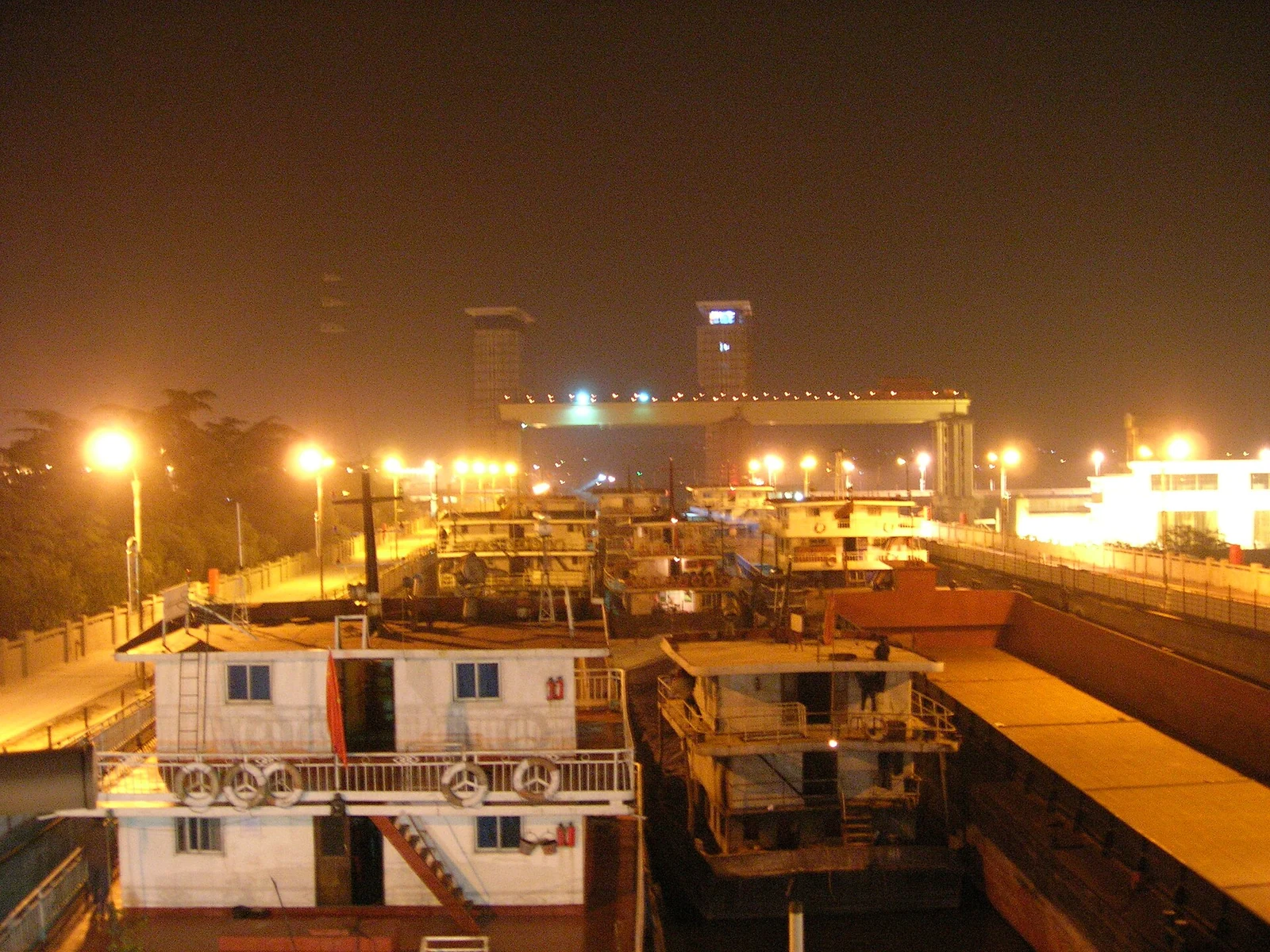
Below Nanjin Pass
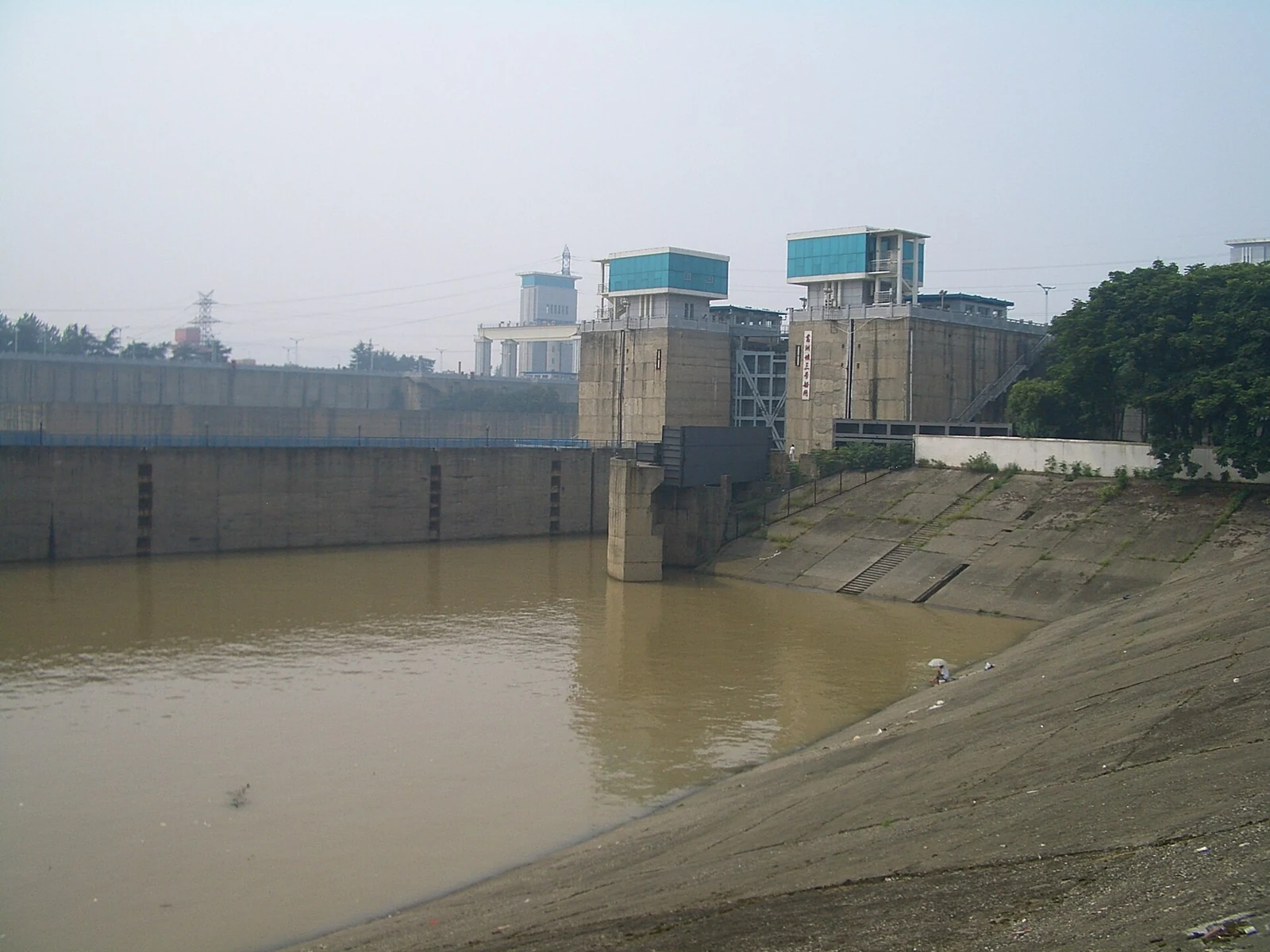
A lower dam and passing vessels
Construction began in 1970, and the project was completed in stages. Its comparatively low head, generating units and ship locks made it an important early large-scale intervention on the Yangtze main stem. The locks keep the story connected to river traffic: boats must pass through a managed change in water level rather than continue along the former current.
A different river for living things
A dam changes conditions for river life as well as for vessels. Barriers and altered flows become part of a wider ecological history that also includes fishing and other human pressures. Looking at Gezhouba through locks, turbines and the surrounding river therefore brings several kinds of movement together: boats passing through chambers, water through machinery and aquatic life within a transformed channel.