Shenhou sits in a bowl of mountains south-west of Yuzhou, and the county description of the town is short: early in the Xia and Shang periods the people here already ploughed and worked clay; from the Tang and Song onwards it became a centre for Jun porcelain and a production and collecting point for northern ceramics. The street itself is made of flagstones and runs seven li. Shops sell flower pots for a few yuan, tea sets and vases, and Jun-ware fridge magnets and zodiac figures. Around one corner the wall is stacked with broken Jun shards, and beside the old cannon tower stands the Ceramic Official Residence, a three-courtyard compound. The guide suggests stopping at a workshop: for around a hundred yuan a potter will take your hands through throwing a piece and send the result home by post.
From the journal
Seven Li of Flagstones, and the Hands That Turn the Clay
A walk through the Jun porcelain town of Shenhou, ending in an open kiln workshop where a piece is fired in front of you.
In the same city · Xuchang ↗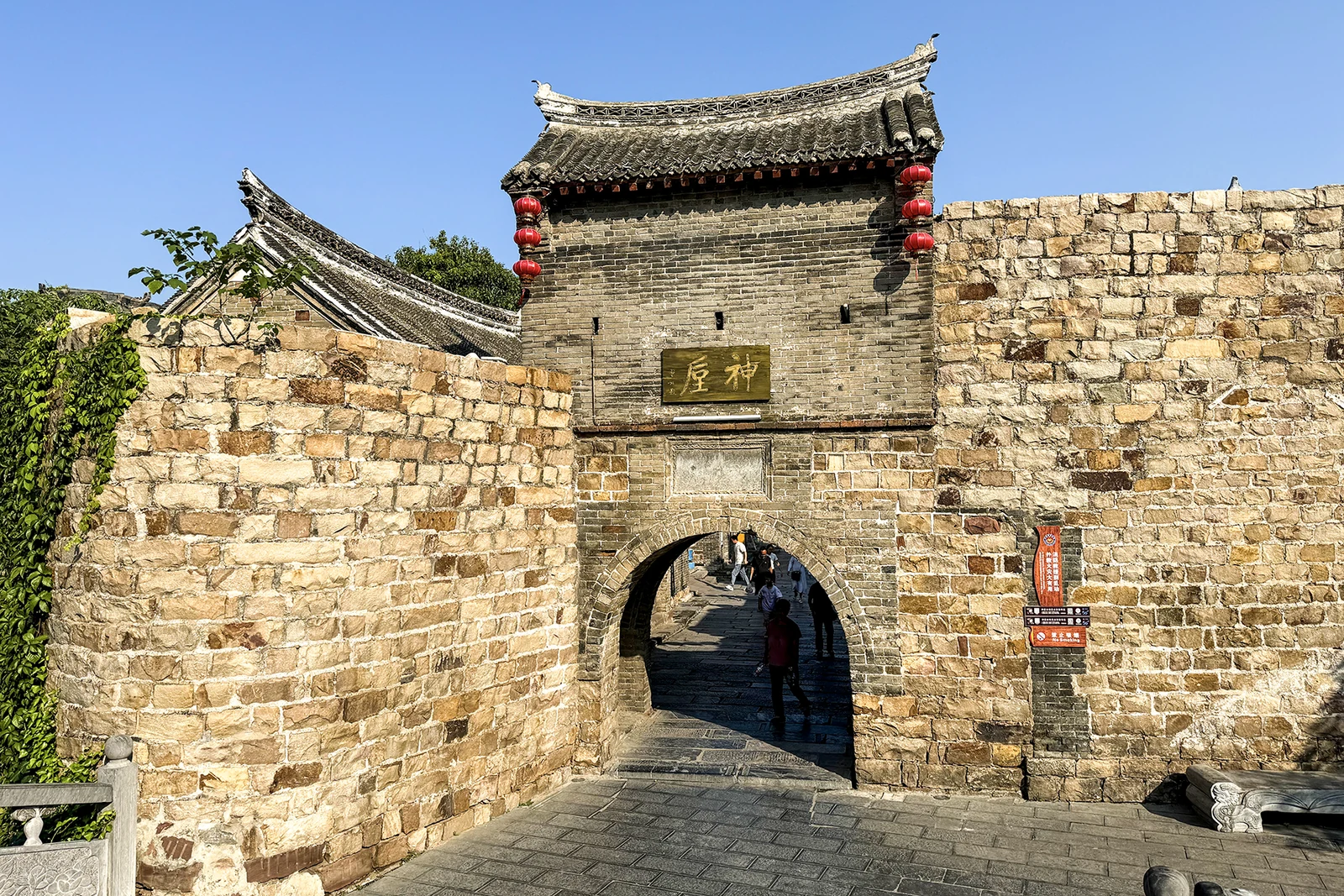
Walking the Old Street
Watching a Piece Go from Shaping to Firing
The county government’s autumn guide to Yuzhou lists the places where Jun ware can be watched rather than only bought. At the Ping Shan kiln, set against the hillside, the production workshop is open and a visitor can stand close while a piece moves from shaping through to firing, with potters explaining the process. Across town, the Song-Yuan Jun specimen museum holds a large number of old Jun pieces and uses them to read how the ware developed. The Jun Porcelain Culture Park has a heritage corridor where the line of the craft is laid out along a walk, and the Yuzhou city museum runs hands-on sessions in pulling, modelling and painting. At the Bajun porcelain garden, the kiln museum is open free and the making of Bajun ware can be tried.
What “One Colour In, Ten Thousand Out” Actually Means
The phrase used for Jun ware describes something physical. The provincial culture and tourism department puts it plainly: Jun ware depends on controlling the kiln temperature during firing, so that physical and chemical changes in the glaze produce the surface known as one colour going into the kiln and ten thousand colours coming out. Around that process, Yuzhou’s own city profile reports 2,420 recorded cultural heritage sites on the ground, 106 protected monuments at county level or above, two national intangible cultural heritage items and fourteen provincial ones, and describes the county as the only source of Jun ware among the five famous wares of China — a claim of the city government, repeated here as such rather than as an established finding. In the kiln town, the Shenhou porcelain kiln site museum makes opening ceremonies and master workshop study sessions a regular part of the year.