The national heritage entry for Ru ware describes a process that is as much about judgement as about recipes. The steps run from selecting material and kneading the clay through forming the body, the first firing, glaze making, glazing and the firing itself, and the whole is carried on a support of stacked bowls holding one vessel at a time. What makes it difficult is stated plainly: the skill has no written physical or chemical specification, and the control of glaze viscosity, flow, melting temperature and the slow cooling that produces the crystal effect rests entirely on the master's eye, judgement and feel, handed on by word of mouth from teacher to apprentice. Season matters too. Ruzhou potters choose their moment by the calendar and the weather, and autumn is recorded as the best time to fire.
From the journal
One Bowl, One Vessel
The firing method behind Ru ware, the hills that supplied its agate and kaolin, and the kiln sites still standing in the ground of western Henan.
In the same city · Pingdingshan ↗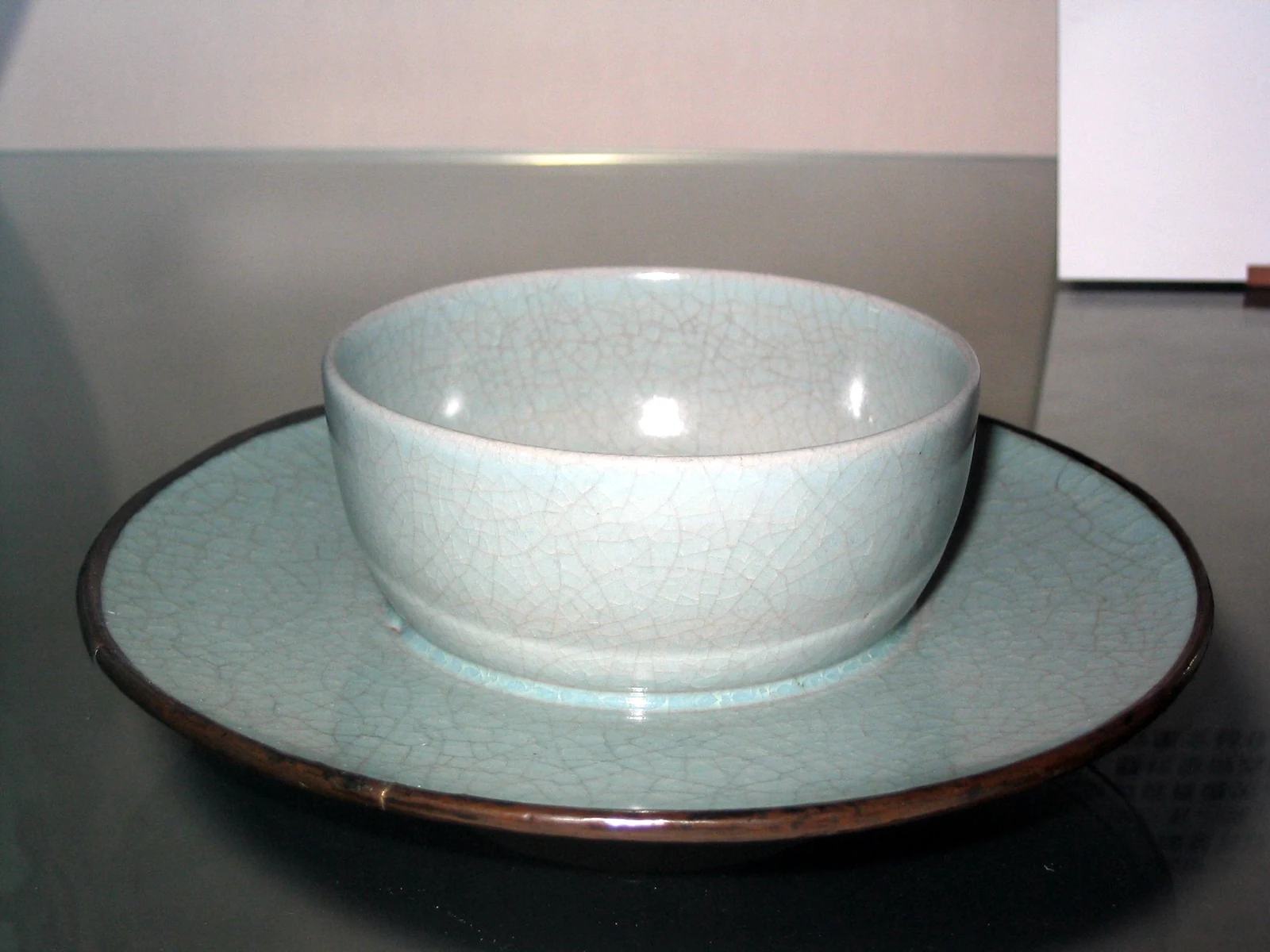
Eight Steps, and No Measuring Stick
Why This Valley, and Why Agate
The reason the ware belongs to this particular place is written into the ground. Ruzhou is described as a hundred li of coal sea, and it produces kaolin, agate and clay for ceramic bodies, conditions the heritage entry calls naturally suited to the birth, growth, maturing and flourishing of the Ru firing technique. The traditional rule that agate goes into the glaze explains the famous surface: a quiet, even colour with the description blue as sky, smooth as jade, soft as milk and clear as a stone chime. The same entry also carries the older judgement that Ru ware stood first among the Song dynasty's five famous kilns, and notes that the craft fell out of court hands after the Jurchen invasion and was carried into village workshops instead.
The Kilns Still in the Ground
Sites carry the argument where the glaze cannot. The provincial account of Pingdingshan's ceramic history counts twelve nationally protected ancient kiln sites in the province, five of them in this city: the Dudian kiln at Lushan, the Ru official kiln at Qingliang Temple in Baofeng, the Zhang gongxiang kiln and the Yan hedian kiln in Ruzhou, and the Donggou kiln. The same page dates the city's ceramic practice to the Peiligang culture more than 8,000 years ago and counts over sixty Ru and other kilns of the Tang, Song, Jin and Yuan periods, with more than 500 significant ceramic objects. Modern production now runs alongside: the Ruzhou Ru Porcelain Town has taken in 57 enterprises and more than 60 new kilns.