The red-brick building near Yuema Field, south of Snake Hill in Wuchang, began as the Hubei Provincial Consultative Council’s premises. Its symmetrical façade and assembly spaces belonged to a late Qing experiment in provincial political institutions. The colour of the main building gave it the familiar name Red Building. Its revolutionary association came after the building itself was completed.
From the journal
The Red Building and the Days of 1911
Wuchang’s Red Building changed from a provincial assembly to the seat of the 1911 military government and later a memorial museum.
In the same city · Wuhan ↗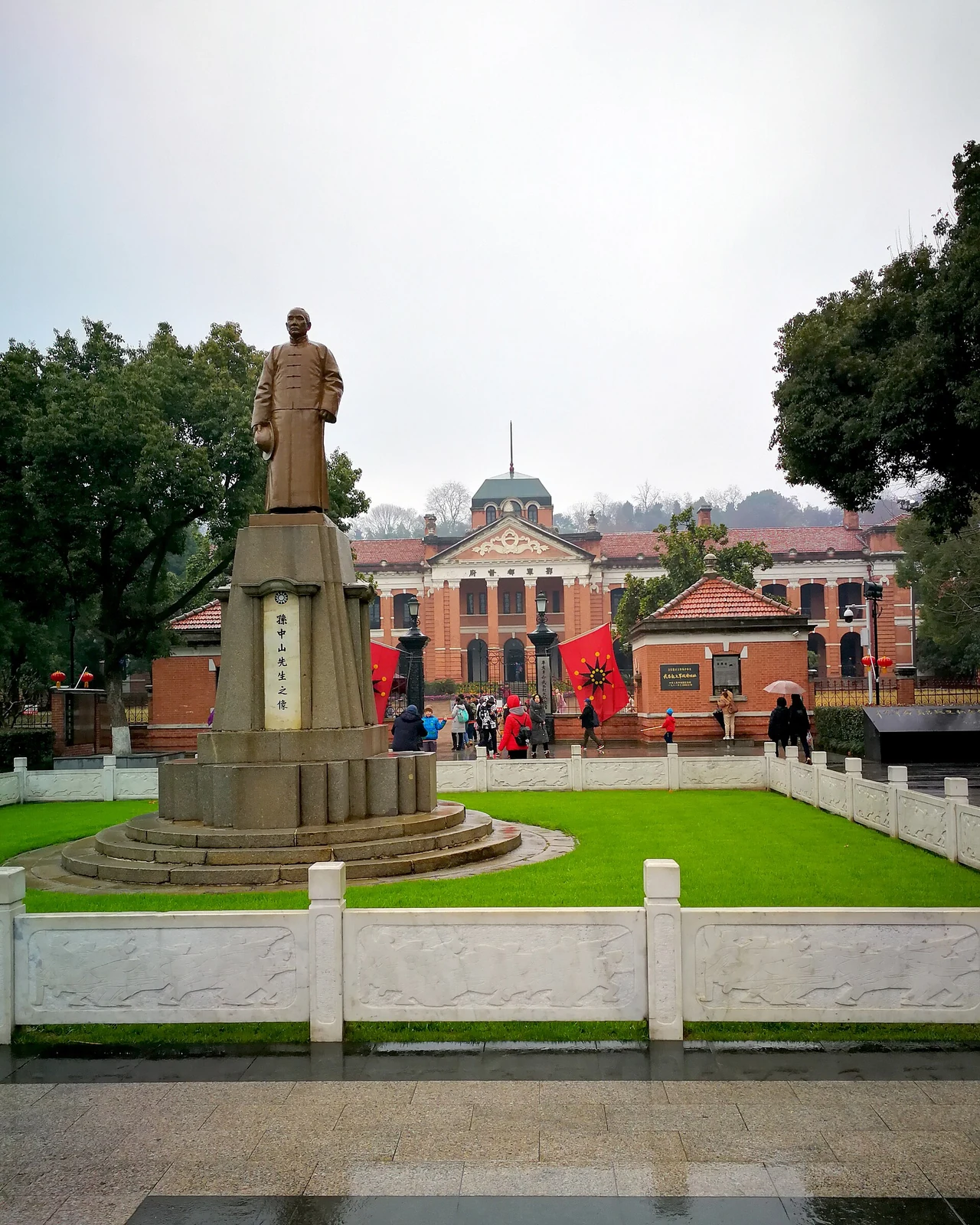
Before it was a memorial
An evening and a new government
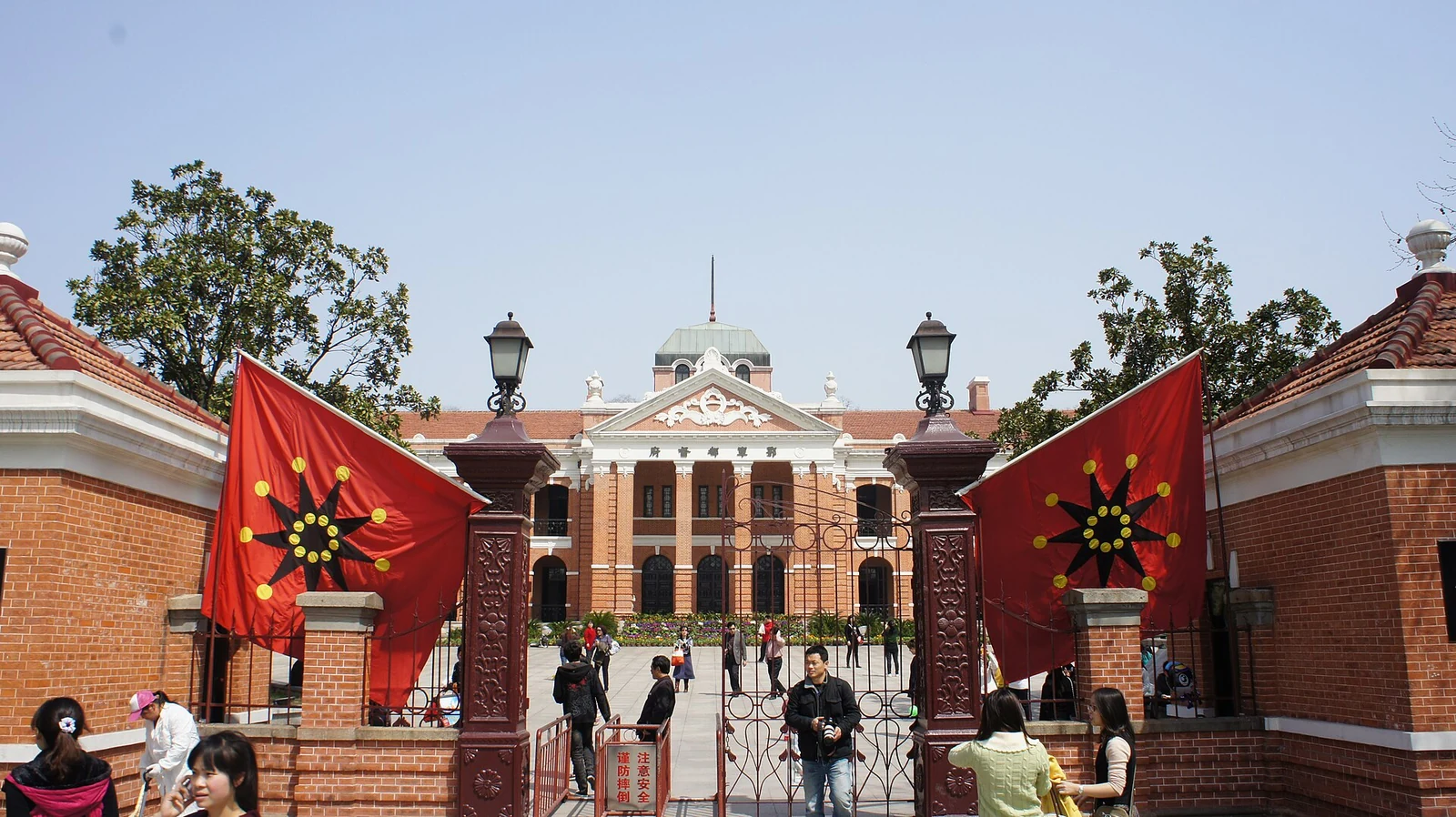
The Wuchang Uprising began on the evening of 10 October 1911. On 11 October a military government for Hubei was established in the former assembly building. The uprising became a decisive event in the wider Xinhai Revolution, which led to the end of Qing rule. Keeping the evening of the uprising separate from the next day’s government explains the building’s role more clearly than calling it the place where every part of the revolution began.
Rooms that carry a change of use
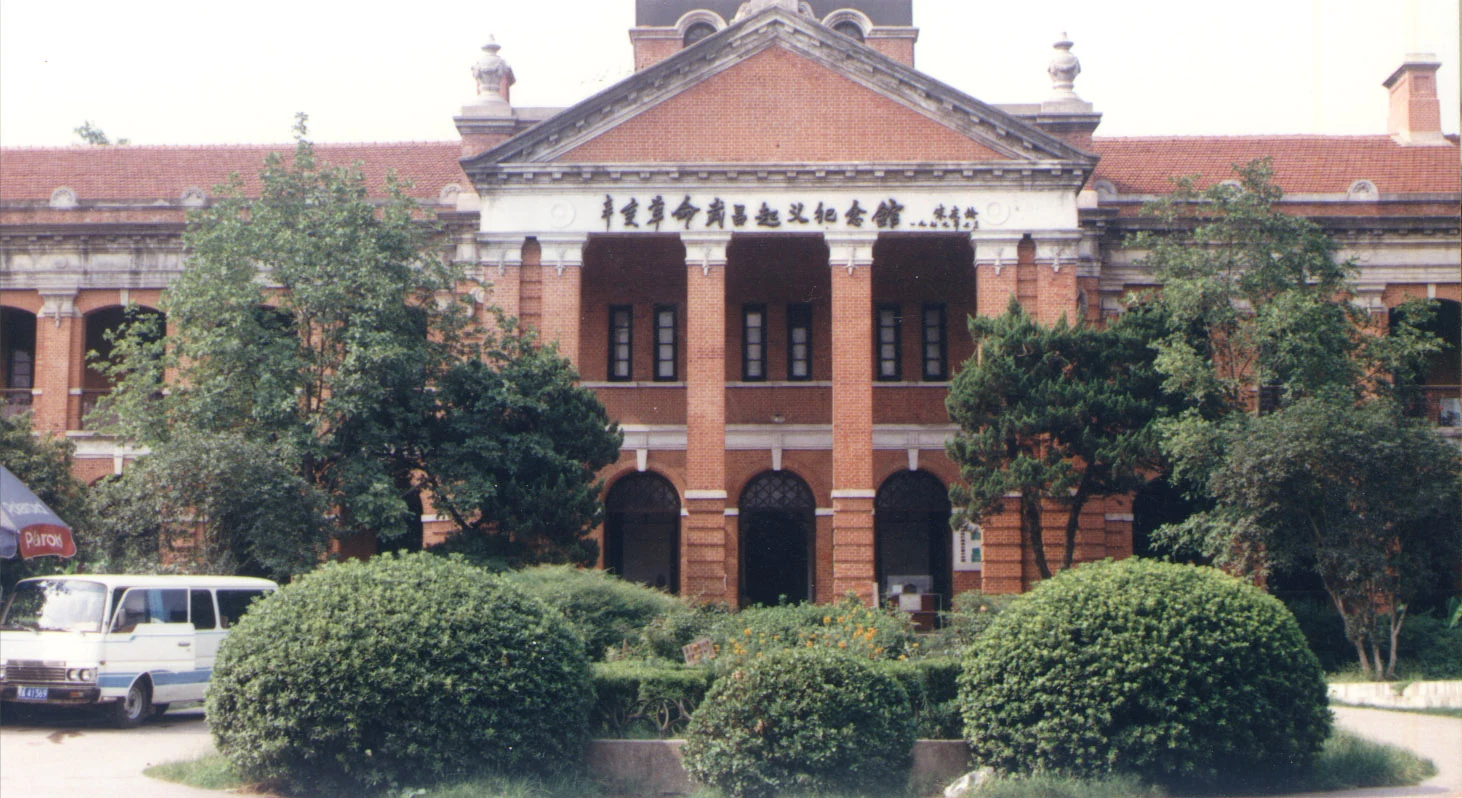
The memorial opened in 1981, on the uprising’s seventieth anniversary. Exhibitions and restored spaces connect the building’s earlier assembly function with the military government that occupied it. The same façade has framed different kinds of public authority. Inside, rooms, documents and displays allow a visitor to follow that change at the scale of a building, alongside the wider events of the Xinhai Revolution.