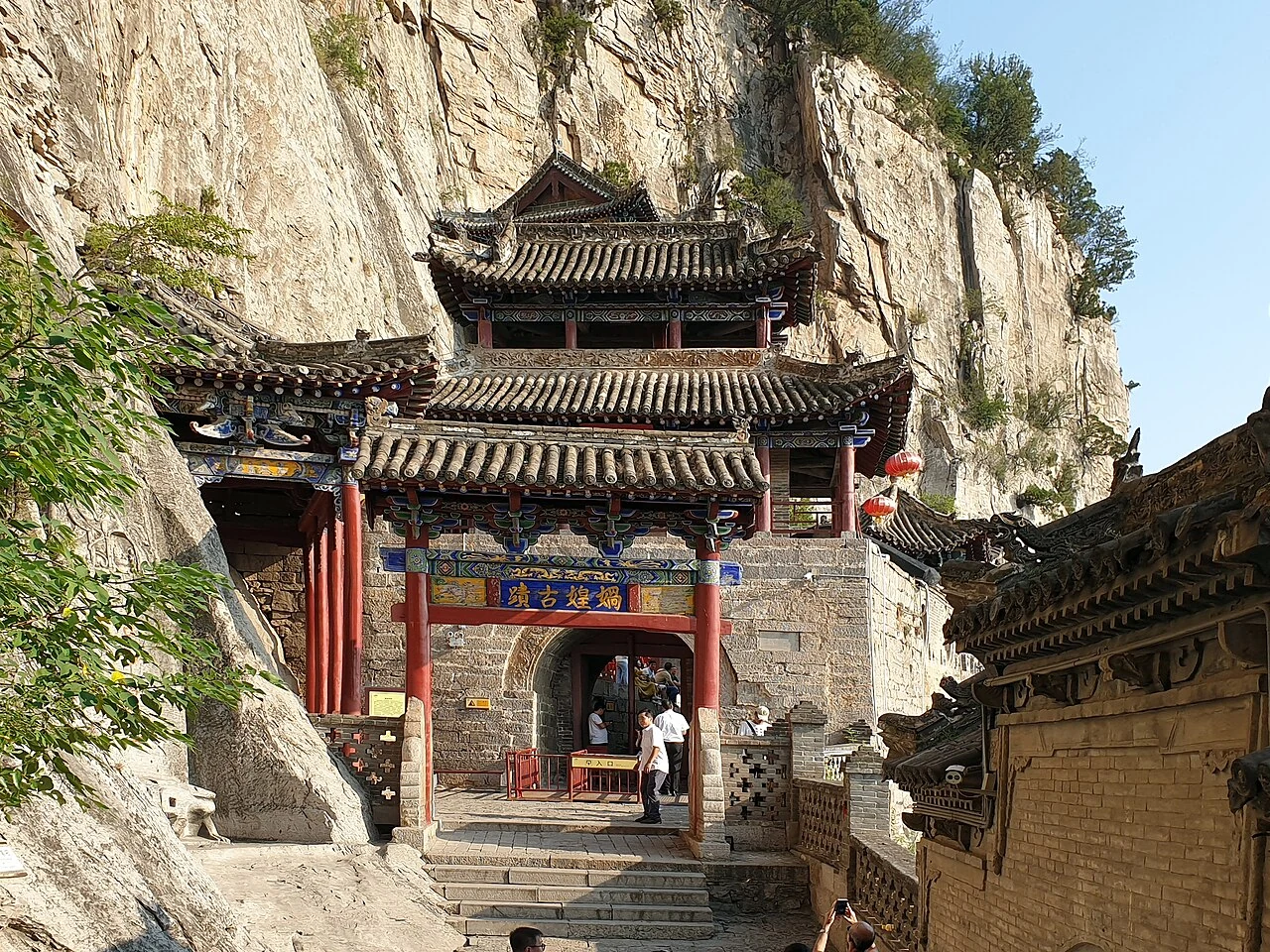
On the rockface at Phoenix Mountain in She County, in the west of Handan, Buddhist scripture is cut straight into the stone. Two caves in the Wahuang Palace complex hold most of it: the Chinese account gives more than 131,000 characters, the English one 130,000. Either figure makes this the largest surviving body of Northern Qi cliff-cut scripture in China.
The work began in the sixth century, under the Northern Qi. What is left is the text itself, a body of characters that has outlived the dynasty that ordered it by more than fourteen centuries.
Wahuang Palace itself is a compound of palaces and temples beside the mountain, not a Buddhist foundation. It honours Nüwa, the goddess of Chinese myth who made human beings and mended the sky. The built halls and the cut text belong to different religions and different centuries, and they sit on the same slope: the shrine of a creator goddess, and beside it scripture in stone. The whole compound is treated as an ancestral shrine of all humankind, a claim that belongs to the myth rather than to the masonry.
The mountain is in She County, which takes the name home of Nüwa culture from the site. Its temples were not built by the Northern Qi. The surviving palaces and temples began to be erected under the Wanli emperor of the Ming, a thousand years after the scripture was cut, which is why the place reads in layers: myth, then stone text, then Ming timber and tile.