Danjiangkou Reservoir occupies valleys in Hubei and Henan, supplied by the Han and Dan rivers. The broad water surface covers places that once had fields, roads and settlements. Its outline and water level are products of engineering and operation. The still-looking surface is therefore a different landscape from the river valleys that preceded it.
From the journal
The Settlements Beneath the Reservoir
The Danjiangkou reservoir joins a water-supply landscape to the history of Junzhou, relocated communities and places remembered above a changed shoreline.
In the same city · Shiyan ↗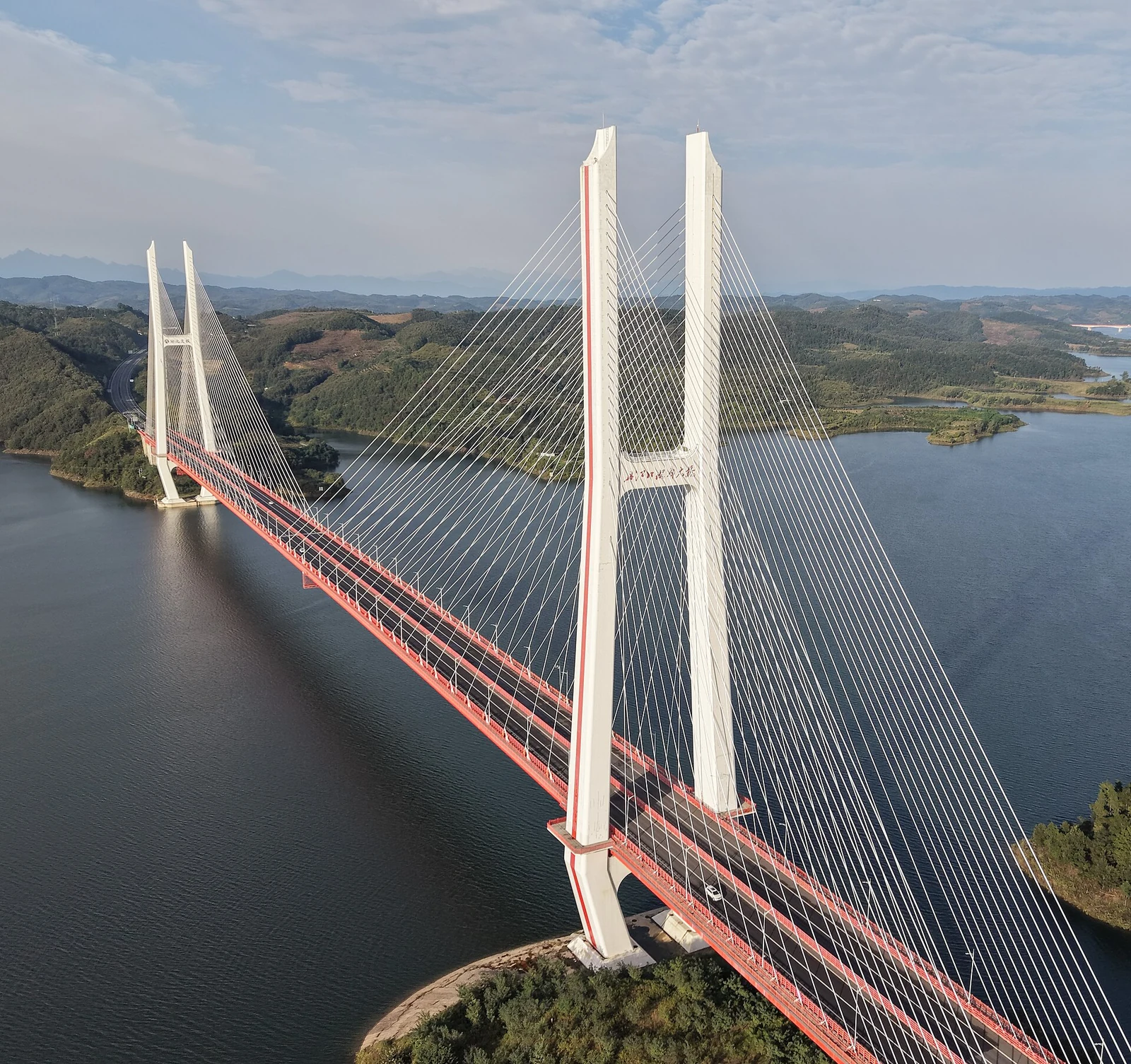
A reservoir across two provinces
Moving a community
Reservoir construction and later expansion required large-scale resettlement. A moved town is more than a new address: homes, farmland, burial grounds and relationships to neighbouring places all change. The old town of Junzhou is among the places associated with the submerged landscape. Exact population totals depend on which project stage and area are counted, so figures from different phases should not be presented as one interchangeable number.
Places retained in memory
The old Jingle Palace site links this water history with Wudang’s religious landscape. Remembering such places can involve relocated objects, reconstructions and archaeological records as well as names. Each preserves a different part of the former setting. The reservoir’s present role in water supply belongs alongside that history of local change, rather than replacing it with a view of water alone.