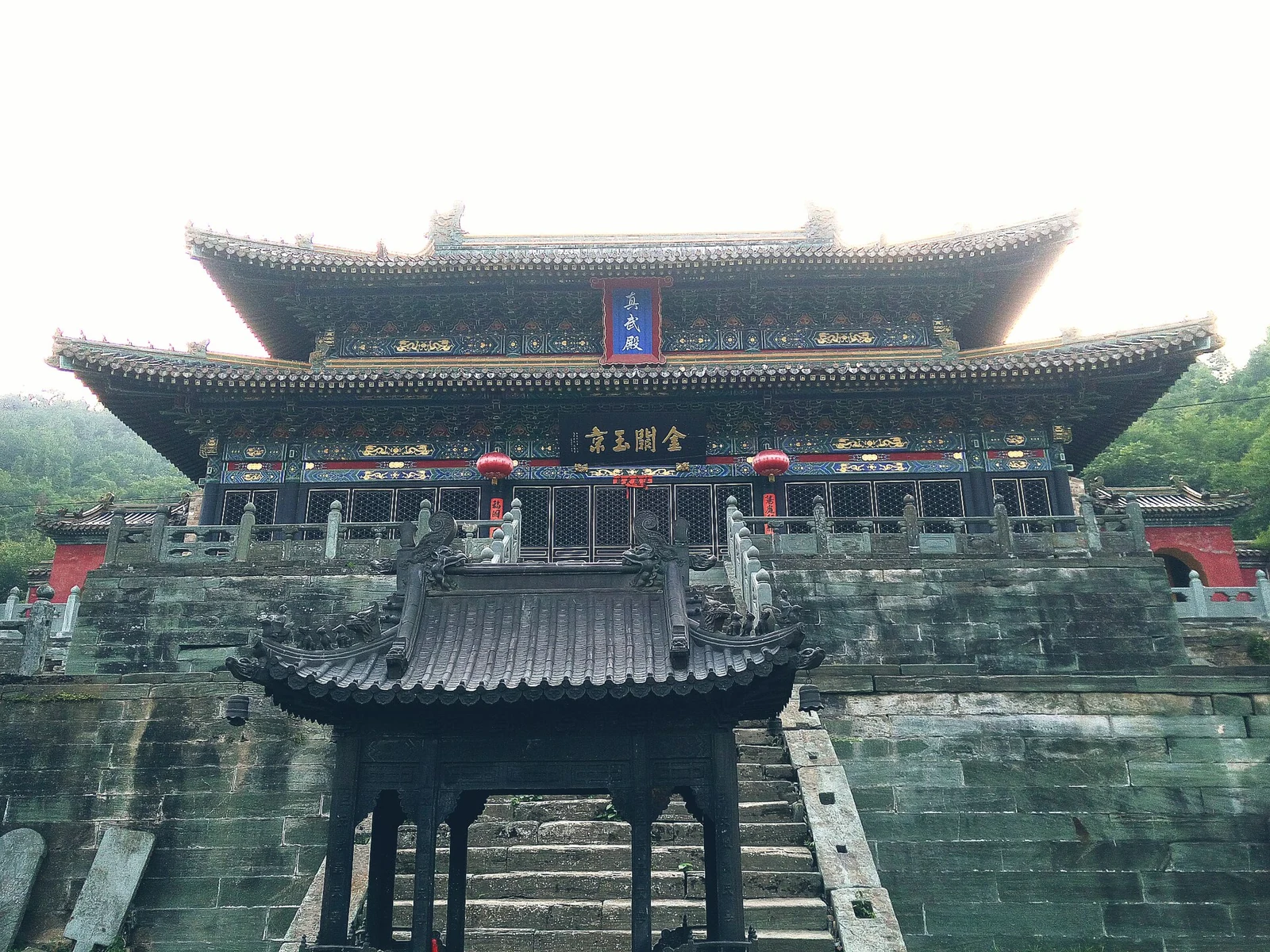
Wudang’s Daoist buildings occupy peaks, slopes and valleys in northwestern Hubei. Gates, courtyards, steps and distant roofs turn changes in height into changes of scale. The complex developed over many centuries and expanded particularly under Ming imperial patronage. It was inscribed on the World Heritage List in 1994 for its architectural and artistic significance.
From the journal
Bronze Architecture Above the Clouds
On Wudang Mountain, the Golden Hall and the sequence of Daoist buildings make mountain terrain part of an architectural world.
In the same city · Shiyan ↗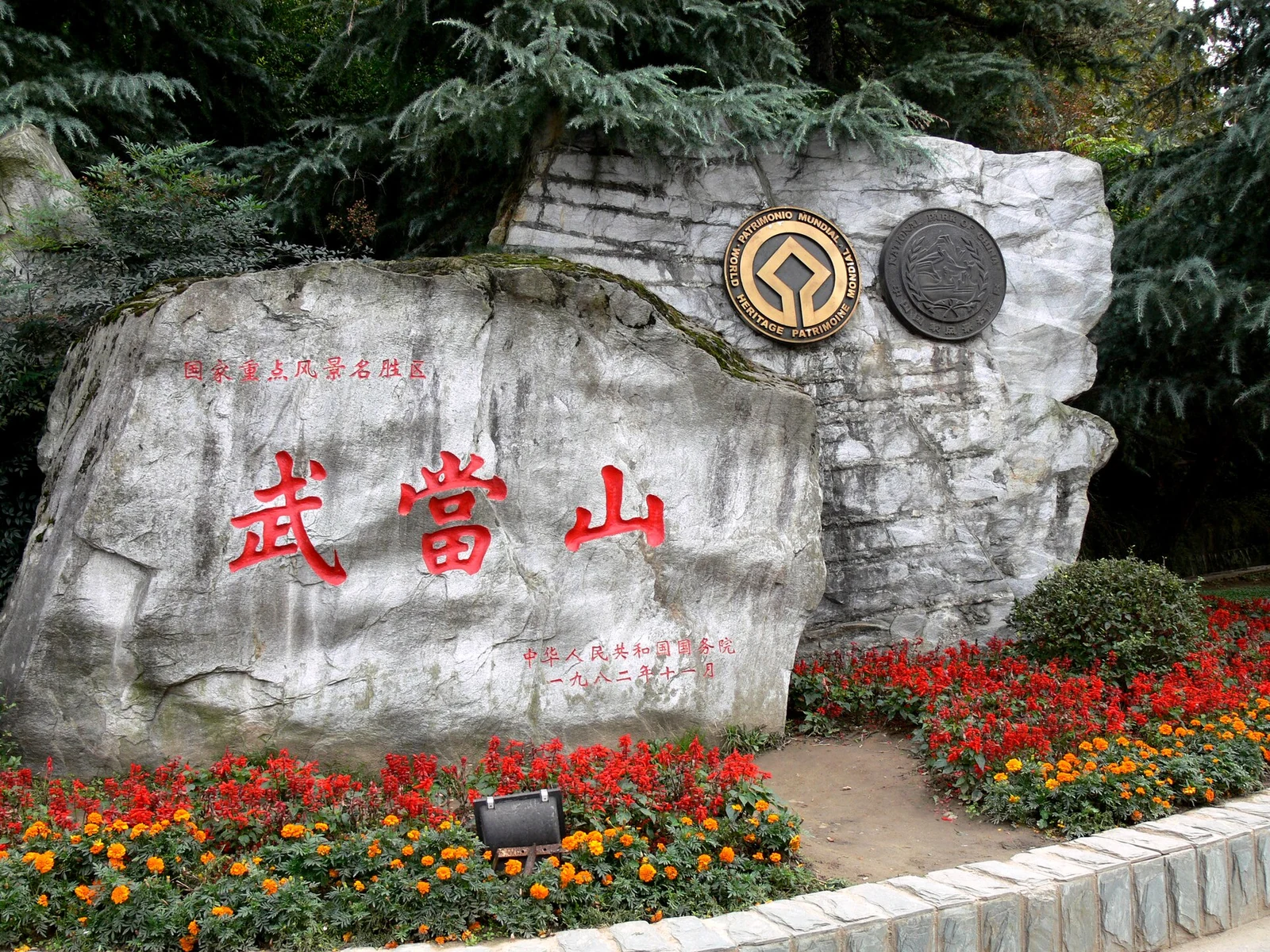
A mountain approached through buildings
A hall cast in metal
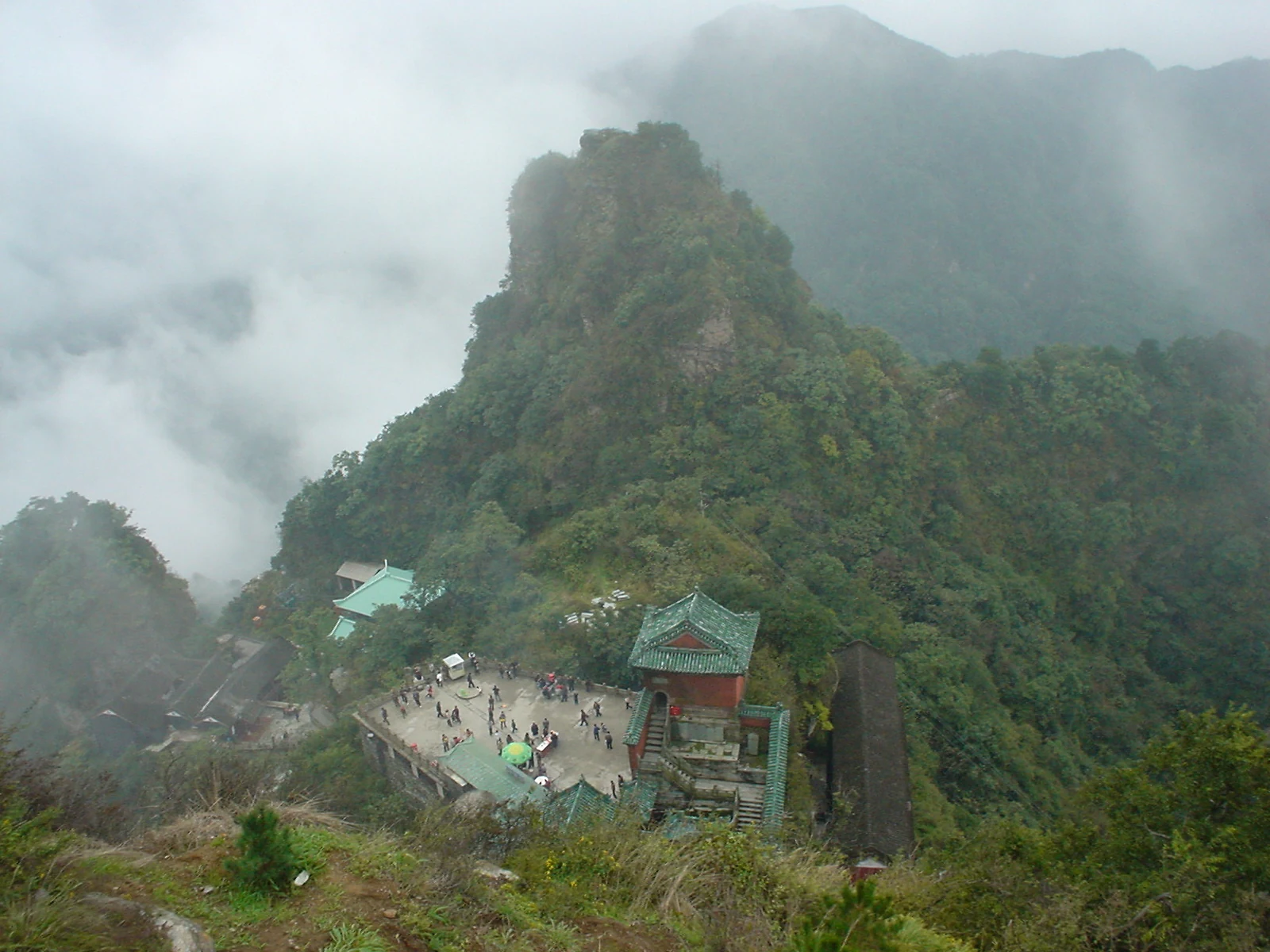
The Golden Hall stands on Tianzhu Peak. Its bronze structure adopts forms familiar from timber architecture, translating columns, beams and roof elements into metal. The compact building makes details of casting and assembly as important as the distant view. It belongs to a wider group of palaces and shrines, including Zixiao Palace and buildings set against the cliffs, rather than being an isolated summit ornament.

The mountain and the water below
The Danjiangkou reservoir changed lower landscapes associated with Wudang, including the site of Jingle Palace and the old town of Junzhou. Relocation and reconstruction gave parts of that religious landscape new settings. The buildings on the slopes and the water below can be read together through those specific places. An ascent towards the Golden Hall and a view across the reservoir open different chapters of the same mountain country.