Sanmenxia sits at 34.7 degrees north on the Yellow River, and the river's turn here creates the conditions for the largest wintering population of whooper swans in the country. The wetland park lies between the city's eastern and western districts, built on the bed of the old Shanzhou city and the two streams, Qinglong and Canglong, that cross it; it covers 8,850 mu, of which 6,150 are land and 2,700 are water and mudflat. The Yellow River runs east past the lake, and the two streams pass through it, so the park is a set of connected waters rather than a single pond. The city's own page calls Sanmenxia the city of swans. In winter the name is not an exaggeration.
From the journal
Sixteen Thousand Swans
Sanmenxia's wetland park was a sewage ditch in the 1990s and now winters more than 16,000 whooper swans within sight of the city.
In the same city · Sanmenxia ↗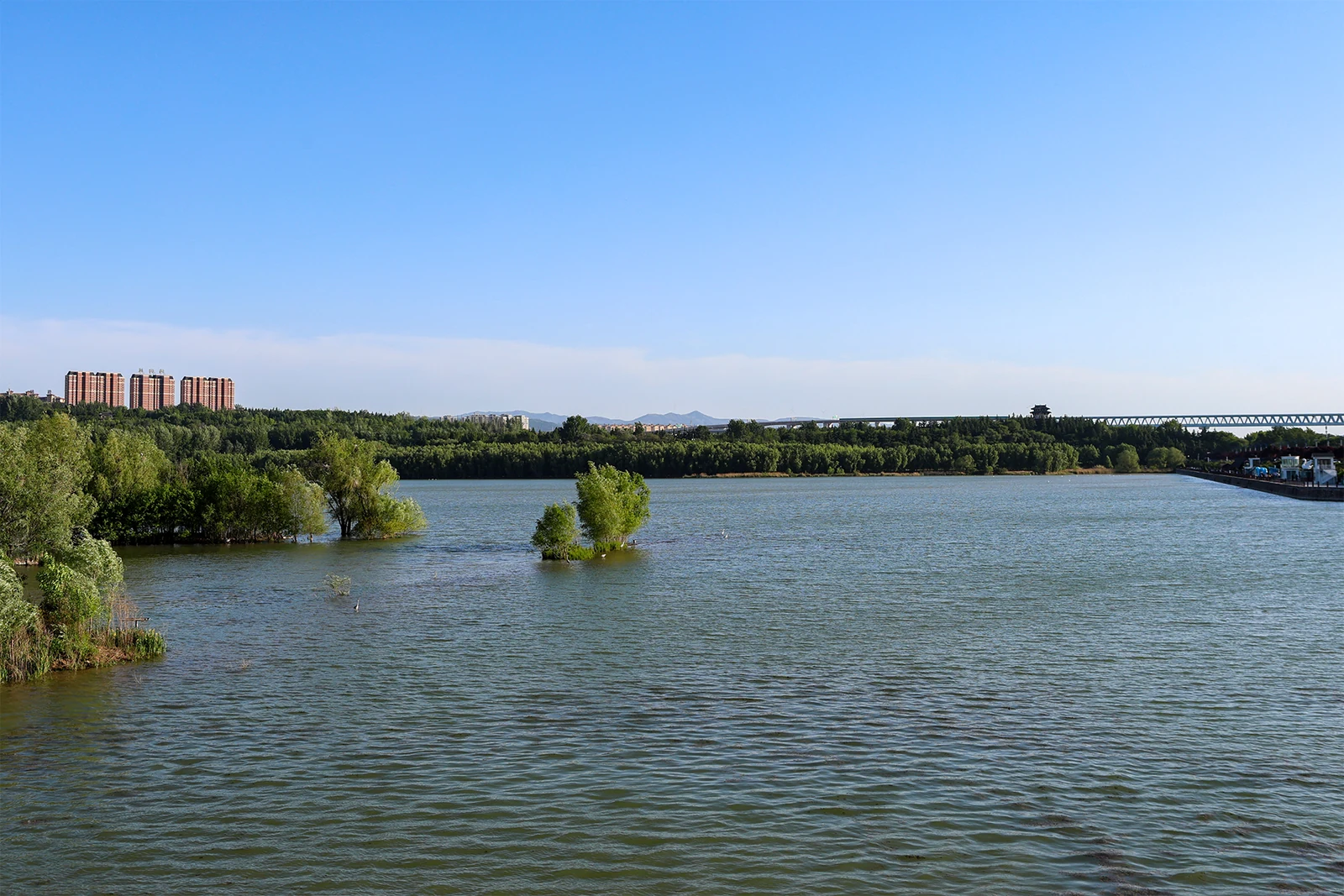
A River That Turns
From Ditch to Wetland
The lake is a repair job. The municipal culture and tourism bureau records that construction began in 2001 and that on 6 February 2007 the site was named a national urban wetland park by the Ministry of Construction. A newspaper account reprinted by the city quotes Gao Ruyi of the national bird-banding station saying that in the 1990s the lake was a sewage ditch that passers-by had to hold their noses against, and that treatment turned it into a place for walking. The same account describes the park authority coordinating with the water department to let Yellow River water in and improve quality. That sequence, from ditch to designated wetland in about fifteen years, is the part of the swan story that is easiest to verify.
Sixteen Thousand
The numbers have moved fast. An account reprinted by the city in 2025 says wintering whooper swans rose from about 2,000 ten years earlier to more than 16,000, and that the number of sites used by swans went from four to nine. Wild bird species recorded in the area rose from 175 to about 300, and the city has built 240 kilometres of composite ecological corridor along the Yellow River, with wetland protection at 53 per cent and forest cover at 42 per cent. These are municipal figures and should be read as such, but the direction is consistent across several years of reporting: more birds, more sites, more recorded species. The swans are counted because they are the visible index of everything else.
Morning and Dusk
The viewing has a timetable. Qinglong Lake, west of national highway 209 and east of the Qinglong dam, has 2,070 mu of water and is the main viewing point; Canglong Lake, smaller and weedier, keeps lotus stalks in winter that feed the birds. A photographer quoted by the city says the best hours are dawn and dusk, when the light comes across the water, and recommends a wide lens at close range and continuous shooting for birds in flight. The park runs patrols day and night and asks visitors to keep their distance and keep quiet. The birds winter within sight of the city's apartment blocks, which is the unusual thing about Sanmenxia rather than the number alone.