For decades the question was simple and commercial: which kiln actually made the Song pieces that survive in museums. The provincial account of Baofeng records the answer being settled by fieldwork in the village of Qingliang Temple. From the 1980s, excavation teams worked through several seasons at the site and found the central firing area of the Ru official kiln, which fixed the kilns around Qingliang Temple as the place where the transmitted official Ru ware of the Northern Song was fired. Recovery then became a matter of stubborn repetition. One inheritor, who grew up in the village and built his first experimental kiln at home in 1995, spent years testing the chemistry of old and new glazes; in 2004 he produced his first sky-blue piece, and he has since worked on the small bubbles and pale haloes that gather around them in transmitted shards.
From the journal
Kiln Fire and a Drum on the Riverbank
Baofeng does two things with its new year: it re-fires a sky-blue glaze on the site of an imperial kiln, and it fills a riverbank with storytelling artists.
In the same city · Pingdingshan ↗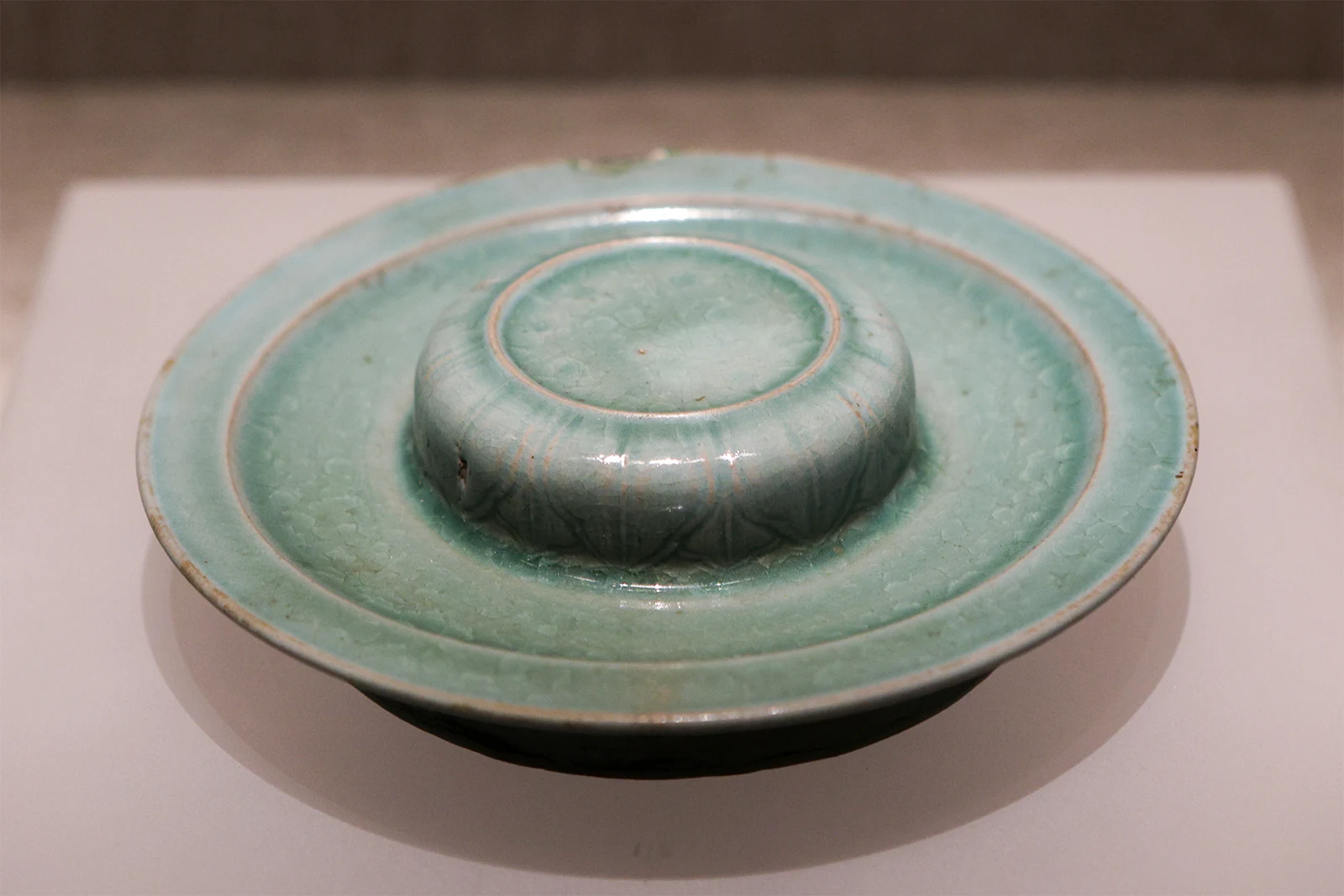
Digging for the Right Kiln
A Workshop Economy
What surrounds that single breakthrough is a working industry, and the numbers come from the provincial culture and tourism department's account of the county. Baofeng now has close to one hundred inheritors of the Ru firing technique, close to 200 production, workshop and research bodies, more than 5,000 people employed, over 5,000 product types and annual output worth 680 million yuan, with the rest of the district forming a system of imitation antique, art, craft and tableware. The same report notes the county has published a group standard on the grading of Baofeng Ru porcelain, applied for a geographical indication mark, and set aside a fund of ten million yuan a year for the industry, while an online selling base has pushed daily e-commerce sales in the category past two million yuan.
The Thirteenth Day of the First Month
The other annual gathering is not fired but spoken. The Majie storytelling fair, listed among the first batch of national intangible heritage projects in 2006, is also called the thirteenth Majie fair, and its season runs from the thirteenth to the fifteenth day of the first lunar month, the thirteenth being the main day. It is held seven kilometres south of Baofeng county town, on the north bank of the Yinghe river at Majie village in Yangzhuang township, where performers arrive from the province and beyond with drums and qin to trade and to show their art in forms including Henan zhuizi, daoqing, quzi and qinshu. The official entry is careful about origins: the fair's beginnings cannot now be verified, though historical material suggests it may date as far back as the Yuan.