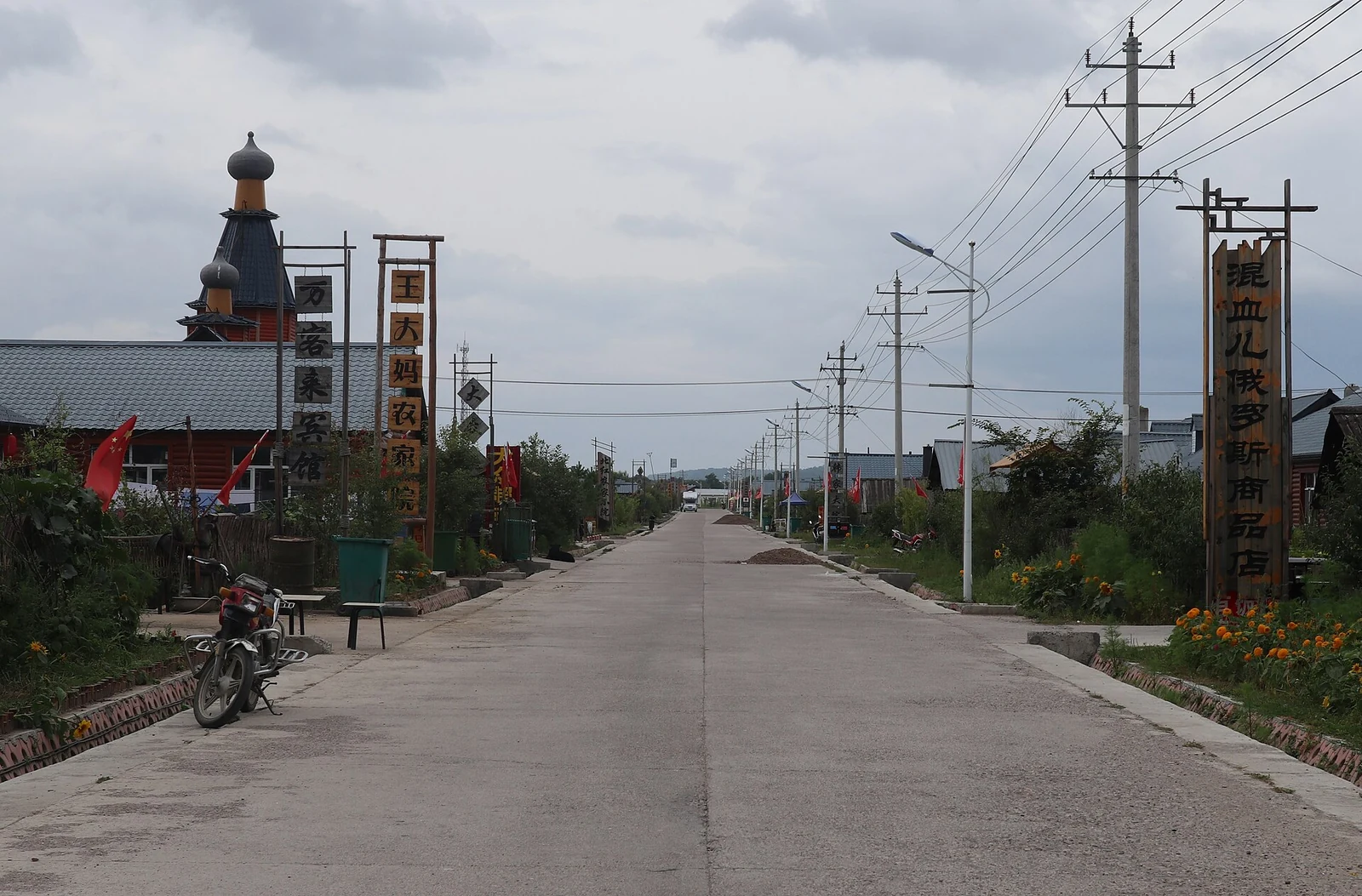
Beihong belongs to Beiji Town in Mohe, on the southern bank of the upper Amur. A provincial village profile dates its formal establishment to 1965 and its recognition as a Russian ethnic village to 2008. Timber houses known as mukeleng give its streets a recognizable form. The river and the surrounding northern forest frame a settlement whose family histories connect Chinese and Russian traditions.
From the journal
Beihong Village: Timber Houses, Family Tables and Russian Bread
On the Amur’s southern bank, Beihong’s timber houses and family food traditions reveal a border village through local memories and the work of a bread shop.
In the same city · Greater Khingan Range Prefecture ↗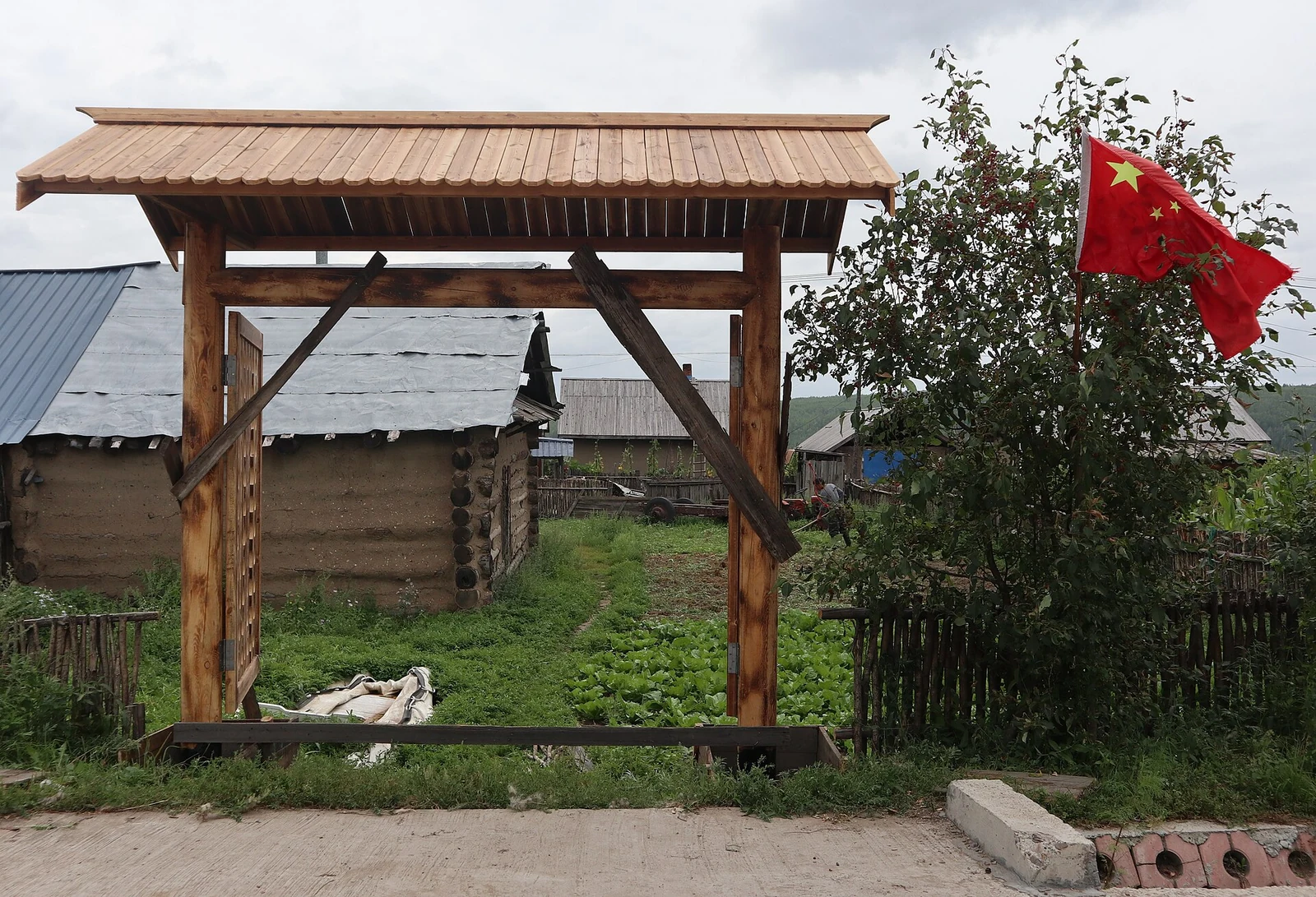
Timber houses on the Amur’s southern bank
A family history at the table
When People’s Daily visited in June 2025, village doctor Li Chunhua recalled Russian ancestry on both sides of her family. She described a household table where jam, sauerkraut and suba soup accompanied steamed buns and northeastern Chinese home cooking. Such combinations make the village’s cultural inheritance tangible in ordinary meals. They belong to particular families and memories, alongside the public displays of local history.

Zhao Yinhua’s bread shop
Nearby, Zhao Yinhua was tending an oven in her Russian bread shop. Her mother-in-law had taught her to make lieba, including collecting wild hops in the hills after the autumn frost. Preparing a batch began the day before baking, with fermentation and repeated additions of flour through the night. Village customers came for a remembered childhood flavor, while visitors encountered the bread as a local specialty. A family technique had become a small business, carrying part of Beihong’s domestic history into its present-day street life.