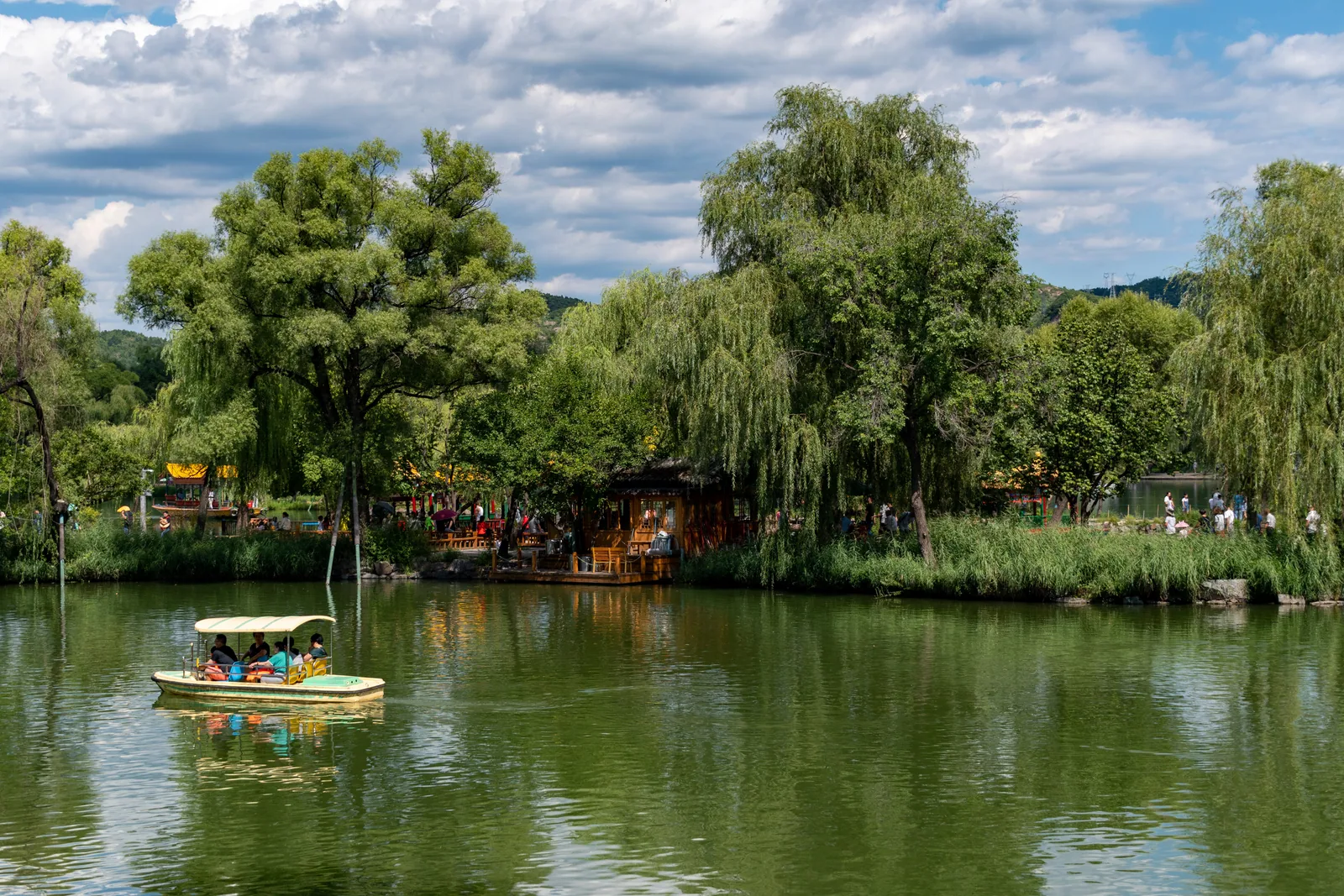
The first thing the Chengde Mountain Resort asks a visitor to accept is a wall. It runs about ten kilometres around the compound and stands three metres high, and people call it the small Great Wall because it is shaped like the frontier line to the north. Inside, the ground falls into lakes, opens into grassland, then rises into wooded hills.
The main gate is Lizhengmen, built in 1754. Above the doorway the name is cut in five scripts: Chinese, Manchu, Mongol, Tibetan and Uyghur. It was the first of the thirty-six views that the Qianlong emperor named.
Beyond the gate lies the palace zone, planned as a smaller echo of the Forbidden City in Beijing. A court in front received high officials, noblemen from the frontier and foreign envoys; the living quarters stood behind. The emperor's bedchamber, the Hall of Tranquil Waves and Refreshing Air, was built in 1711 and named by the Kangxi emperor for its height and for the air that moved off the water.
West and north of the palace, the garden takes over. The lake area borrows its buildings from gardens in the south, among them the Tower of Mist and Rain on Green Lotus Island, modelled on a tower beside Nanhu Lake at Jiaxing in Zhejiang. The plain is laid out like Mongolian grassland. The hills hold a stone pagoda seventy metres tall, finished in 1751, octagonal at the base, nine storeys of glazed tile beneath a gilded spire.